
Graveyard in the desert. From the journey to Egypt — History & Facts
In Graveyard in the Desert, the stillness of the desolate landscape echoes with whispers of forgotten stories and the madness that lies within solitude. This artwork beckons viewers to confront the unsettling beauty of abandonment, urging them to explore the shadows of their own psyche. Focus first on the stark contrast between the sun-bleached bones of the grave markers and the deep, dusky hues of the surrounding sands. The composition draws you in, with the horizon stretching infinitely, a testament to nature's indifference.
Notice how the light bathes the graves in a harsh glow, illuminating their angular forms and casting long, ominous shadows that stretch toward an unseen past. Ciągliński’s brushwork captures the texture of desolation, each stroke evoking the raw emotion of despair intertwined with a haunting beauty. Delve deeper into the emotional tensions present in the piece. The starkness of the graveyard symbolizes not just death, but the madness that can arise from isolation in an unforgiving environment.
The juxtaposition of life’s ephemeral nature against the unyielding landscape reflects humanity's struggle against the void, hinting at a collective madness that emerges from confronting mortality. Each grave marker stands as a silent witness, embodying the fragility of existence and the haunting echoes of those who have been lost to time. In 1903, while creating this piece, Ciągliński was in the midst of exploring themes of mortality and existentialism, influenced by both personal experiences and broader cultural shifts in Europe. The artist's journey to Egypt and the subsequent reflection on its ancient tombs and graveyards provided a backdrop for this work, allowing him to articulate the tension between life and death in a landscape that felt both alien and hauntingly familiar.
More Artworks by Jan Ciągliński
Browse all →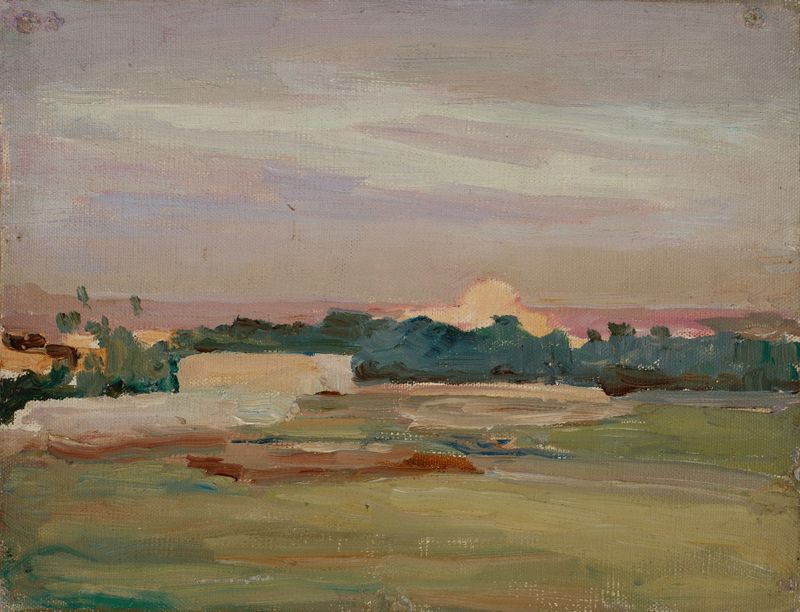
The Sirocco
Jan Ciągliński
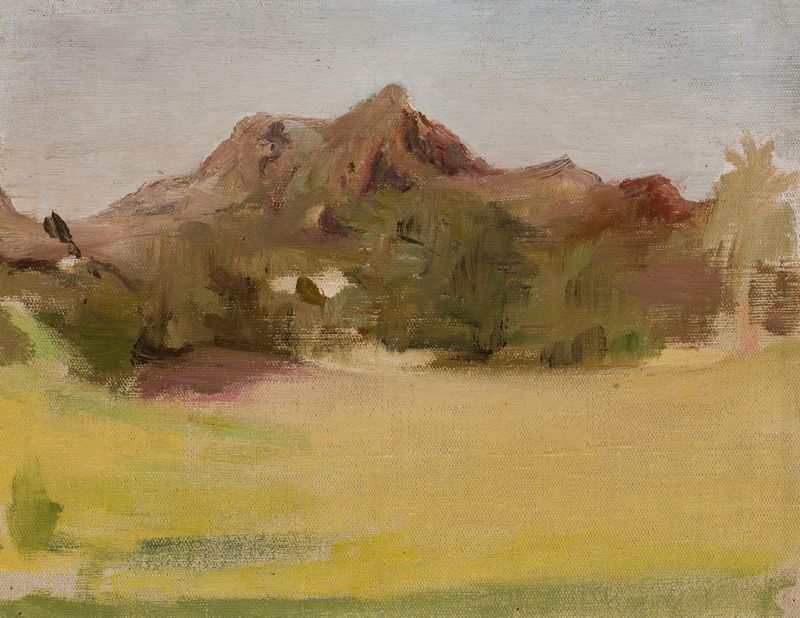
Mountain landscape. From the journey to India
Jan Ciągliński
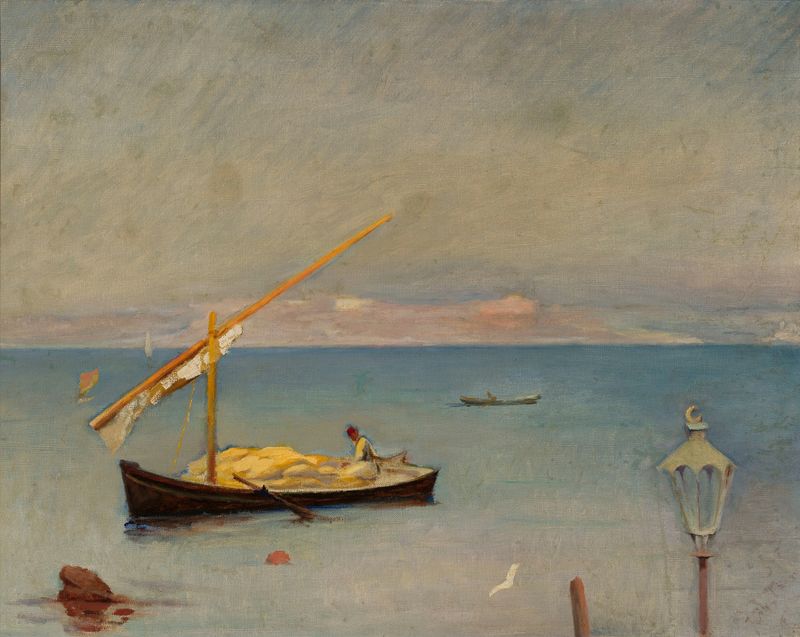
At Bosporus
Jan Ciągliński
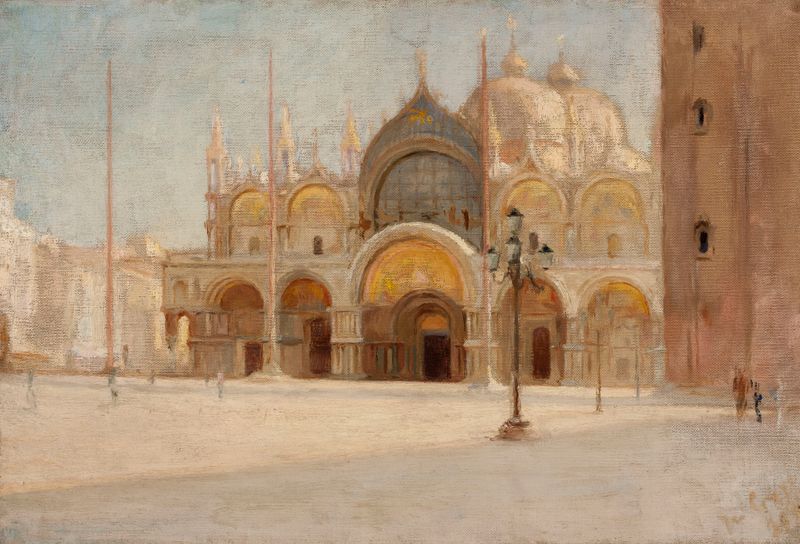
St Mark’s Square in Venice
Jan Ciągliński
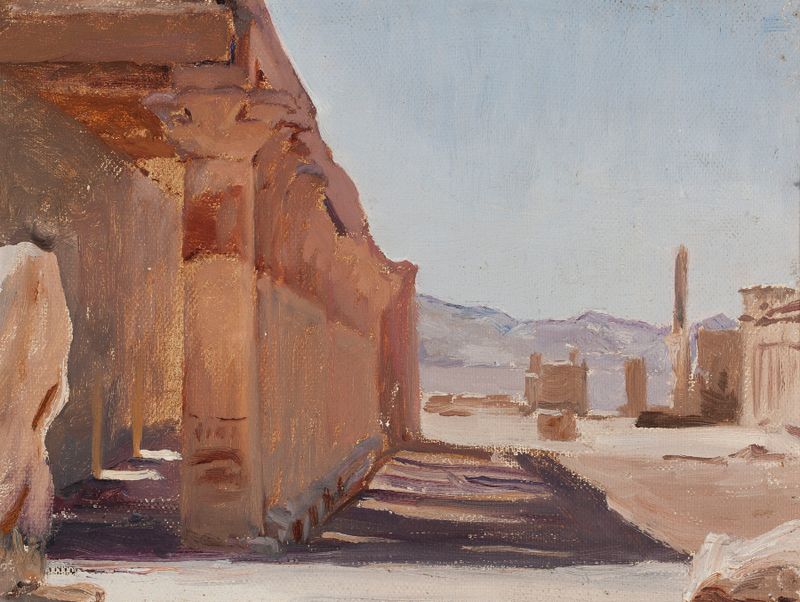
Temple. From the journey to Egypt
Jan Ciągliński
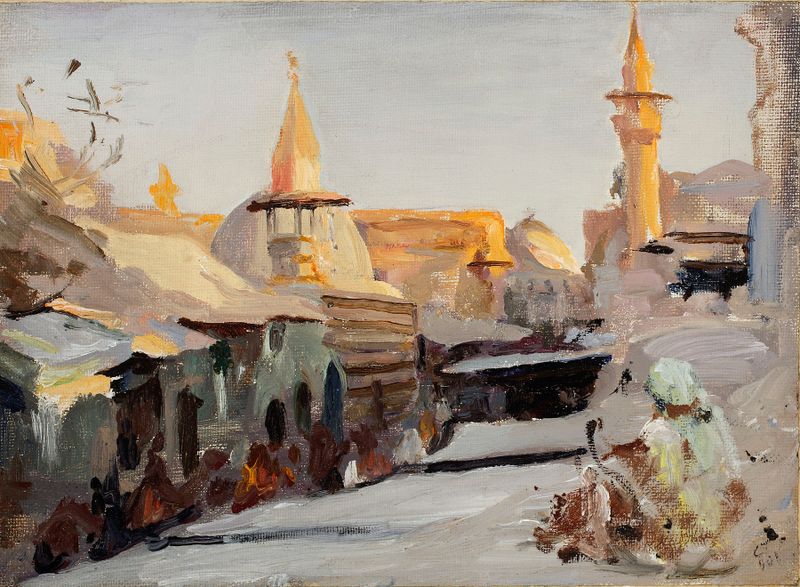
Street in Damascus. From the journey to Palestine
Jan Ciągliński
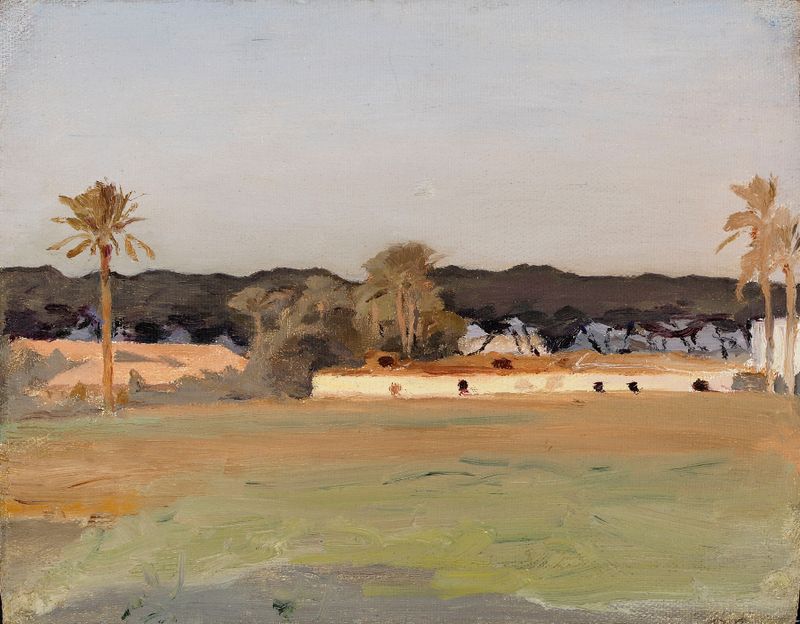
Evening. From the journey to Egypt
Jan Ciągliński
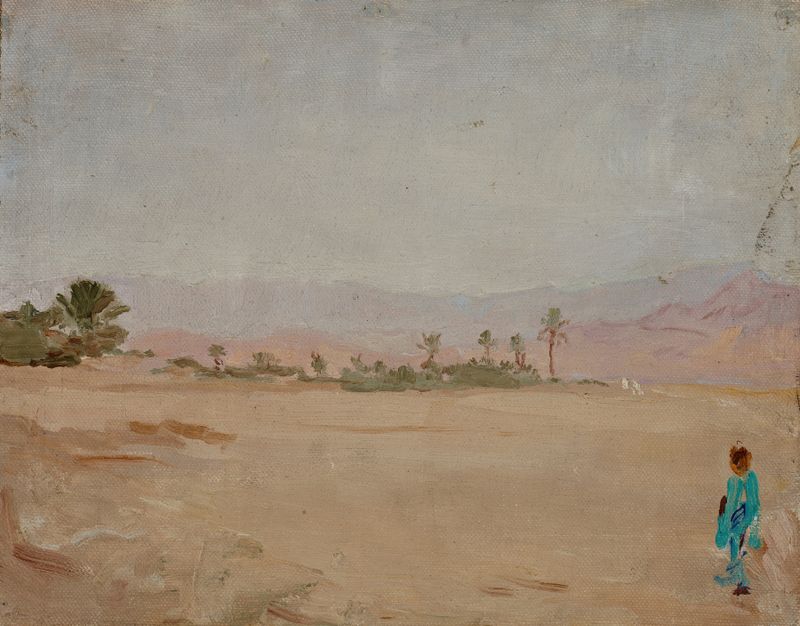
Sahara (Desert)
Jan Ciągliński
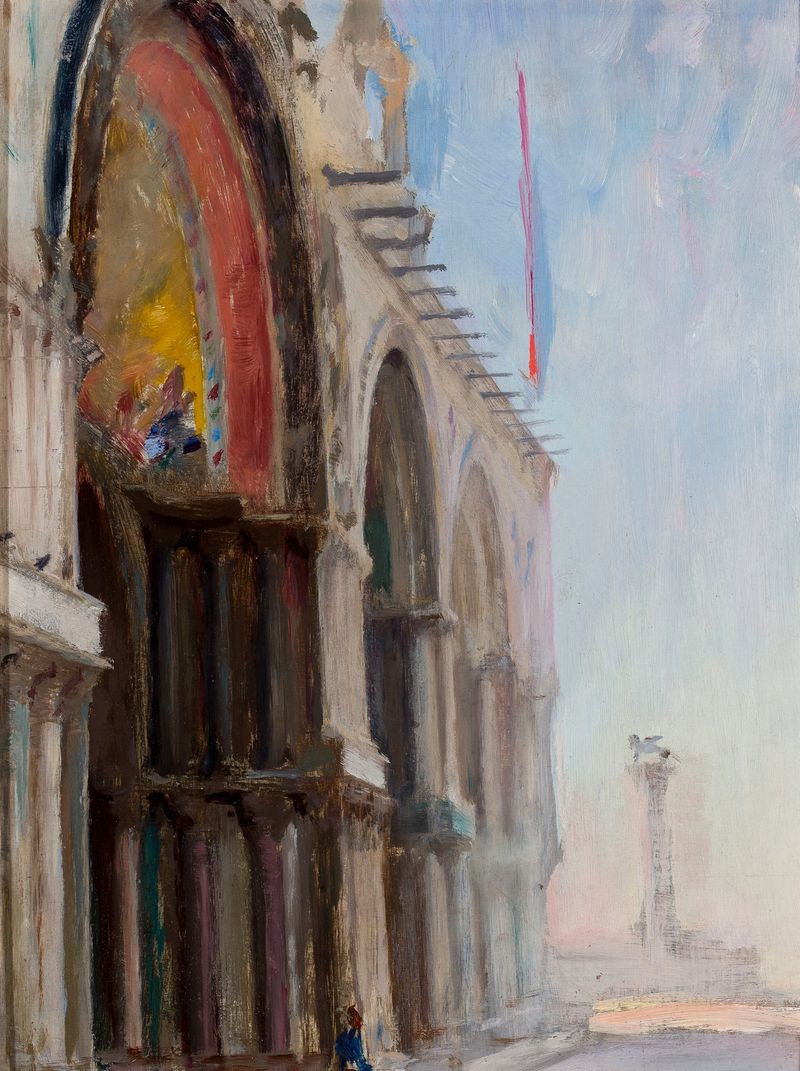
Venice – San Marco. From the journey to Italy
Jan Ciągliński
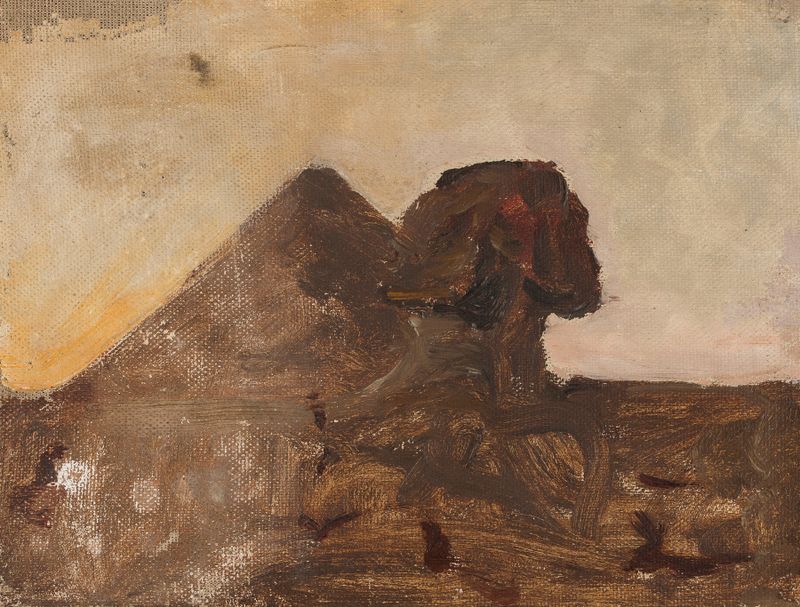
Evening in the desert – Sphinx and pyramid. From the journey to Egypt
Jan Ciągliński





