
Green Ponds — History & Facts
In the quiet refuge of art, time holds sway, revealing the essence of stillness and continuity. Focus on the vibrant hues of green that dominate the canvas, where various shades blend seamlessly, inviting the eye to traverse the tranquility of the ponds. Notice how the artist employs short, rhythmic strokes to mimic the gentle ripples on the water’s surface, creating a mesmerizing dance of color that draws you in. The interplay of light and shadow enhances the depth, allowing the viewer to feel the serenity of nature captured in a momentary glance. Amidst the lush greenery, hints of life emerge quietly in the foreground—a delicate bloom, a glimpse of a bird, alluding to the interconnectedness of existence.
The calmness of the scene contrasts with the turbulent world outside, revealing a sanctuary where time seems to stand still. Each element holds significance, suggesting both the fleeting nature of beauty and the enduring power of memory—reminders that nature’s splendor is both ephemeral and eternal. In 1920, in a world recovering from the upheaval of the First World War, the artist sought solace in the landscapes of the American West. Living in New Mexico, Joseph Henry Sharp immersed himself in the vibrant colors and tranquil settings that defined the region.
This was a pivotal time in his career as he embraced modernist influences while staying true to the beauty of his surroundings, capturing the essence of unspoiled nature in works like Green Ponds.
More Artworks by Joseph Henry Sharp
Browse all →
Clearing After Storm, Taos
Joseph Henry Sharp
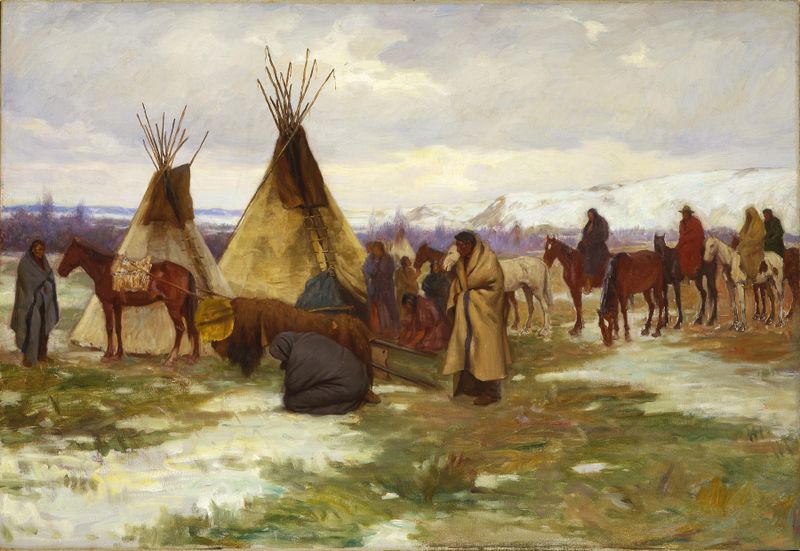
Burial Cortege of a Crow Chief
Joseph Henry Sharp
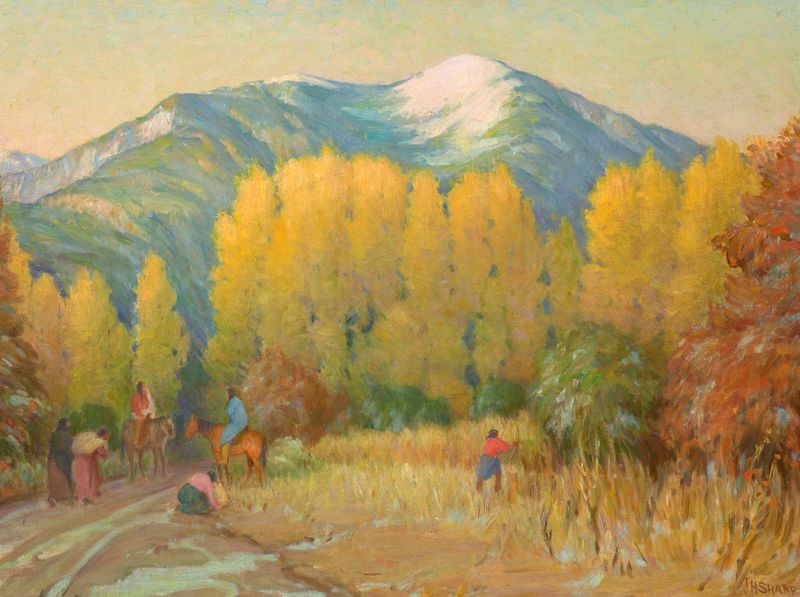
Old Road to the Pueblo of Taos—Afterglow
Joseph Henry Sharp
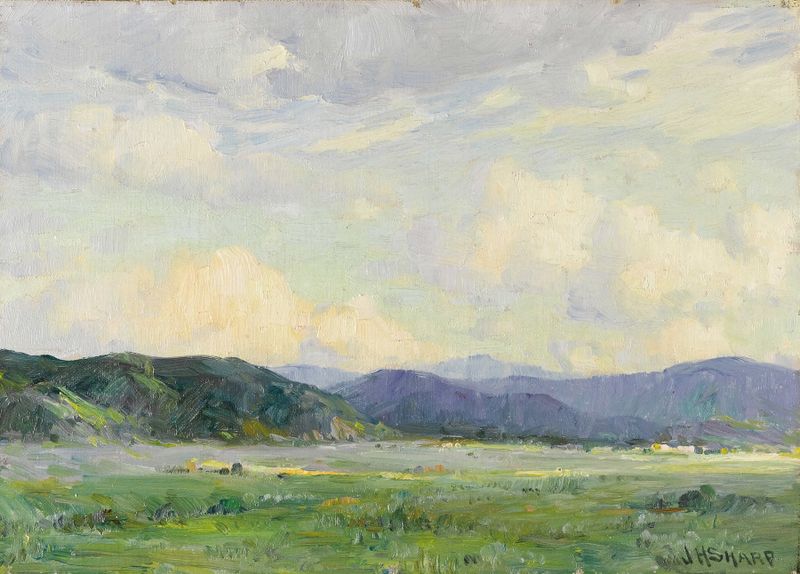
Taos Landscape
Joseph Henry Sharp
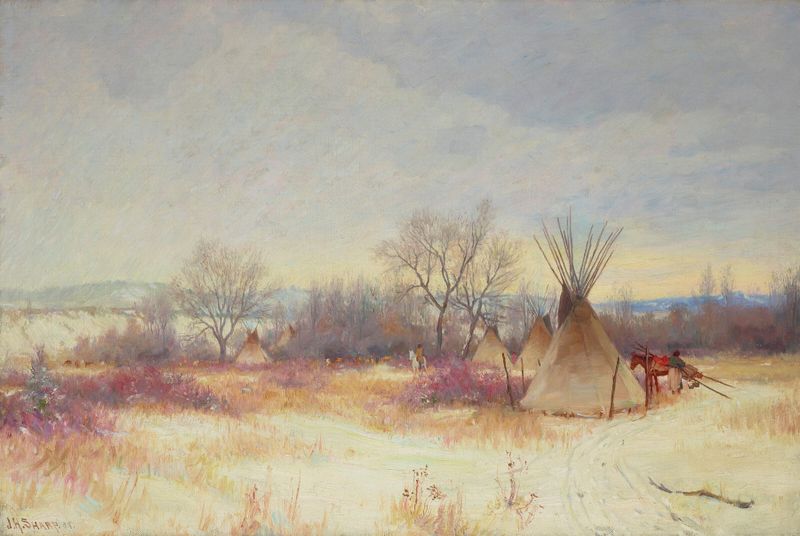
Indian Encampment
Joseph Henry Sharp

The Blue Tepee
Joseph Henry Sharp
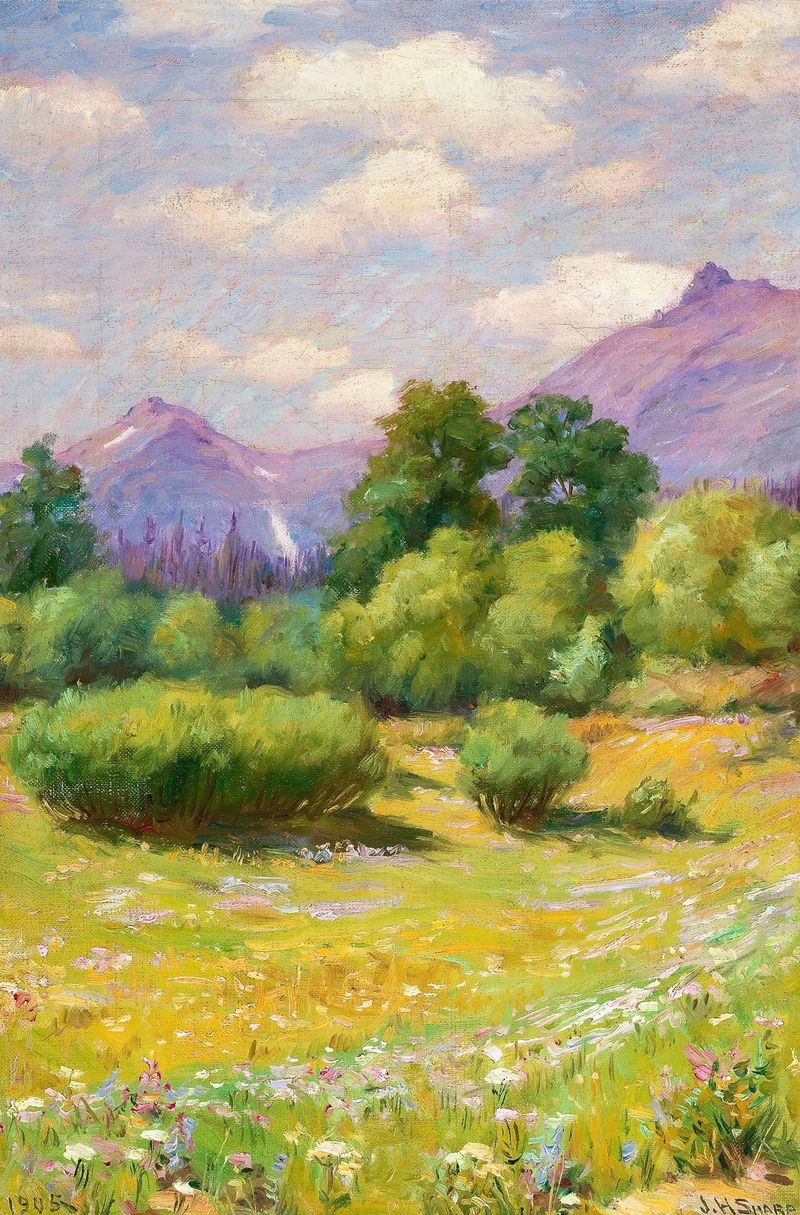
Landscape of Glacier Joseph Henry
Joseph Henry Sharp

Shadows in the Night
Joseph Henry Sharp
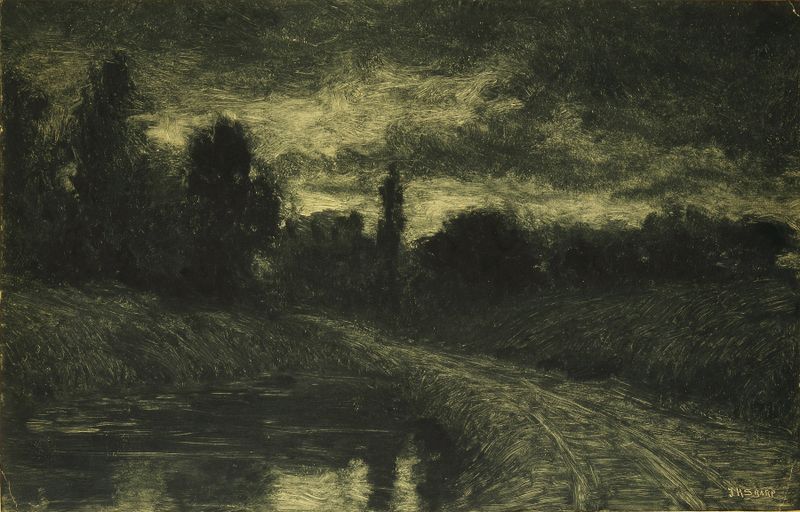
Afterglow
Joseph Henry Sharp

The Summer Camp
Joseph Henry Sharp





