
Grzymisława z synem Bolesławem Wstydliwym w więzieniu u Konrada Mazowieckiego — History & Facts
In 1879, Jan Matejko turned to a dramatic episode from Polish medieval history, capturing a moment that had shaped the fate of the Piast dynasty. The painting centers on the imprisonment of Grzymisława of Łuck and her young son, Bolesław the Chaste, by Duke Konrad of Masovia—a political maneuver that unfolded in the turbulent years after 1227, when rival Piast dukes vied for power over a fractured Poland. This episode, though little known outside Poland, was pivotal: the survival and later rule of Bolesław would help stabilize the kingdom.
Matejko’s choice to immortalize this event reflects his lifelong project of visualizing the nation’s defining moments, at a time when Poland itself was partitioned and its history a rallying point for national identity. The painting draws the viewer into the dim confines of the prison cell, where Grzymisława cradles her son, both figures illuminated by a shaft of light that falls from above—a device that signals hope amid despair. The mother’s protective gesture, her arm wrapped tightly around Bolesław, speaks to the vulnerability of both their persons and their claim to the throne. Scattered objects—a broken chain, a discarded crown—underscore the loss of freedom and royal dignity.
Matejko’s attention to historical costume and psychological expression invites comparison to Delacroix’s The Prisoner of Chillon, though Matejko’s focus is less on individual suffering than on the endurance of a royal bloodline. Every detail, from the stone walls to the anxious tilt of Grzymisława’s head, is charged with the tension of a moment when the future of a dynasty hangs in the balance. The precise medium of Grzymisława z synem Bolesławem Wstydliwym w więzieniu u Konrada Mazowieckiego is not always listed in catalogues, though most of Matejko’s major works are oil on canvas. Like many of his historical canvases, it was likely intended for public exhibition, part of his broader mission to educate and inspire Poles during the nation’s 19th-century partitions.
The painting has remained in Polish collections, reflecting its resonance with national memory, though it is less frequently displayed than Matejko’s grander works such as The Battle of Grunwald. Today, it stands as a testament to Matejko’s meticulous research and his belief in art as a vessel for history, bridging the gap between past and present for generations of viewers.
More Artworks by Jan Matejko
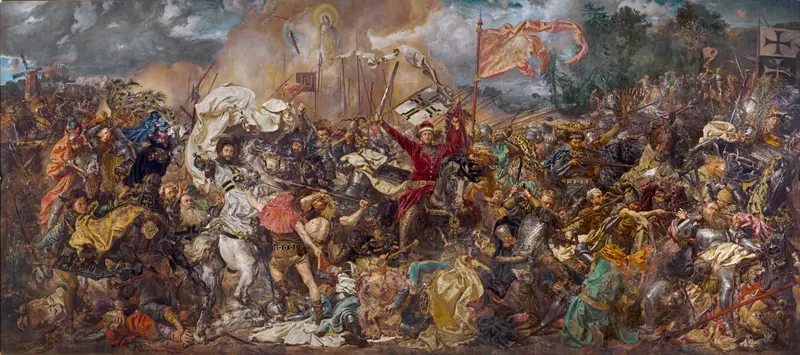
Battle of Grunwald
Jan Matejko

Stańczyk
Jan Matejko

Battle of Raclawice
Jan Matejko
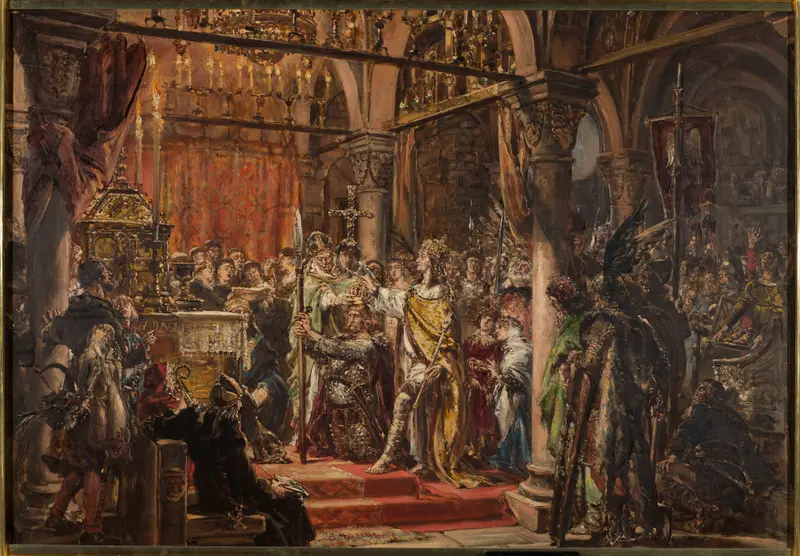
Coronation of the First King, 1001 AD, from the series “History of Civilization in Poland”
Jan Matejko
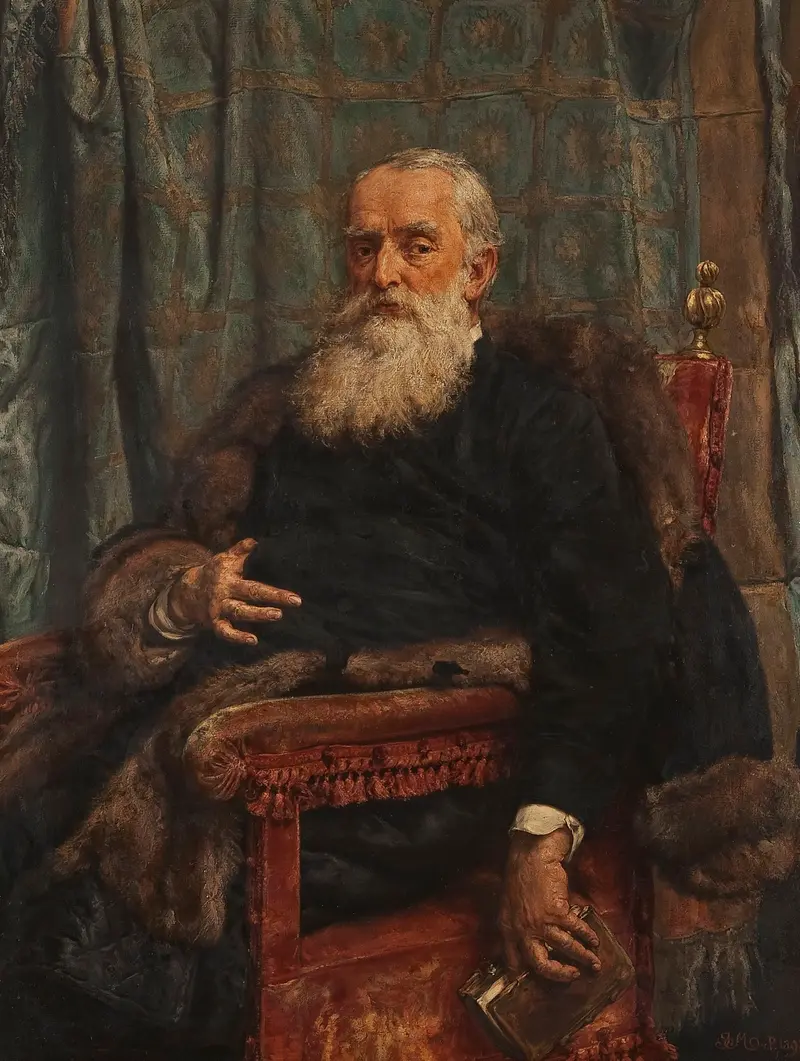
Portrait of Henryk Krajewski
Jan Matejko
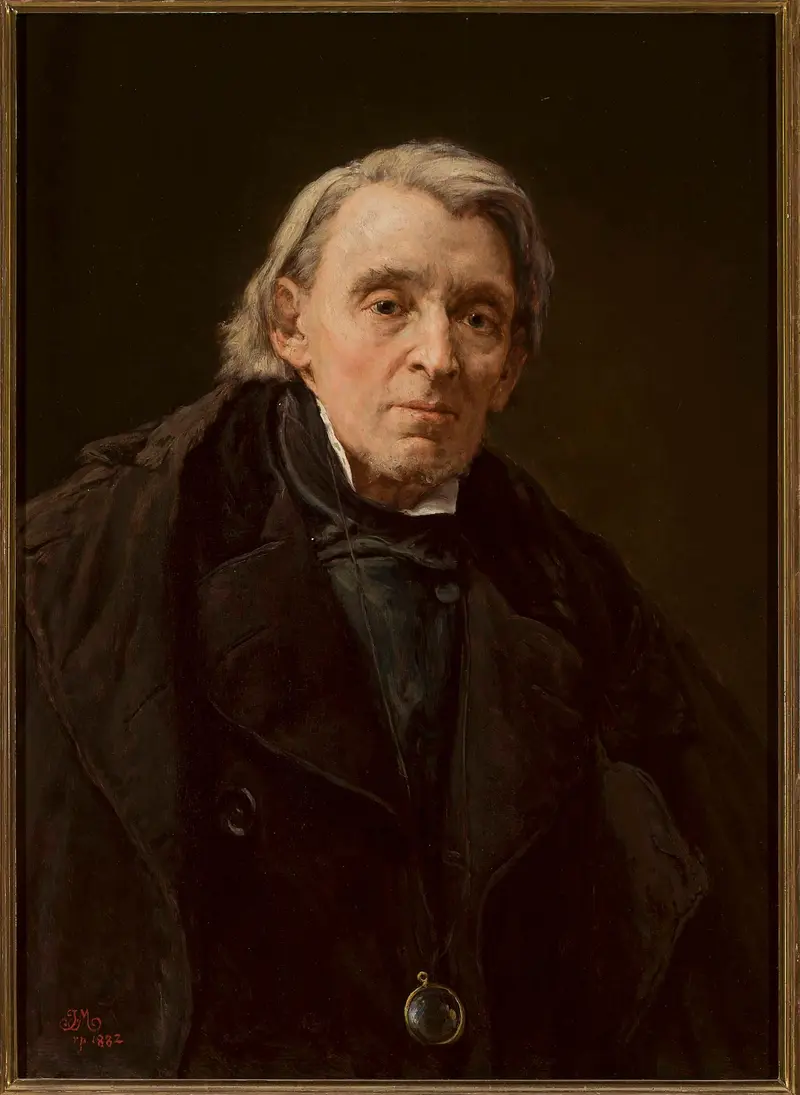
Portrait of Karol Podlewski
Jan Matejko
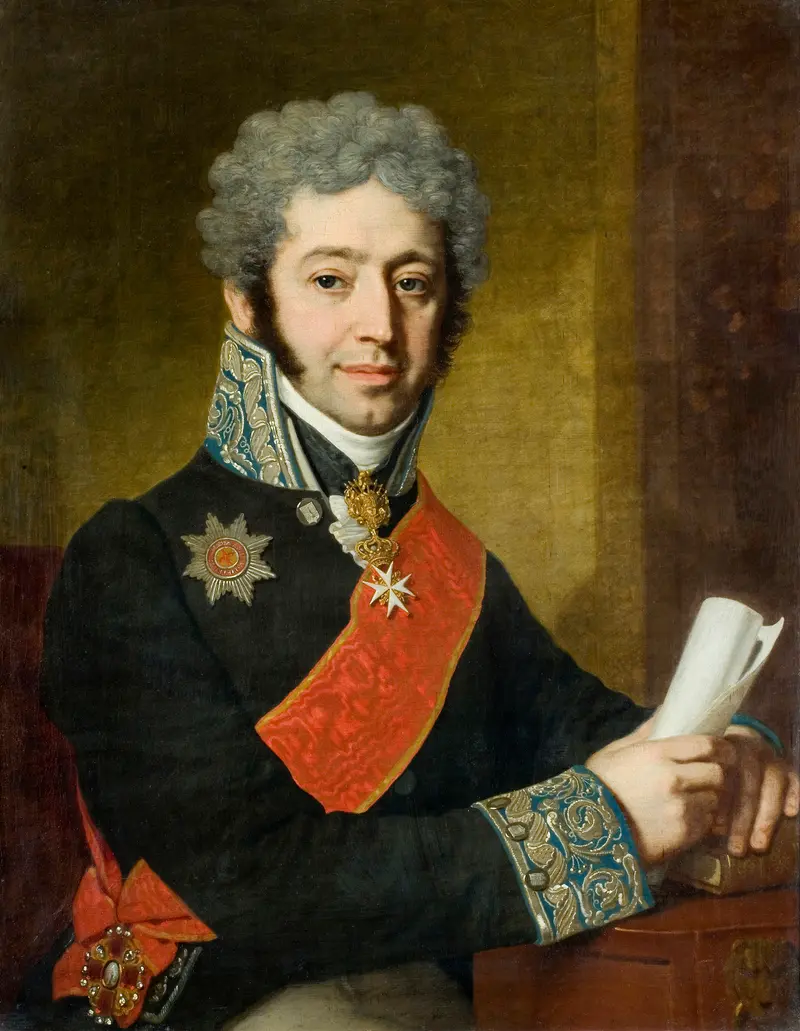
Portrait of Potocki and Poninski
Jan Matejko
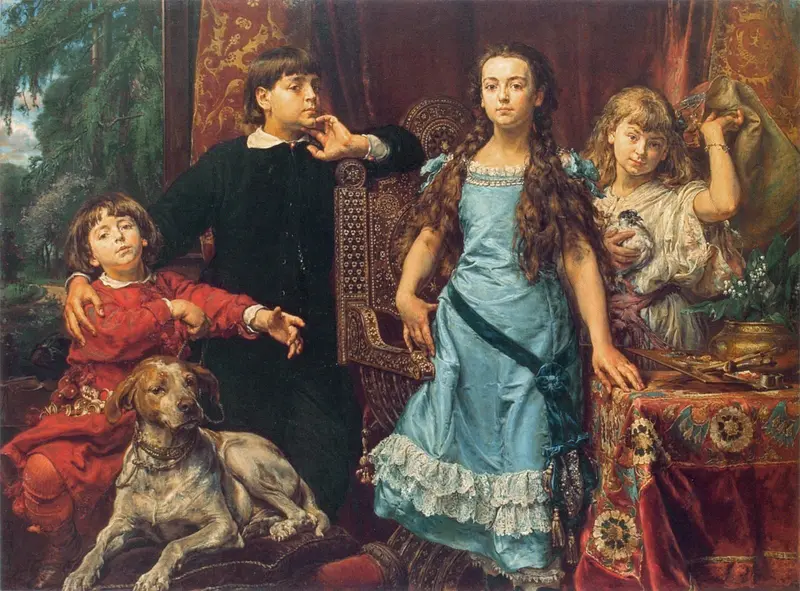
Portrait of the artist's four children
Jan Matejko
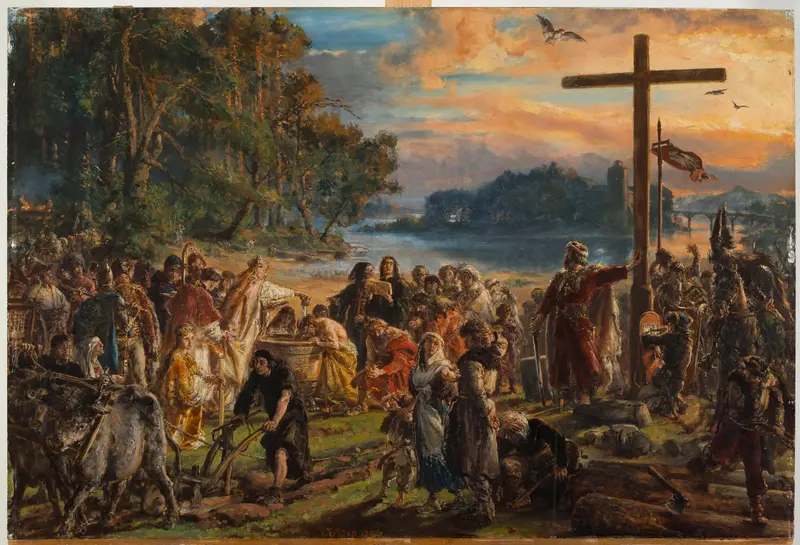
Introduction of Christianity in Poland
Jan Matejko
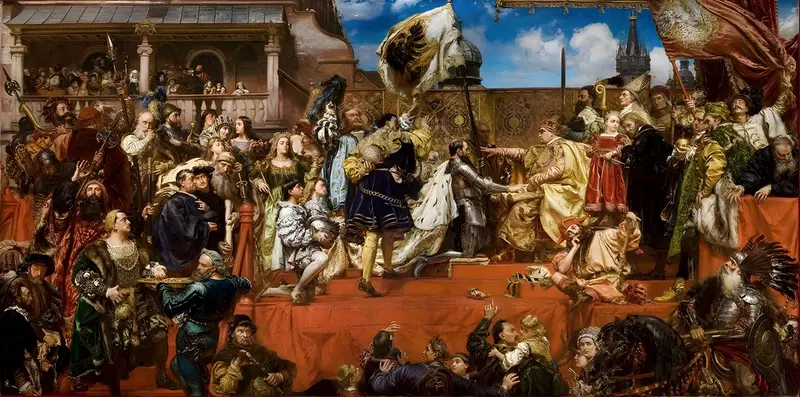
Prussian Homage
Jan Matejko





