
Prussian Homage — History & Facts
When Jan Matejko unveiled Prussian Homage in 1882, it was hailed as a visual resurrection of a pivotal moment in Polish history: the 1525 ceremony in Kraków, when the Grand Master of the Teutonic Order, Albrecht Hohenzollern, knelt before King Sigismund I the Old, swearing fealty and transforming Prussia into a Polish fief. This event, celebrated and debated by historians, marked the end of a centuries-long conflict between Poland and the Teutonic Knights. Matejko, already famous for his panoramic canvases of Polish glory and crisis, poured years of research and national feeling into this vast painting, which quickly became a touchstone for Polish identity under foreign partitions. The canvas captures the very instant Albrecht bends his knee on the cobblestones of Kraków’s main square, his hands clasped in fealty as King Sigismund, draped in gold and crimson, sits enthroned above him.
The faces in the crowd—nobles, clergy, and foreign envoys—are painted with almost theatrical clarity, each a portrait of pride, suspicion, or triumph. Matejko’s exacting detail is not just decorative: the broken sword at Albrecht’s side hints at defeat, while the king’s upright scepter signals authority. The composition’s crowded, almost stage-like arrangement recalls the narrative density of Peter Paul Rubens’s historical tableaux, but Matejko’s focus is on the Polish court as the axis of power, with the viewer’s eye drawn inexorably to the kneeling figure at its heart. Commissioned by the Kraków City Council, Prussian Homage was intended as both a patriotic lesson and a monument to the city’s heritage.
The painting quickly became a centerpiece of the Sukiennice Museum, surviving wars and occupations as a symbol of national endurance. For Matejko, this work marked a high point in his career as Poland’s painter-historian, and it remains one of his most recognized achievements. Today, it hangs in the National Museum in Kraków, its monumental scale and intricate storytelling still drawing crowds eager to witness the moment when history, art, and national memory converge.
More Artworks by Jan Matejko
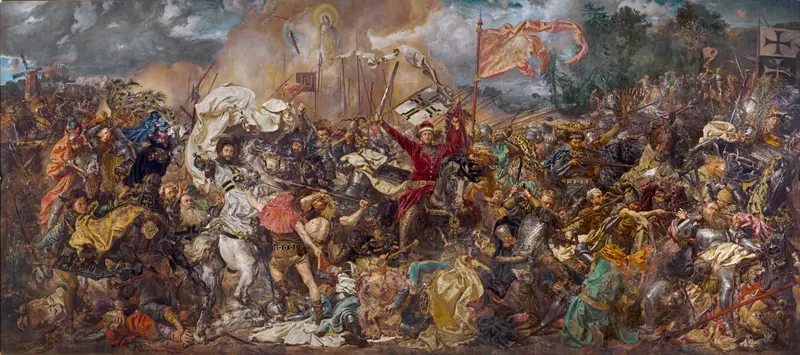
Battle of Grunwald
Jan Matejko

Stańczyk
Jan Matejko

Battle of Raclawice
Jan Matejko
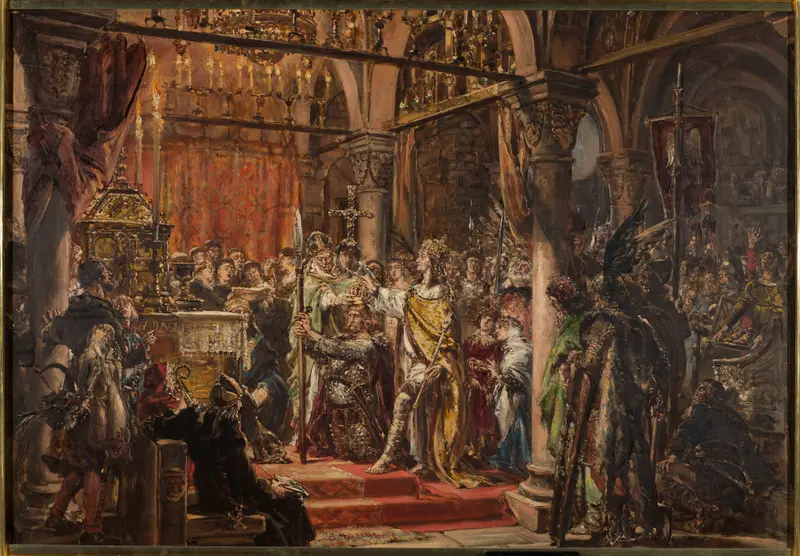
Coronation of the First King, 1001 AD, from the series “History of Civilization in Poland”
Jan Matejko
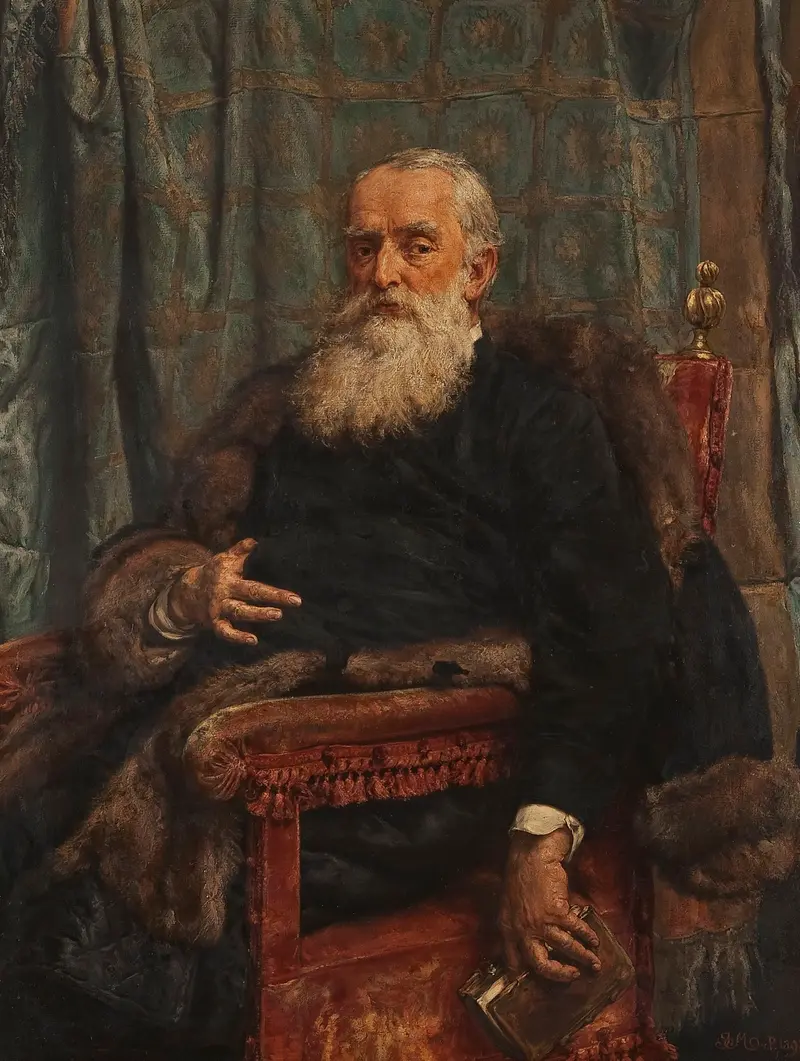
Portrait of Henryk Krajewski
Jan Matejko
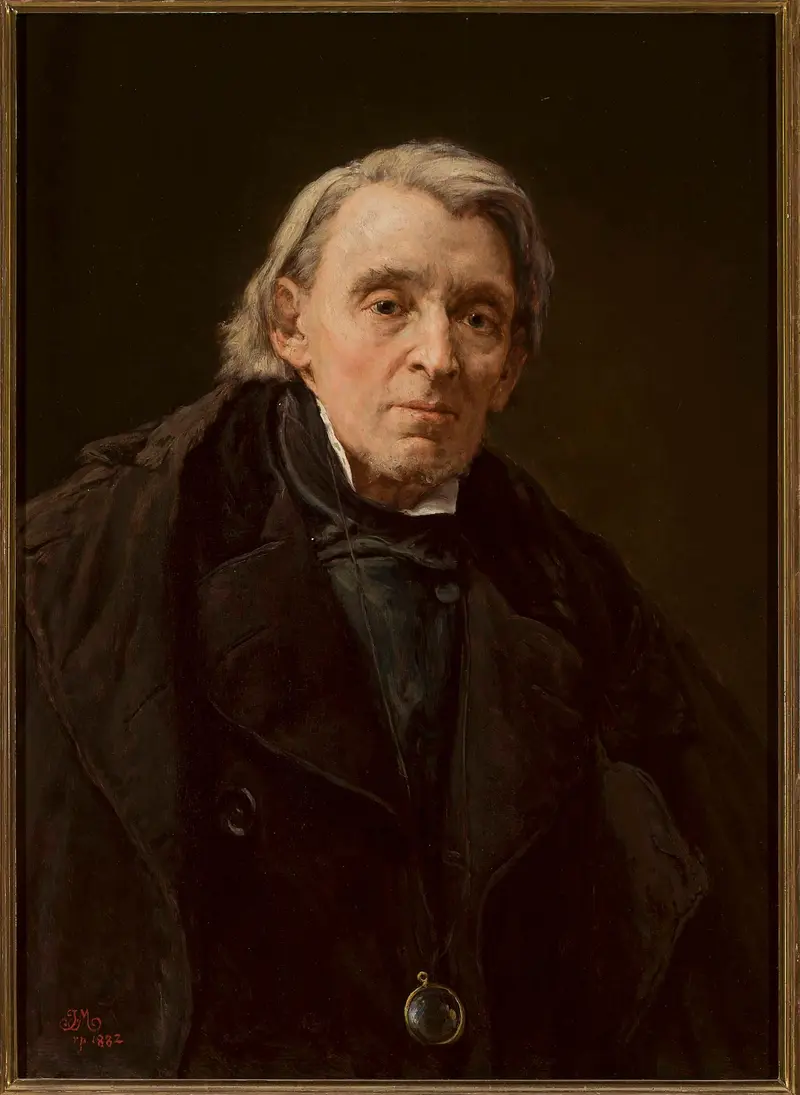
Portrait of Karol Podlewski
Jan Matejko
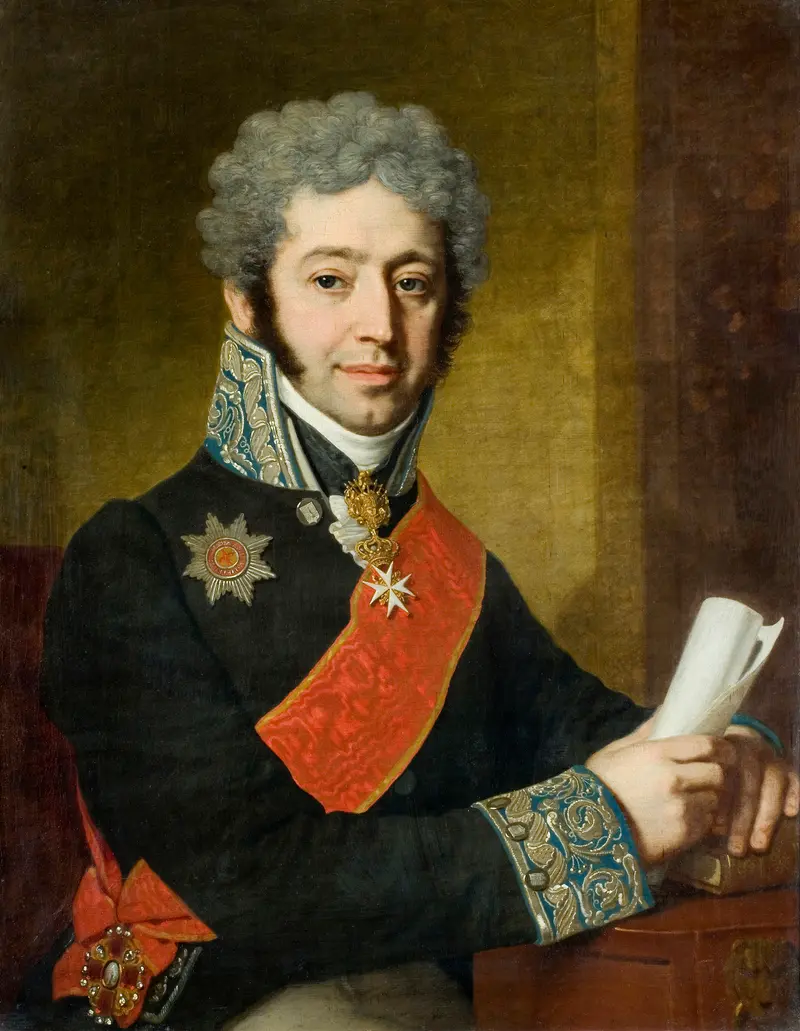
Portrait of Potocki and Poninski
Jan Matejko
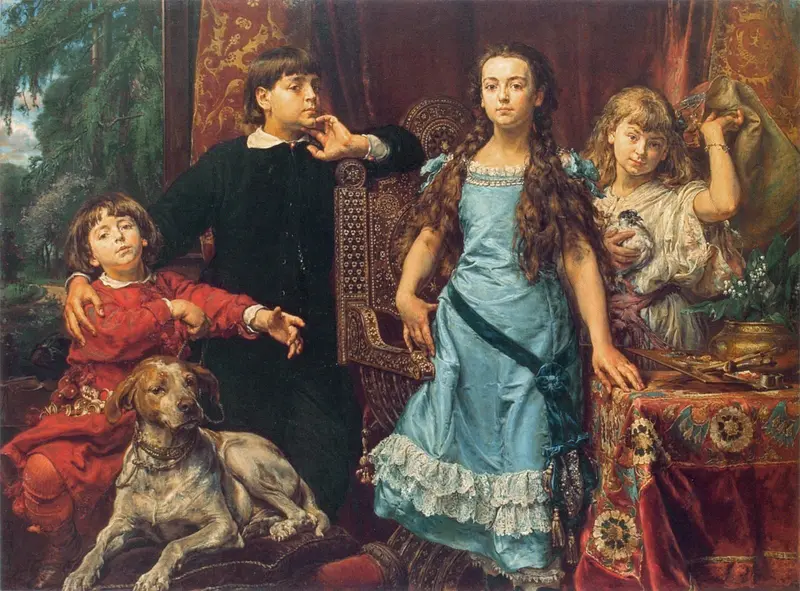
Portrait of the artist's four children
Jan Matejko
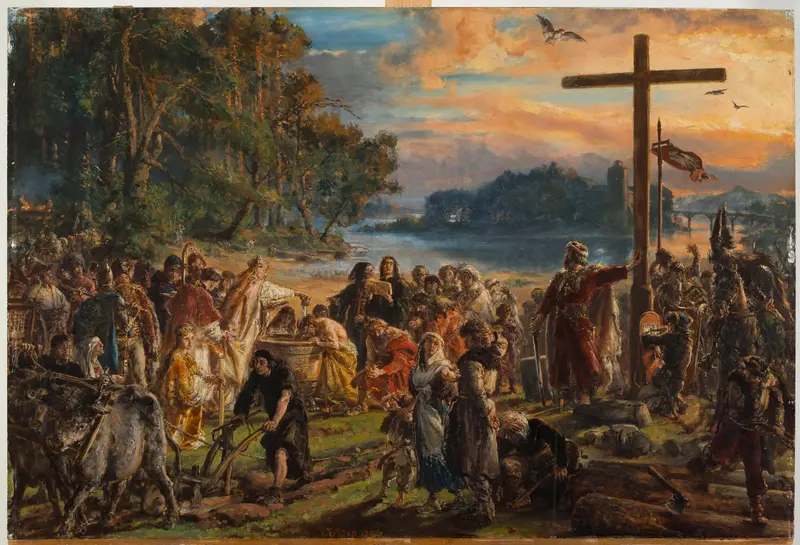
Introduction of Christianity in Poland
Jan Matejko
Janusz III Mazowiecki
Jan Matejko





