Stańczyk — History & Facts
A solitary figure in a red jester’s costume sits slumped in a high-backed chair, his hands clasped and his gaze cast downward in deep contemplation. His pointed cap, adorned with bells, droops to the sides, and his pale, somber face stands out against the vivid red of his clothing. Behind him, a heavy green curtain partially covers a window, through which the silhouette of a distant city or tower is visible, painted in muted tones that contrast with the warm interior.
The floor beneath the jester is dark, with a red cap or toy lying discarded near his feet, reinforcing the sense of abandonment and isolation. On the right, beyond a parted curtain, a lively group of elegantly dressed figures gathers in conversation and dance, their forms blurred and indistinct, illuminated by a warm, golden light that sharply contrasts with the shadowed foreground. The composition divides the painting into two worlds: the jester’s lonely vigil in the foreground and the oblivious festivity in the background, emphasizing his separation from the courtly celebration.
The brushwork is meticulous, especially in the rendering of fabrics and facial expression, with rich reds, deep greens, and warm browns dominating the palette. A crumpled piece of white paper and a small goblet rest on the table to the left of the jester, adding to the sense of disarray. The edge of the tablecloth hangs heavily and is painted with thick, textured brushstrokes.
In the background, a group of secondary figures includes a man in a feathered hat, a woman in a voluminous dress, and a child in dark clothing, all partially obscured by shadow and the curtain. The upper right corner features the suggestion of a chandelier or decorative lamp, its golden light diffused across the scene. The left edge of the painting is dominated by deep green drapery, rendered with sweeping, fluid lines.
Light falls most strongly on the jester’s face, hands, and knees, while the rest of the foreground recedes into shadow, emphasizing the dramatic contrast between illuminated and darkened areas. The painting’s central contrast between Stańczyk’s grave demeanor and the revelry behind him has made it one of the most recognizable works in the National Museum in Warsaw’s collection.
Sources: National Museum in Warsaw, record MP 433 · Wikidata Q6609268 · Wikipedia: Stańczyk (painting) · Image source (Wikimedia Commons)
More Artworks by Jan Matejko
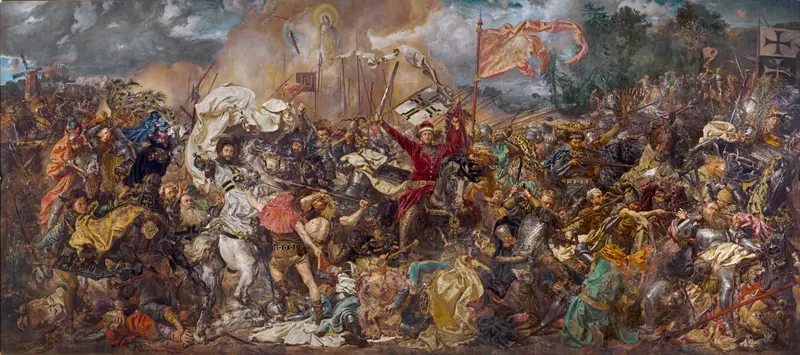
Battle of Grunwald
Jan Matejko

Battle of Raclawice
Jan Matejko
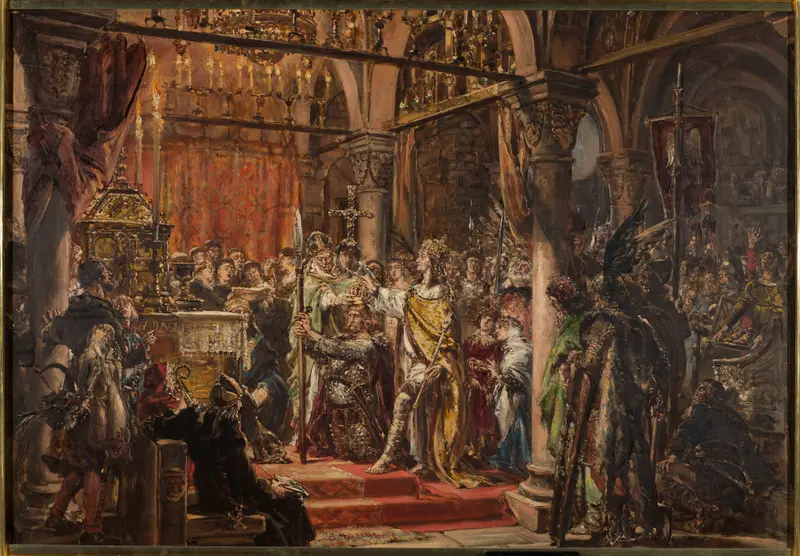
Coronation of the First King, 1001 AD, from the series “History of Civilization in Poland”
Jan Matejko
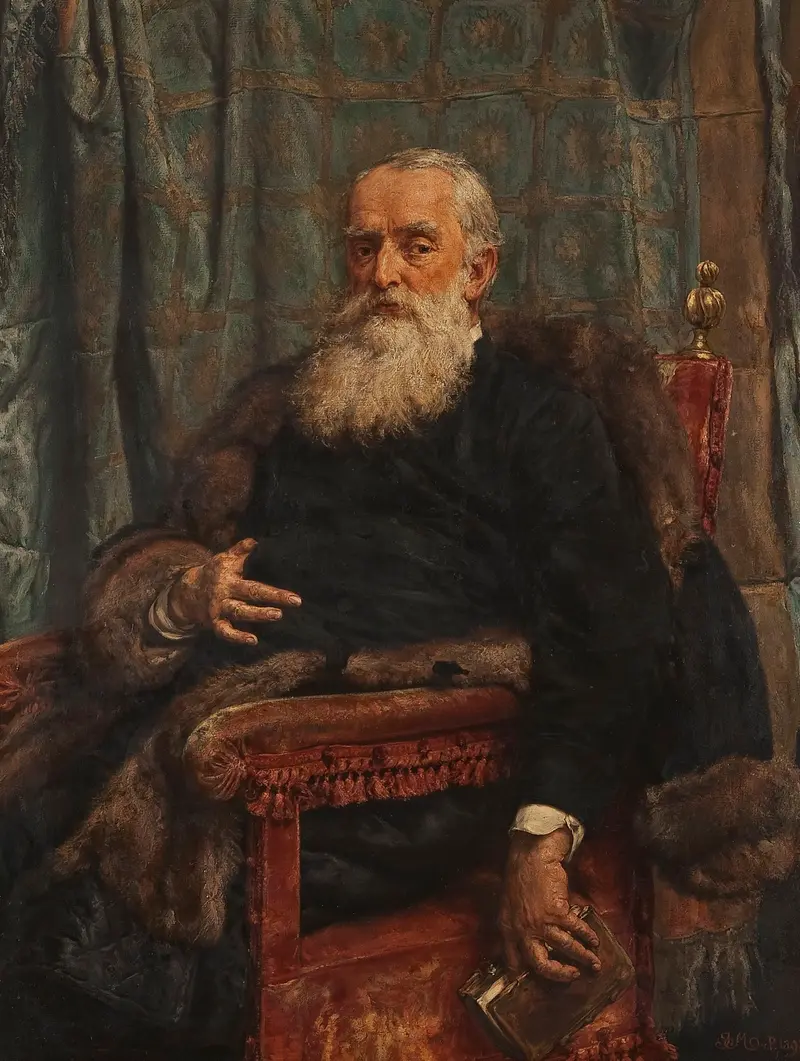
Portrait of Henryk Krajewski
Jan Matejko
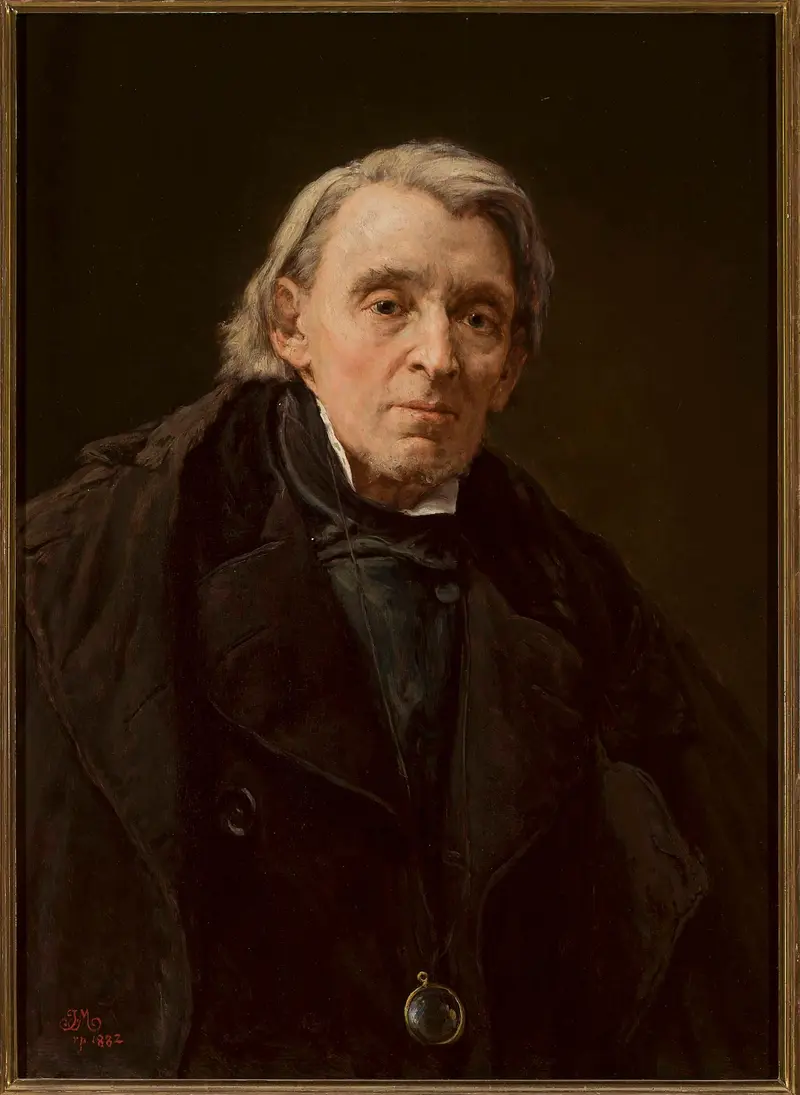
Portrait of Karol Podlewski
Jan Matejko
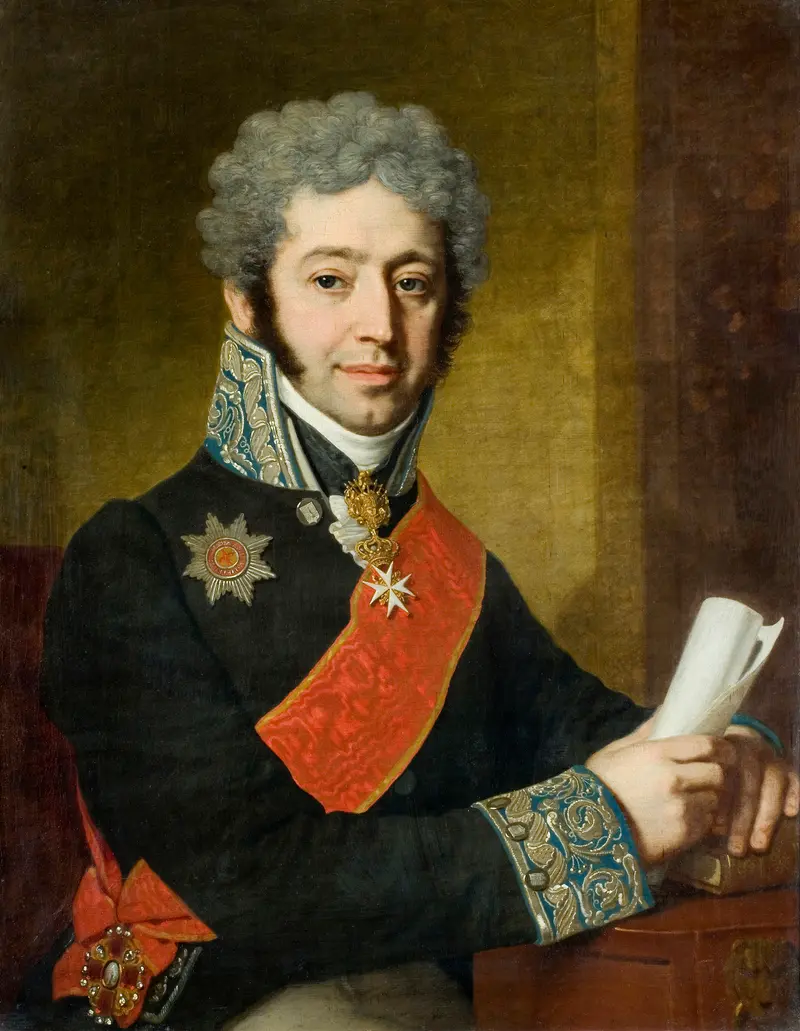
Portrait of Potocki and Poninski
Jan Matejko
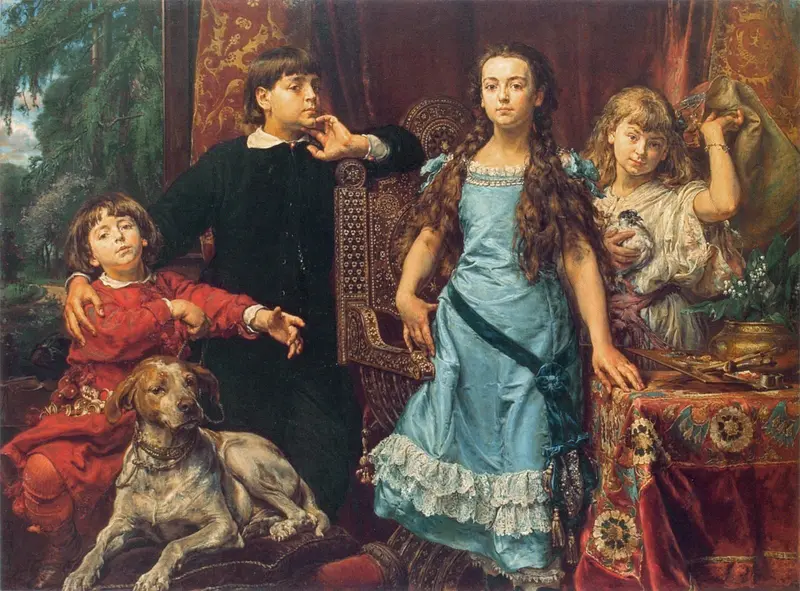
Portrait of the artist's four children
Jan Matejko
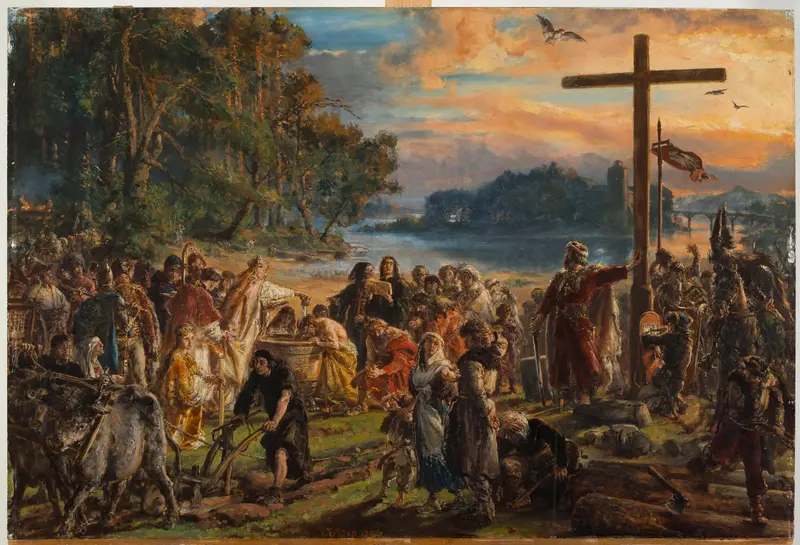
Introduction of Christianity in Poland
Jan Matejko
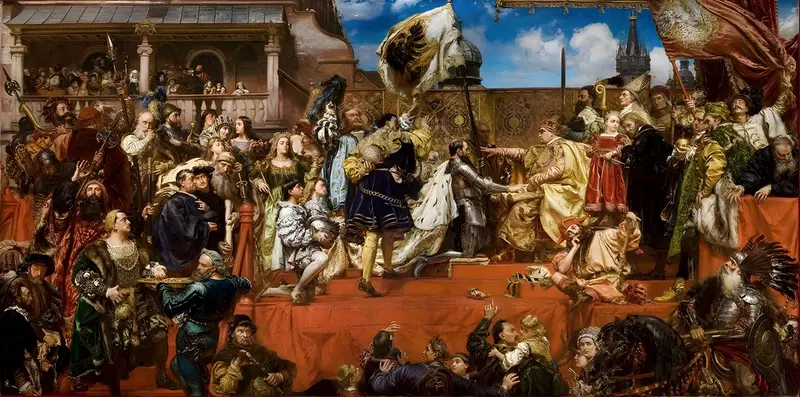
Prussian Homage
Jan Matejko
Janusz III Mazowiecki
Jan Matejko