
“Gunderunds bejlen”. — History & Facts
What first catches the eye in Gunderunds bejlen is the theatrical tension between arrival and anticipation. A lone rider, dressed in a boldly patterned tunic, sits upright on a black horse beneath a timbered archway, his gaze fixed forward, bouquet in hand. The light draws us to his face and the vivid reds and greens of his attire, setting him apart from the shadowed figures to the left.
There, a woman in white stretches out an arm, her gesture urgent, almost beseeching, as if to bridge the distance between the approaching suitor and those waiting. Above, a figure peers from an open window, heightening the sense of a moment suspended—an entrance that is both public spectacle and private drama. Painted in 1912 by Agnes Slott-Møller, this work belongs to a world where history painting and legend still held sway in Scandinavian art. The early 20th century in Denmark saw a renewed fascination with the medieval past, often filtered through a lens of national romanticism.
Artists like Slott-Møller drew on folklore and chivalric tales, using them to explore identity and longing in a rapidly modernizing society. While little is recorded about the specific journey of this painting beyond its presence in the collection of www.bruun-rasmussen.dk, its style and subject speak to a broader cultural moment—one where the past was summoned not as distant memory, but as a living stage. The viewer is left to wonder: who waits, who arrives, and what words will be spoken next?
More Artworks by Agnes Slott-Møller

Herregården Kaas i Salling-1895
Agnes Slott-Møller
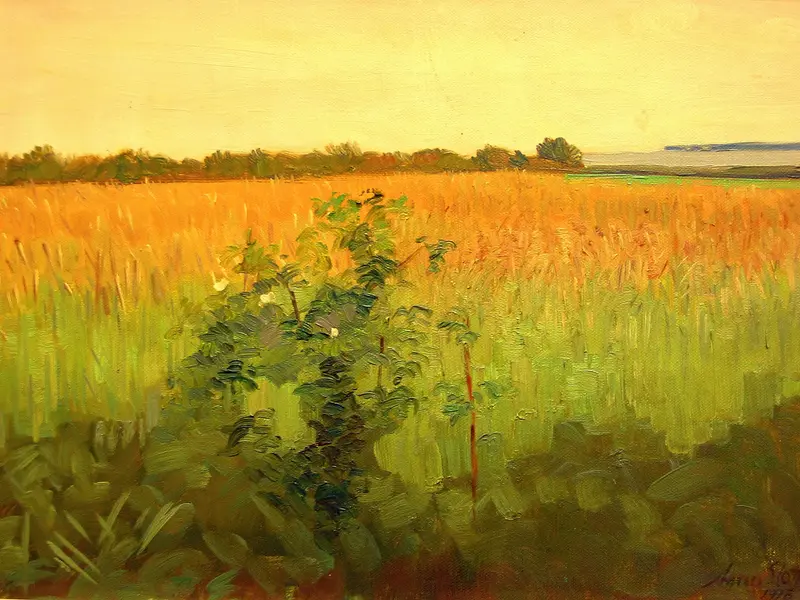
Fields
Agnes Slott-Møller
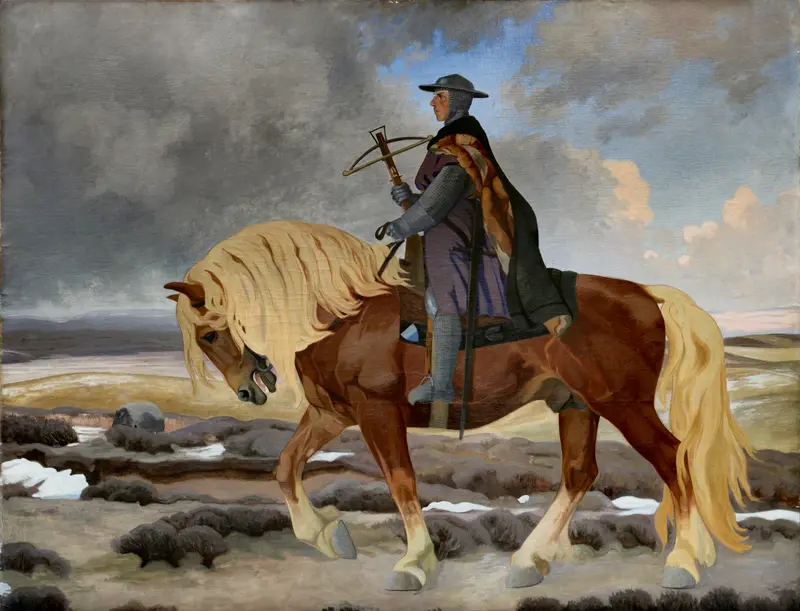
Niels Ebbesen
Agnes Slott-Møller
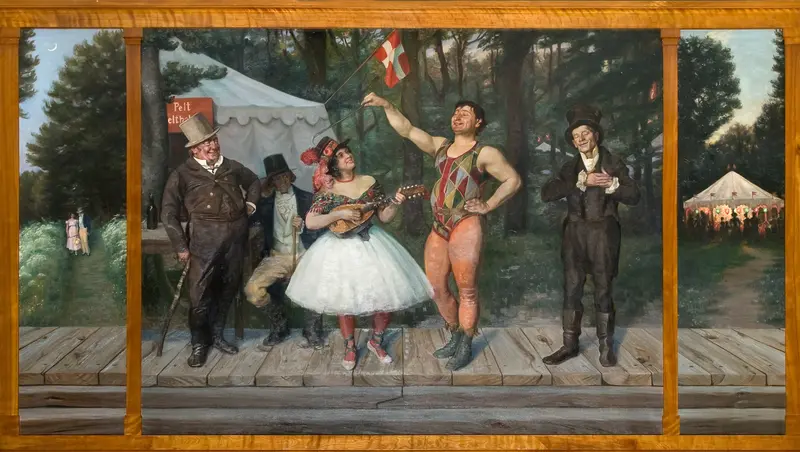
Danish Comedythe Critic and the Animal
Agnes Slott-Møller

Herregården Bangsbo i måneskin
Agnes Slott-Møller
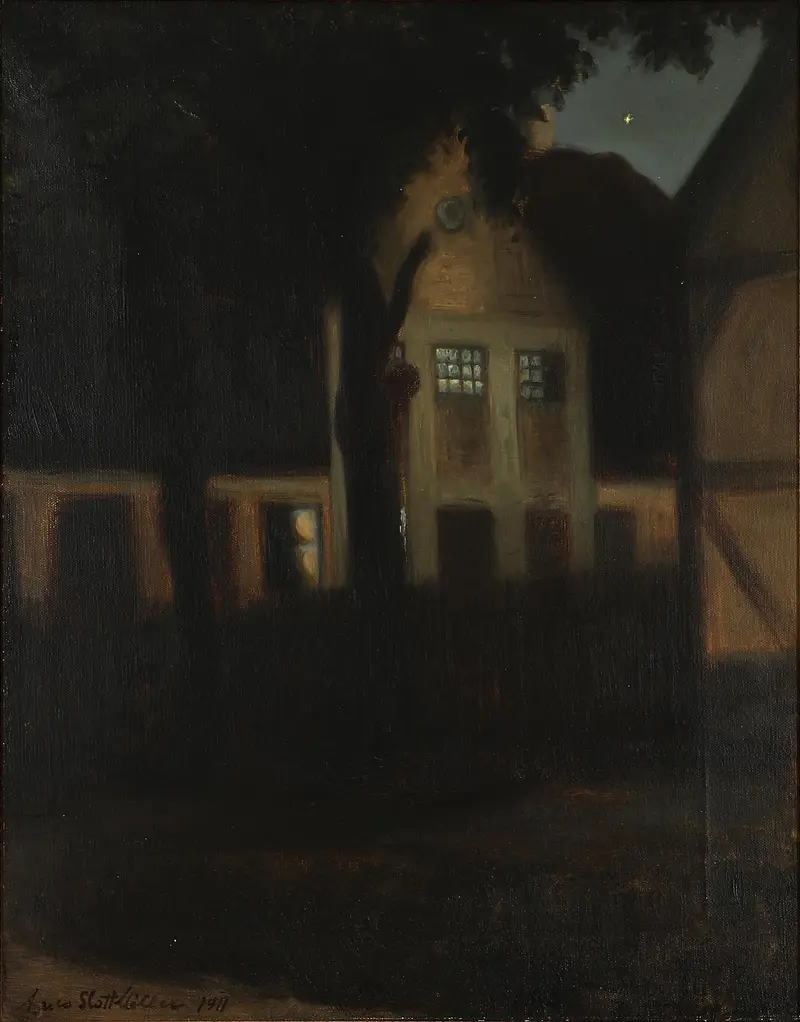
Summer evening. Ryomgaard
Agnes Slott-Møller
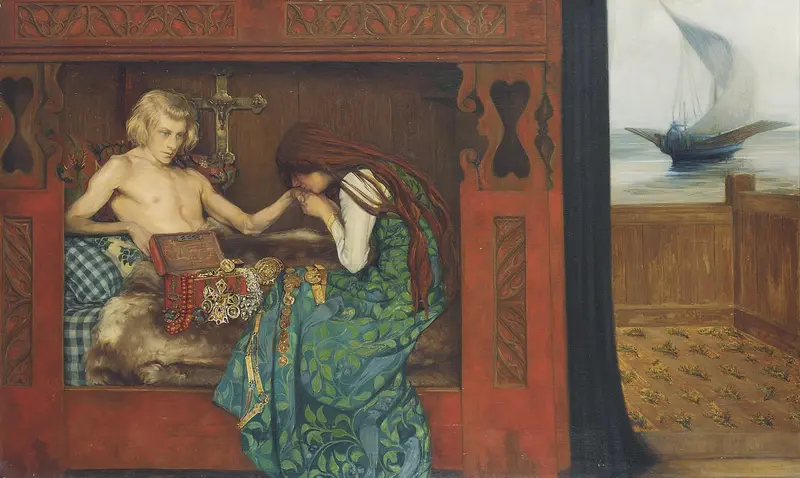
The Dying Betrothed
Agnes Slott-Møller
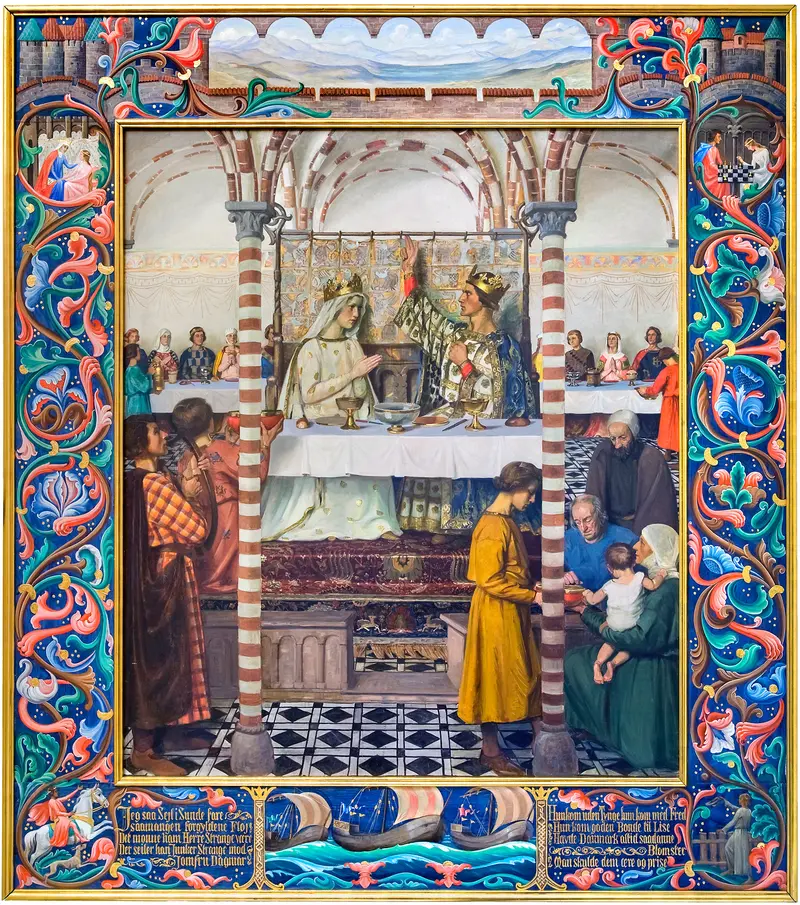
The wedding between Dagmar of Bohemia and Valdemar II of Denmark
Agnes Slott-Møller
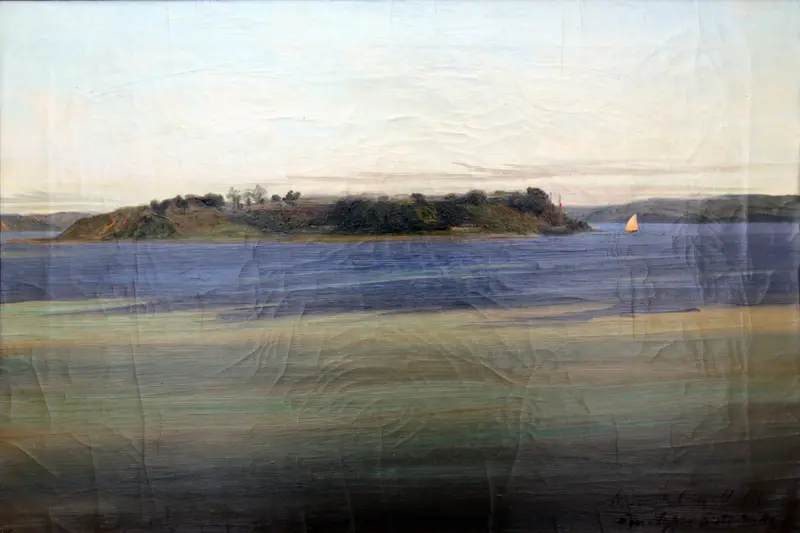
Ox island in Flensburg Fiord
Agnes Slott-Møller
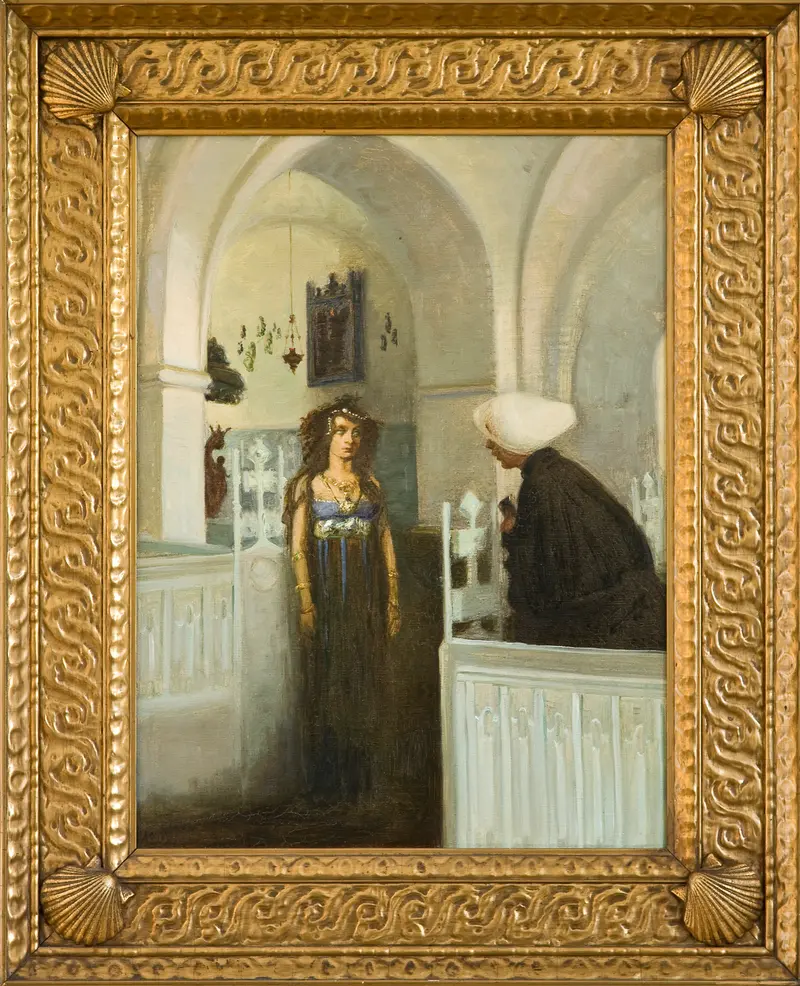
Agnete
Agnes Slott-Møller





