
Danish Comedythe Critic and the Animal — History & Facts
What instantly draws the eye in Danish Comedythe Critic and the Animal is the lively collision of types and temperaments, assembled on a makeshift stage beneath the Danish flag. The scene brims with theatrical energy: a strongman in a harlequin leotard lifts the flag aloft, his stance a parody of classical heroism, while a woman in a tutu and feathered hat strums a mandolin, her smile aimed at the crowd—or perhaps at her own private joke. To their left, a portly gentleman leans on his cane, his laughter broad and unguarded, while a more reserved figure in evening dress stands with hands folded, his expression unreadable.
The wooden planks of the stage, rendered with careful texture, lead the viewer’s gaze across this tableau of performers and spectators, each caught in a moment of self-display or silent appraisal. The palette is festive but grounded: the lush greens of the trees and the soft twilight sky frame the scene in a world that feels both everyday and enchanted. Painted between 1916 and 1917, this work by Agnes Slott-Møller captures the spirit of Danish popular entertainment at a moment when Europe was in turmoil. The setting—half fairground, half woodland—suggests a world where artifice and nature intermingle, and where the boundaries between performer and audience blur.
Such scenes were beloved in late nineteenth- and early twentieth-century Northern Europe, when artists and writers alike turned to folk traditions, local festivals, and the comic stage as sources of national identity and gentle satire. While history has kept few traces of this particular painting’s early reception, its home today at www.aros.dk places it within a collection that values the playful, the critical, and the distinctly Danish. Look again at the faces: each one is a mask, and yet each is unmistakably alive.
More Artworks by Agnes Slott-Møller

Herregården Kaas i Salling-1895
Agnes Slott-Møller
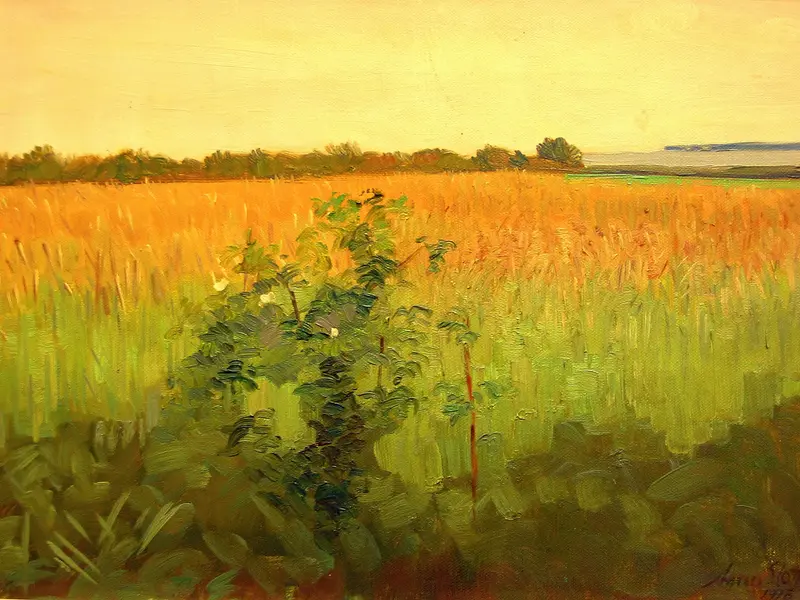
Fields
Agnes Slott-Møller
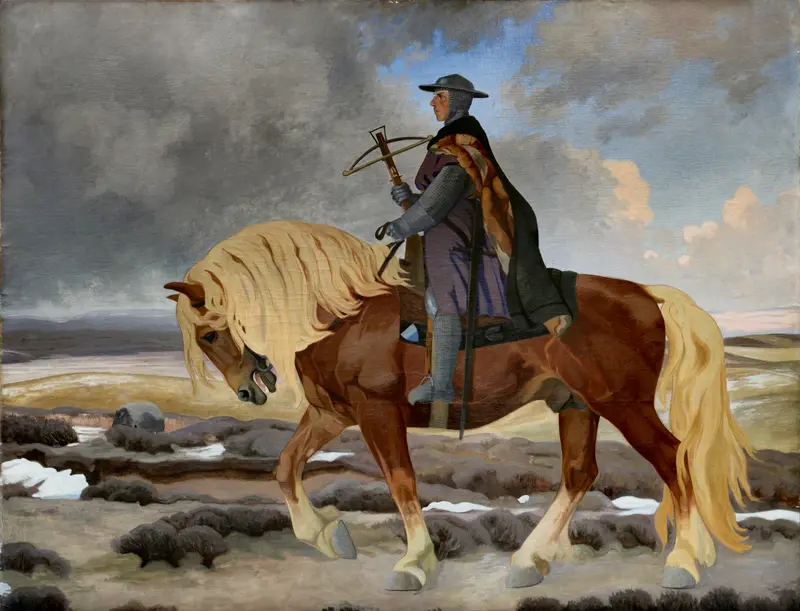
Niels Ebbesen
Agnes Slott-Møller

Herregården Bangsbo i måneskin
Agnes Slott-Møller
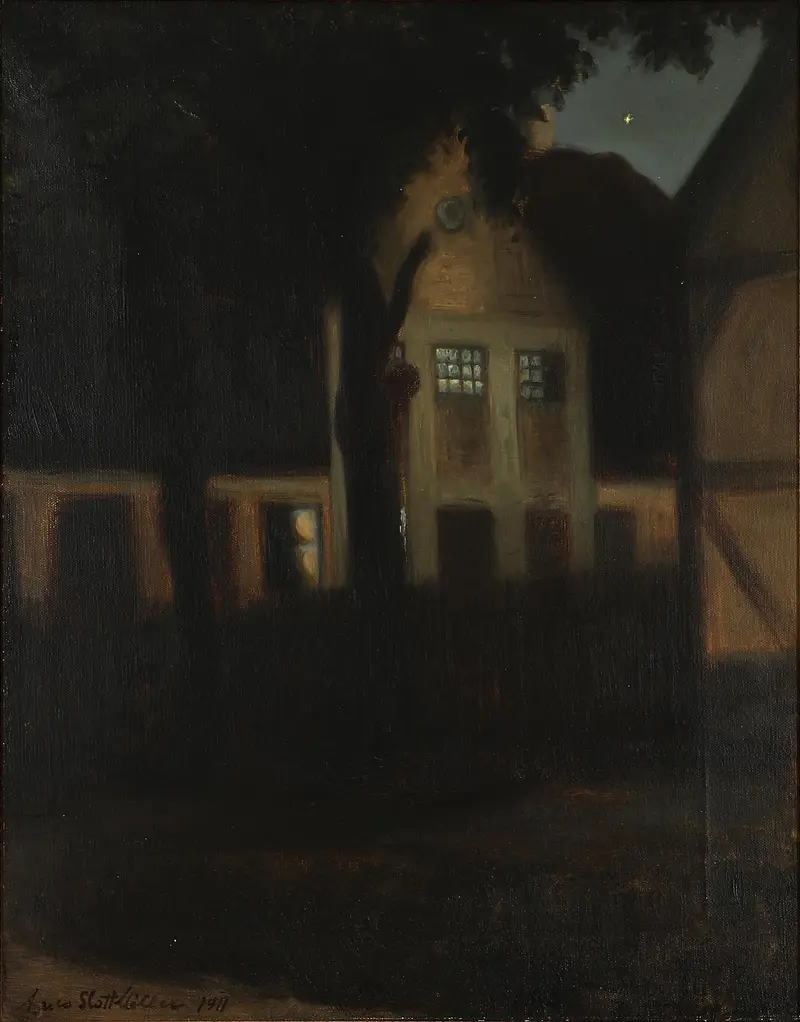
Summer evening. Ryomgaard
Agnes Slott-Møller
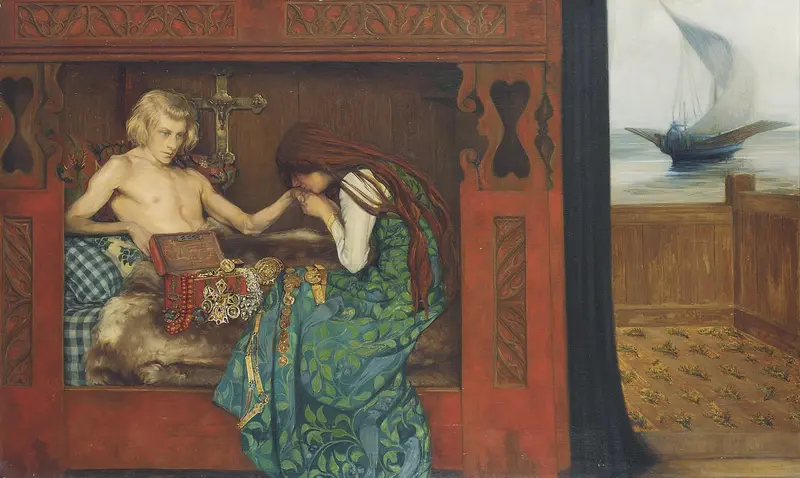
The Dying Betrothed
Agnes Slott-Møller
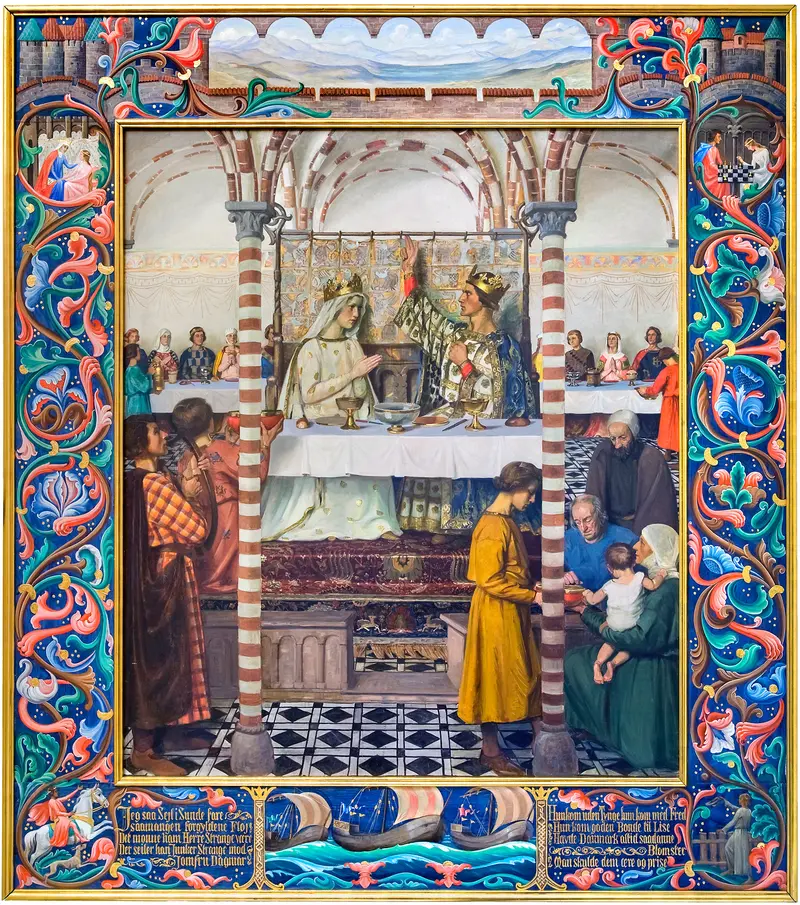
The wedding between Dagmar of Bohemia and Valdemar II of Denmark
Agnes Slott-Møller
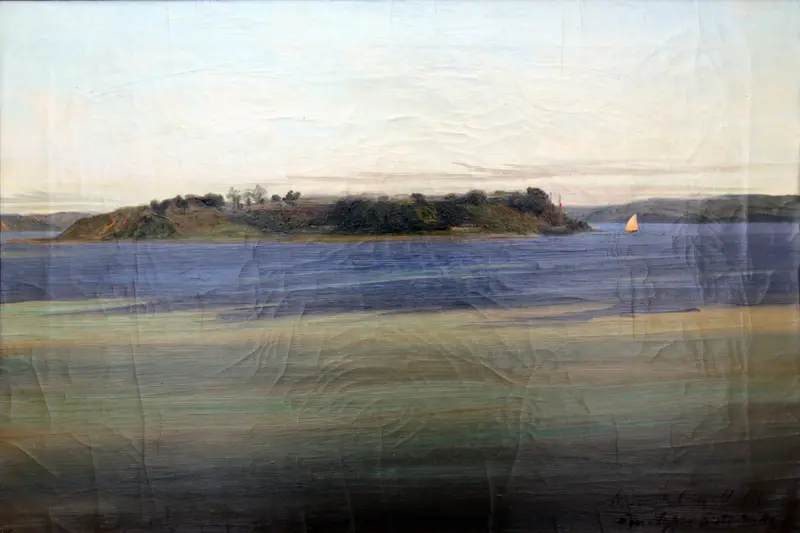
Ox island in Flensburg Fiord
Agnes Slott-Møller
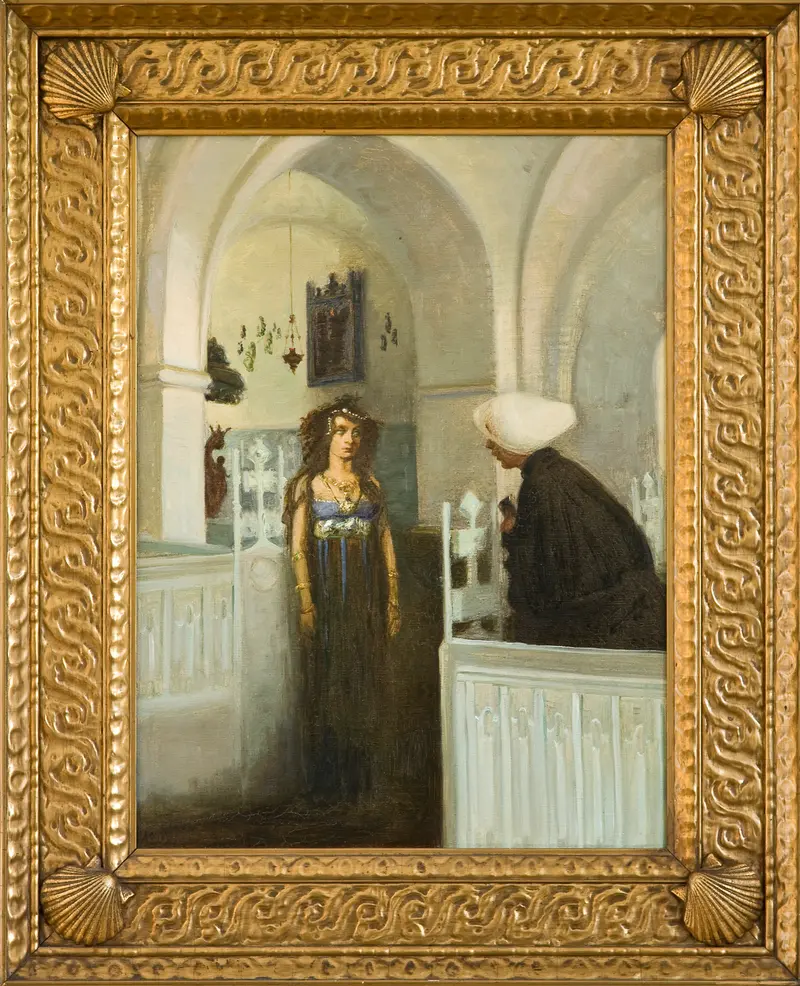
Agnete
Agnes Slott-Møller
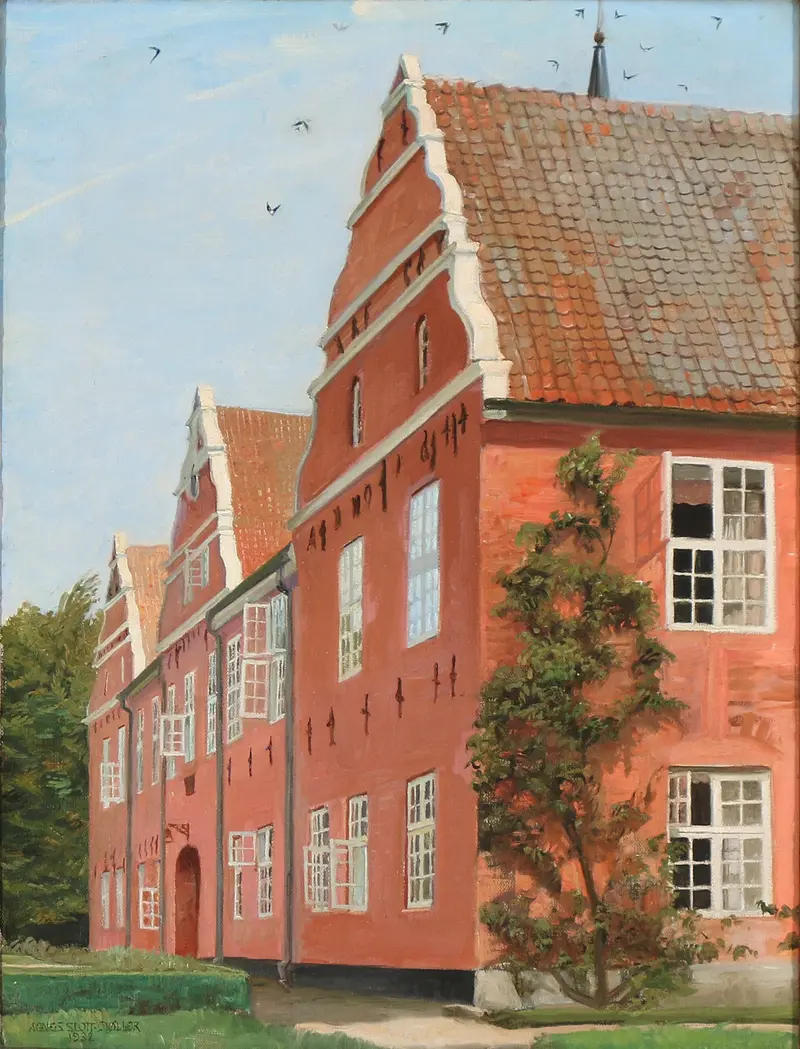
View from Løgismose Manor.
Agnes Slott-Møller
More Genre Scene Art

Banquet of the Officers of the St George Civic Guard
Frans Hals

Rembrandt and Saskia in the Scene of the Prodigal Son
Rembrandt van Rijn

Bal du moulin de la Galette
Pierre-Auguste Renoir

Quadrille at the Moulin Rouge
Henri de Toulouse-Lautrec

A Burial at Ornans
Gustave Courbet

When Will You Marry?
Paul Gauguin