Gustave Jean Jacquet La duchesse de Talleyrand Périgord — History & Facts
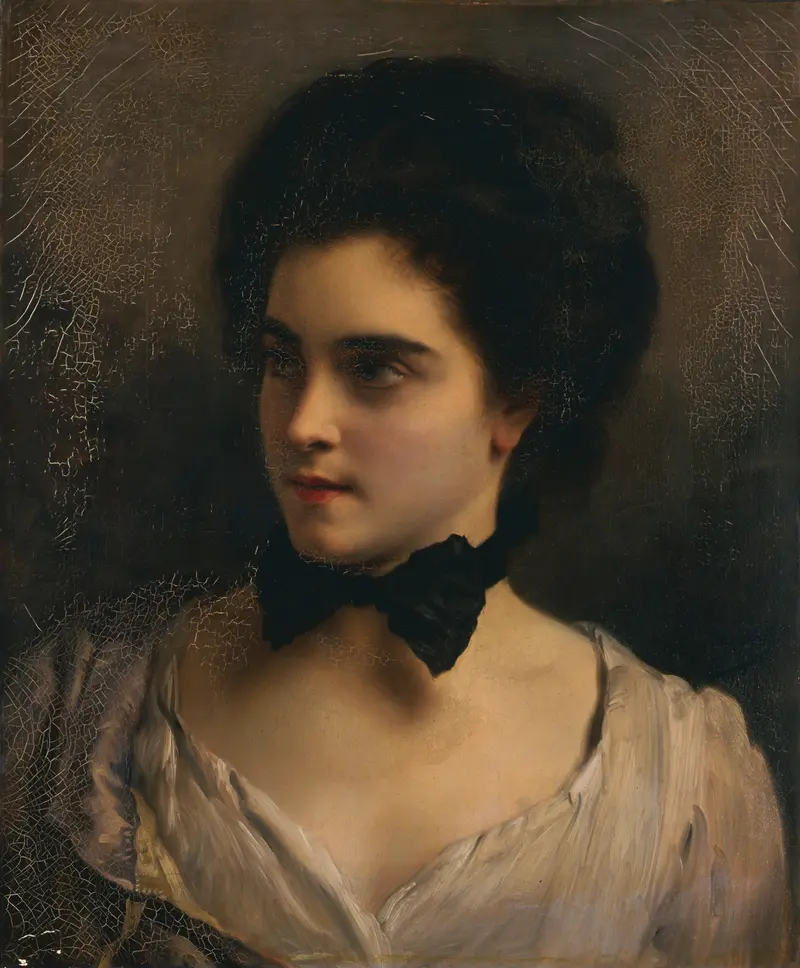
What first draws the eye in Gustave Jean Jacquet La duchesse de Talleyrand Périgord is the quiet intelligence behind the sitter’s gaze—a look that seems to weigh the viewer as much as she is being observed. The soft, almost vaporous treatment of her skin stands in sharp contrast to the crisp, white ruff encircling her neck, a detail that both frames her face and signals her status. The background, a deep and textured green, pushes her delicate features forward, while the dark dress ensures that nothing distracts from the subtle play of light across her cheeks and brow.
The pearls woven through her hair and the hint of a feather suggest a world of courtly ritual, but her expression is modern in its candor and restraint. Painted in 1880, this portrait belongs to a moment in French art when society portraiture was both a mark of social ambition and a record of personal presence. Artists like Gustave Jean Jacquet specialized in capturing the elegance and poise demanded by the era’s elite, often blending contemporary fashion with a nostalgic nod to earlier centuries. While little is recorded about the precise circumstances of this painting’s commission or its subject’s story, its survival in the Paris Musées collection speaks to the enduring fascination with faces that seem to hold their own secrets.
Look again at the sitter’s mouth—on the verge of a smile, or a thought withheld—and consider how much of history is written not in grand gestures, but in moments of stillness like this.