Harvest In Tuscany — History & Analysis
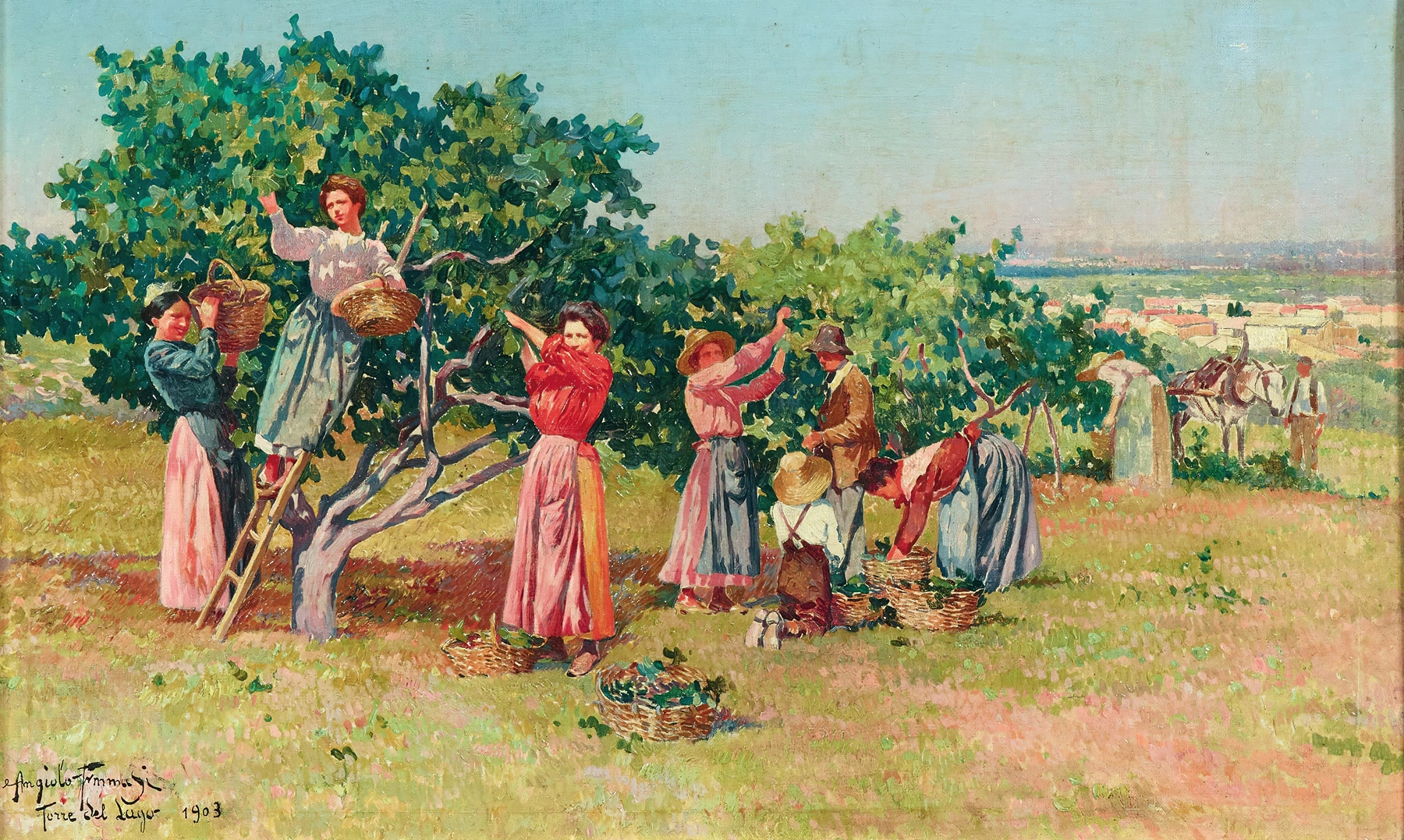
Is this a mirror — or a memory? The interplay between reality and reminiscence becomes palpable in the vibrant, pastoral hues of this piece, inviting contemplation on the delicate balance of nature and human experience. Focus first on the warm golden fields that seem to stretch infinitely, a rich tapestry of wheat swaying gently in the breeze. Notice how the brushwork captures the rhythm of the harvest, with strokes that suggest both motion and serenity.
The verdant hills in the background cradle the scene, their deep greens contrasting with the sunlit yellows, while the sky melts into a soft gradient of blue. This composition reveals the harmony Tommasi meticulously crafted, revealing a world where toil and beauty coexist. Within this harmonious depiction lies an exploration of contrasts—the laborers diligently collecting their bounty juxtaposed against the tranquil landscape, which breathes life into their efforts. The presence of the workers symbolizes a connection to the earth, suggesting that their toil not only yields sustenance but also cultivates a profound relationship with nature.
The balance between labor and leisure, the human and the divine, echoes through the painting, reminding us of our intertwined existence with the land. Created during a time of burgeoning Impressionism, this piece reflects Tommasi’s experiences in the late 19th century, likely while he was immersed in the Tuscan countryside. The artist, influenced by the natural light and vibrant landscape, sought to capture the essence of rural life amidst an evolving art world that was beginning to embrace spontaneity and the fleeting moments of daily life.