
Head — History & Facts
What first seizes the viewer in Head is the electric charge of color—an intensity that radiates outward, as if the sitter’s very presence is burning through the canvas. The face, rendered in fierce oranges, yellows, and greens, seems to hover between mask and apparition, the dark pools of the eyes drawing you in with their heavy, almost ceremonial outlines. There is nothing casual here: every brushstroke pushes the boundaries of likeness, transforming the sitter into an icon of emotion.
The mouth, slightly open, suggests a moment caught between speech and silence, while the wild, halo-like hair blazes against the fiery background, amplifying the sense of inner heat and turmoil. Painted in 1912, this work belongs to a world where artists like Alexej von Jawlensky were breaking away from tradition, seeking new ways to express the inner life through color and form. In the years leading up to the First World War, Expressionism surged across Europe, with painters using bold, unnatural hues to convey psychological depth rather than mere appearance. Works like this were rarely made for wealthy patrons or grand salons; instead, they were acts of personal exploration, often shown in small, radical exhibitions or kept in the studios of their makers.
History has kept few traces of this particular painting’s early journey, but its raw energy and experimental spirit remain as immediate as ever—inviting you to look again, and feel the pulse of its time.
More Artworks by Alexej von Jawlensky

Murnau
Alexej von Jawlensky
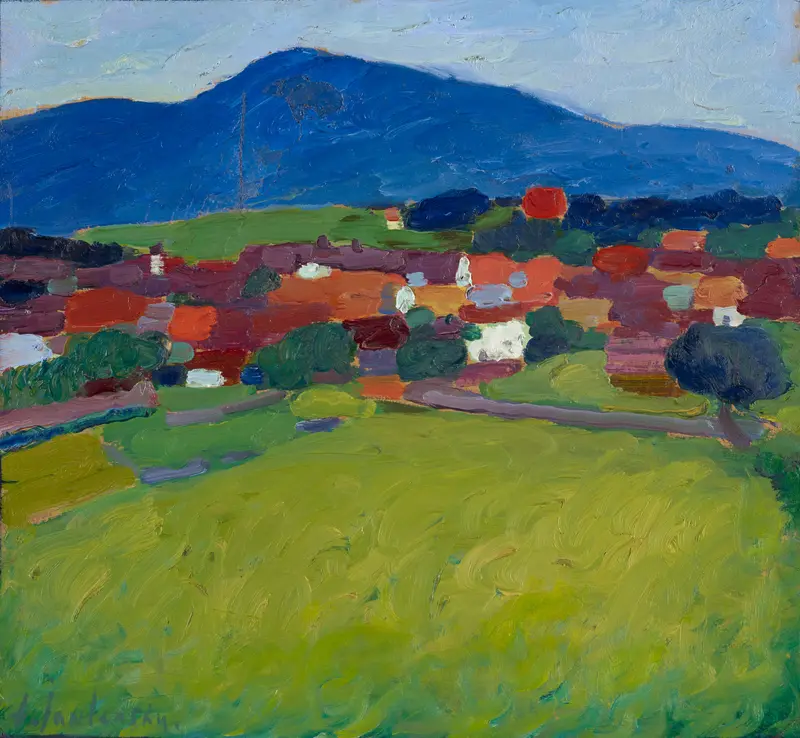
The Village Of Murnau
Alexej von Jawlensky
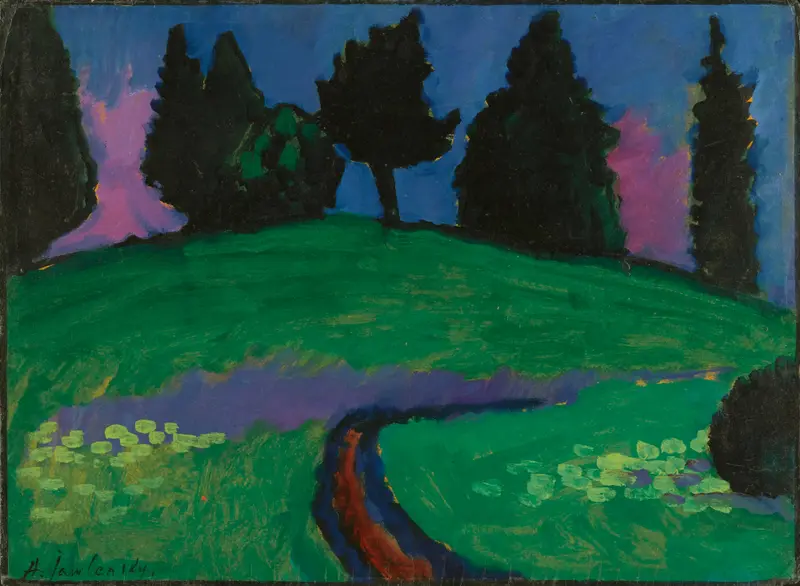
Dunkle Bäume über Grünem Hang (Dark Trees Over Green Slope)
Alexej von Jawlensky
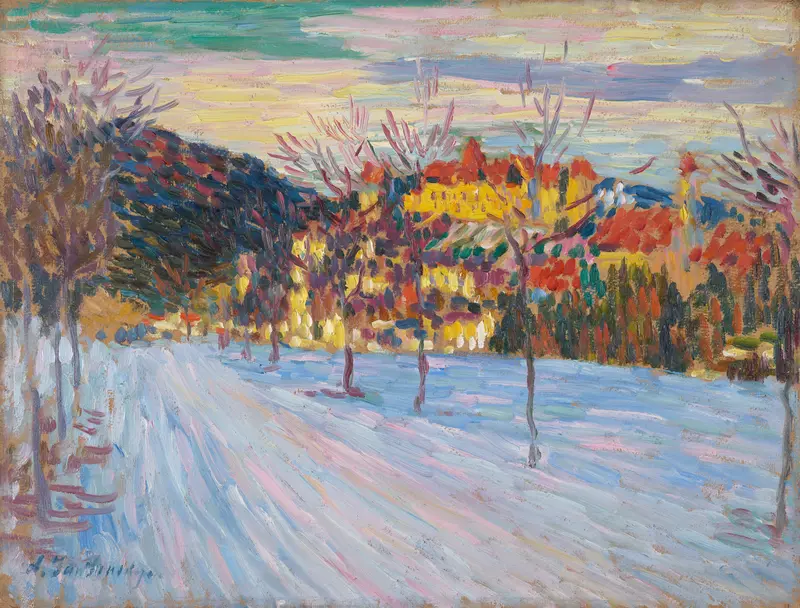
Füssen
Alexej von Jawlensky
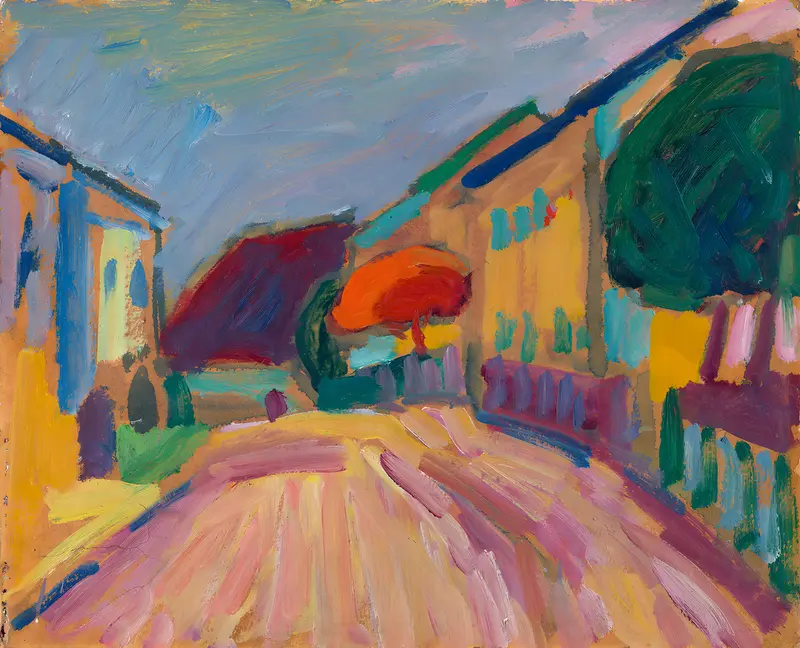
Sketch from Murnau
Alexej von Jawlensky
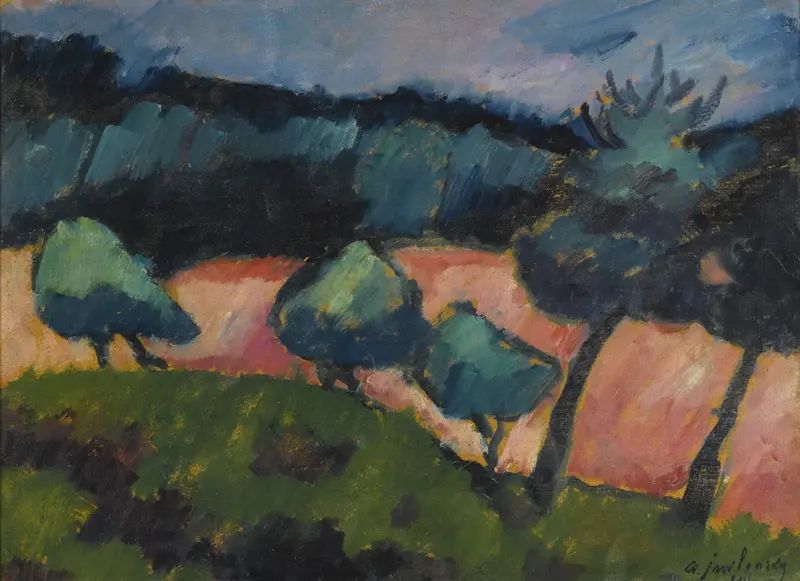
Bäume und Dünen in Prerow (Trees and dunes in Prerow)
Alexej von Jawlensky
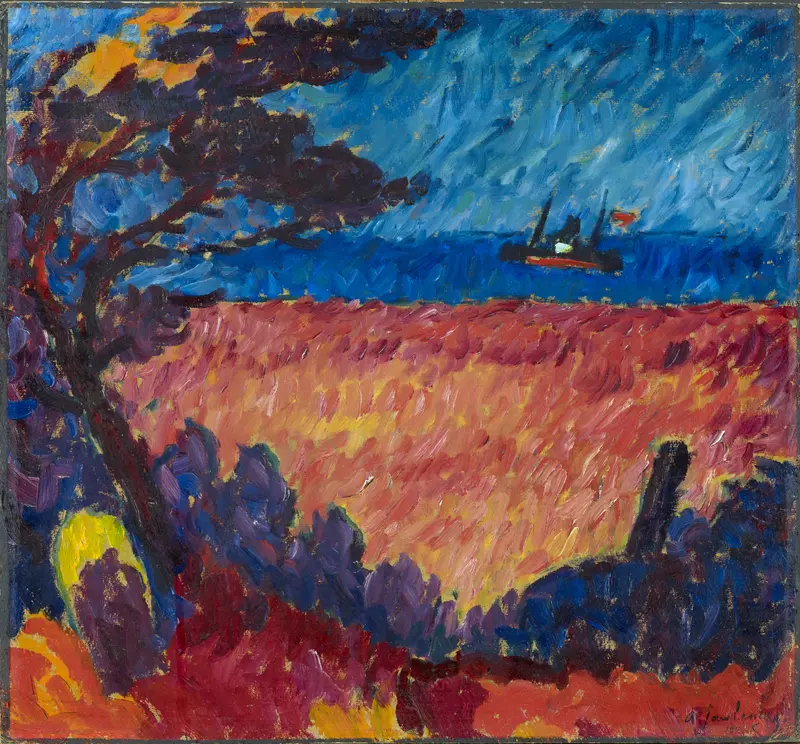
At The Baltic Sea
Alexej von Jawlensky
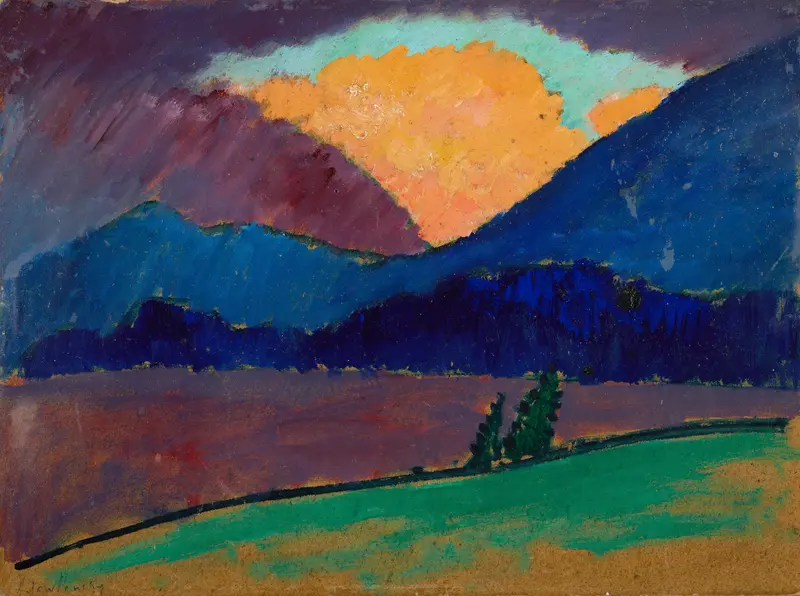
Summer evening in Murnau
Alexej von Jawlensky
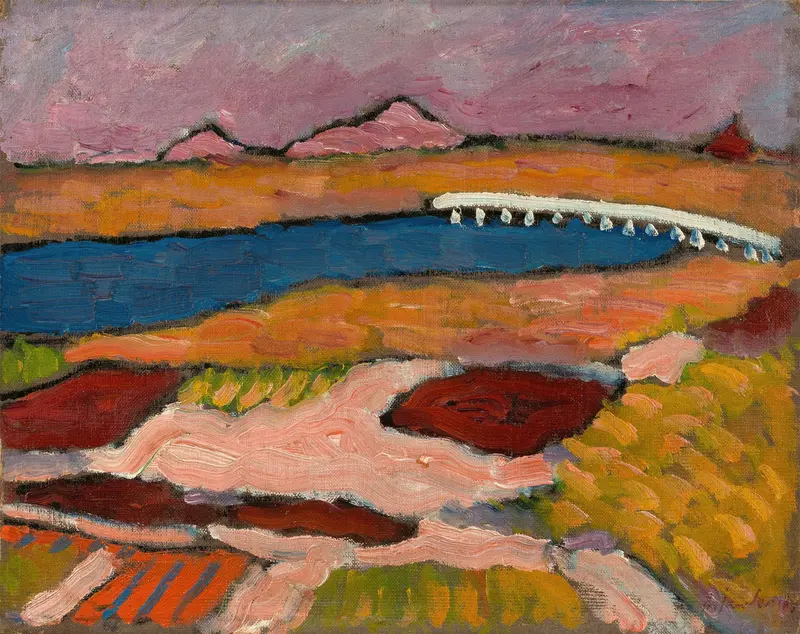
Prerow (Darß), Pommern
Alexej von Jawlensky
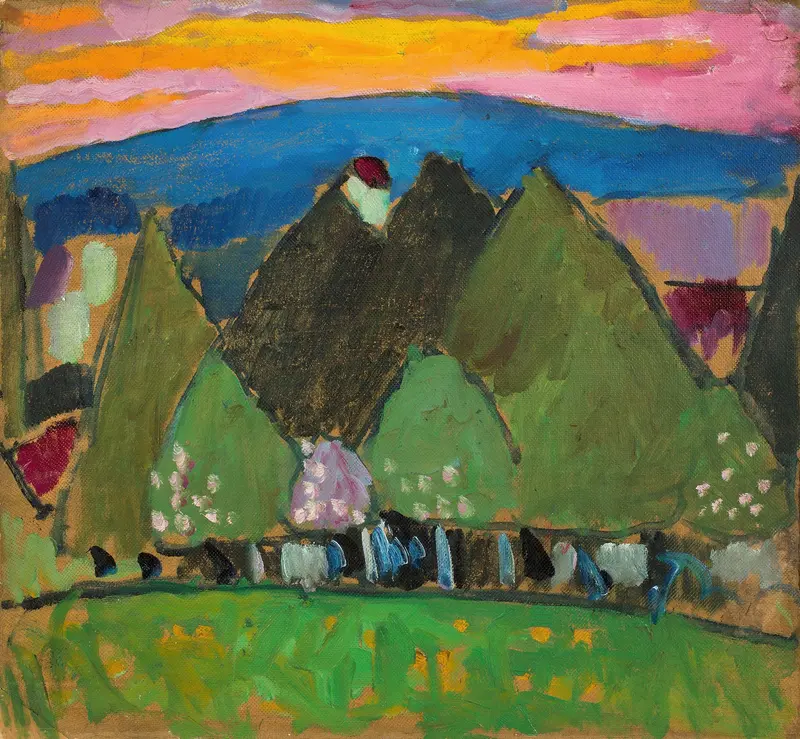
Landschaft mit Bäumen
Alexej von Jawlensky





