
Heimkehr im Abendrot — History & Facts
In the delicate interplay of hues, fragility emerges, whispering secrets of the human condition. Focus on the left side of the composition, where a warm glow bathes the landscape in golden light, creating a striking contrast with the cool blues of dusk encroaching from the right. The gentle brushstrokes evoke the softness of an evening breeze as they form silhouettes of a humble home nestled among the rolling hills. Notice how the fading sun drapes a tender embrace around the scene, illuminating the figures making their way home — their postures convey both weariness and hope as they navigate the threshold between day and night. At the heart of the piece lies a duality: the comfort of returning juxtaposed with the inevitable passage of time.
The fading light reflects life's transience, intimating that moments of warmth are fleeting. Each figure, though small in scale, carries the weight of their journey, symbolizing a collective longing for belonging and safety amid a world painted in twilight. The colors blend harmoniously, yet the encroaching darkness hints at the fragility of these cherished memories, reminding us that the beauty of life is often tinged with uncertainty. Created in 1844, this artwork emerged during a time of significant change in Europe, marked by political upheaval and shifts in artistic expression.
Raffalt, deeply entrenched in the Romantic movement, sought to capture emotional resonance through landscape and human experience. As he painted in the serene landscapes of his native Austria, he reflected society's yearning for solace and connection in an era where both were increasingly challenged.
More Artworks by Ignaz Raffalt
Browse all →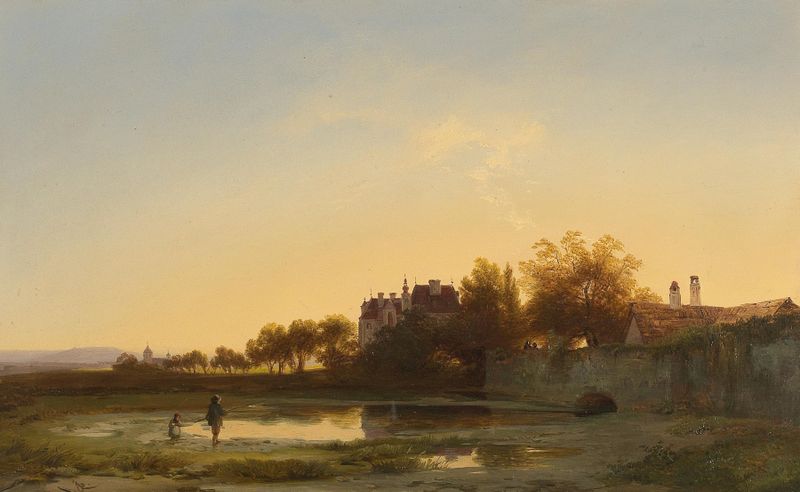
Angler in the evening light by the castle pond
Ignaz Raffalt
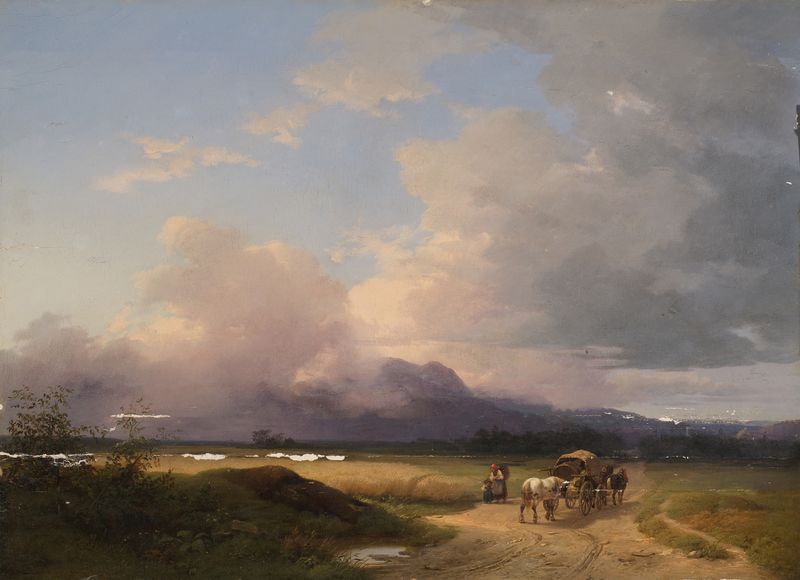
Voralpenlandschaft mit Fuhrwerk auf der Straße
Ignaz Raffalt

Hainbach near Vienna
Ignaz Raffalt

Resting in front of the Inn
Ignaz Raffalt

Stormy Landscape
Ignaz Raffalt
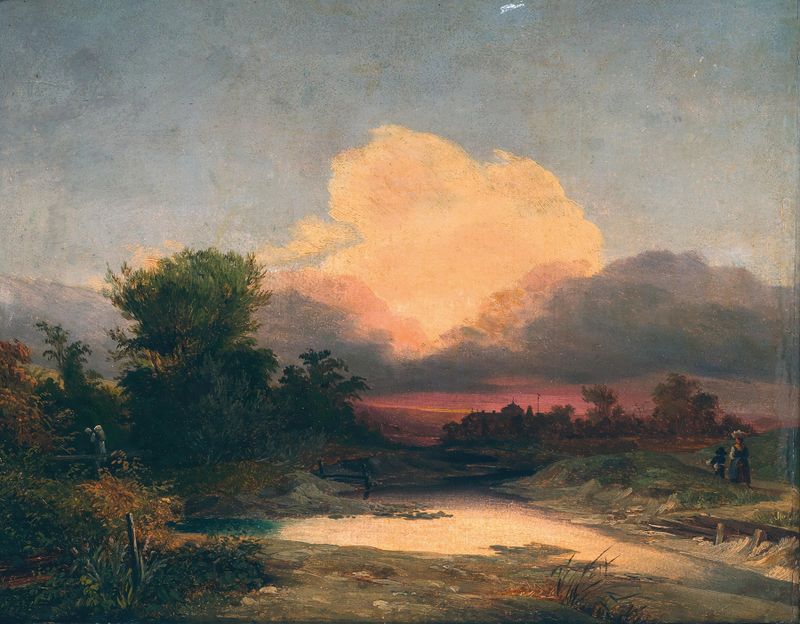
A Landscape at Sunset
Ignaz Raffalt
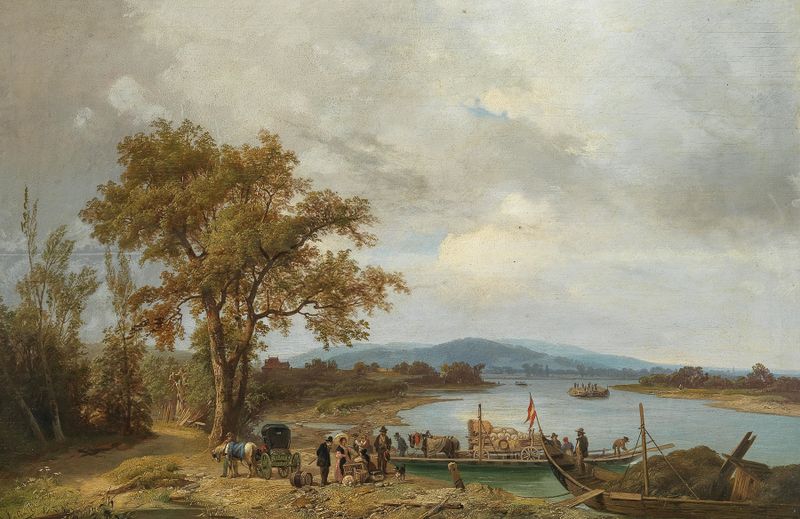
A Danube Landscape with Ferries
Ignaz Raffalt
A Hunter Resting on a Country Road
Ignaz Raffalt
Resting at noon
Ignaz Raffalt
Abendstimmung
Ignaz Raffalt





