
Helbigs und katholische Hofkirche — History & Facts
Can paint confess what words never could? In Helbigs und katholische Hofkirche, a profound dialogue unfolds between architecture and emotion, encapsulating a moment poised on the brink of transformation. Look to the foreground, where the graceful lines of the Hofkirche rise majestically against the backdrop of a dimming sky. The intricate details of the building's facade draw the eye, while muted tones of gray and earth intersperse with fleeting warmth, capturing the twilight glow. Notice how the interplay of light and shadow reveals the craftsmanship in each stone, elevating the structure from mere architecture to a breathing entity.
The composition invites you to explore depths and heights, creating a sense of both stability and vulnerability. As you delve deeper, contrasts emerge—the tension between the solidity of the church and the ethereal quality of the sky behind it suggests a looming change. The gathering clouds convey a sense of unease, hinting at the revolutionary spirit that swept across Europe at the turn of the century. This painting is not just a simple representation of a building; it reflects a society caught in the throes of transition, where faith and doubt coexist, urging viewers to ponder their own beliefs and the shifting tides of their time. Walter Zeising created this work in 1905 amid a wave of artistic innovation in Germany.
At the time, movements like Expressionism and Impressionism were reshaping the art landscape, while social and political upheaval loomed in the backdrop. This period of uncertainty and transformation informs the emotional depth of Helbigs und katholische Hofkirche, marking it as a significant reflection of both personal and collective strife during a crucial moment in history.
More Artworks by Walter Zeising
Browse all →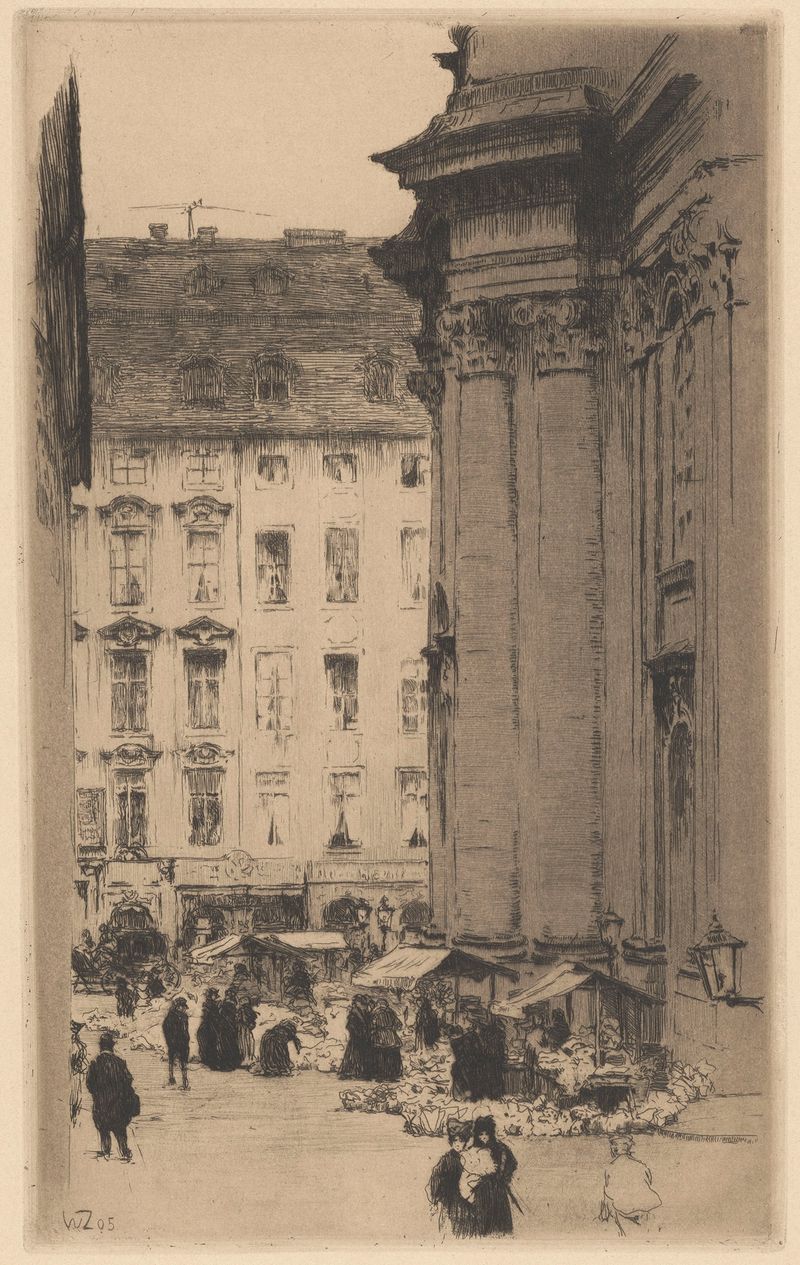


More Architecture Art
Browse all →
The statue of Liberty
Frédéric Auguste Bartholdi

View of Houses in Delft, Known as ‘The Little Street’
Johannes Vermeer

View of Houses in Delft, Known as ‘The Little Street’
Johannes Vermeer

The Cathedral in Rouen. The portal, Grey Weather
Claude Monet

The yellow house
Vincent van Gogh

The Church in Auvers-sur-Oise, View from the Chevet
Vincent van Gogh