Laterne am Güntzplatz — History & Facts
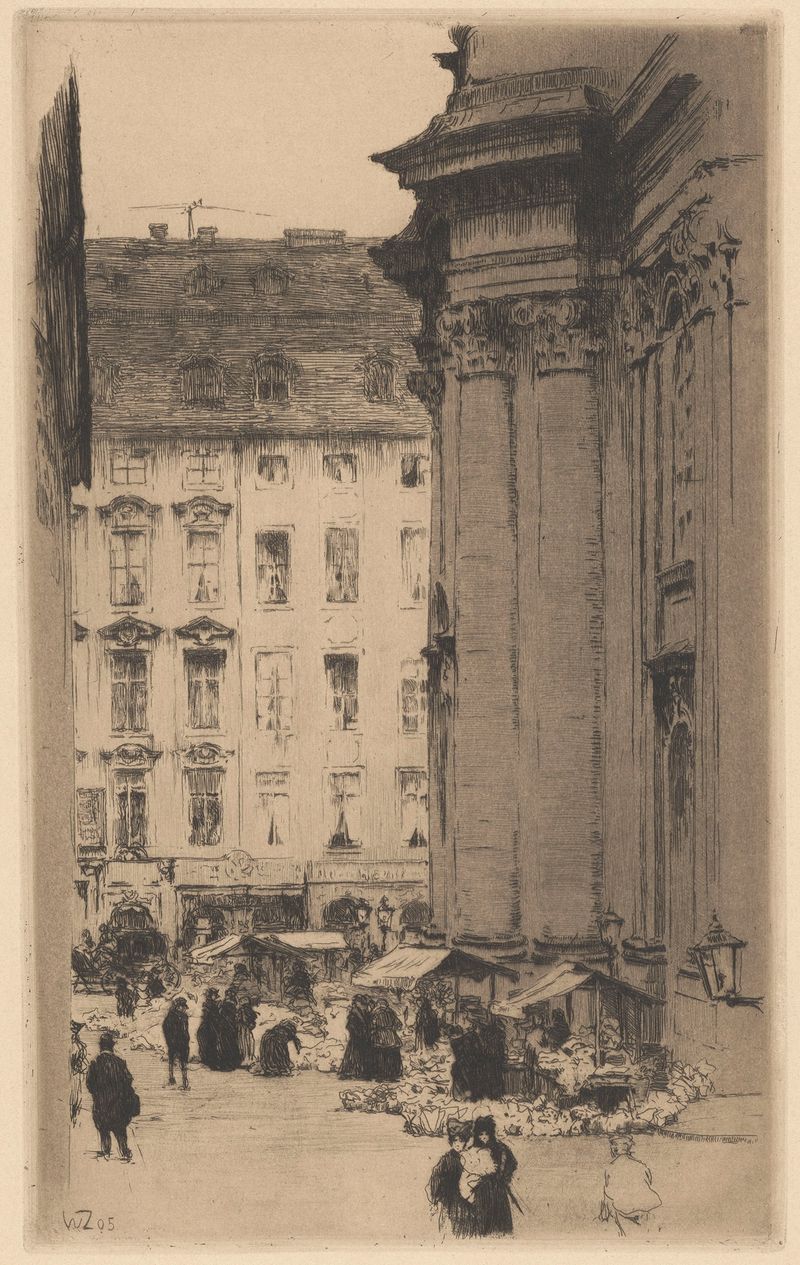
In the hush of the twilight, something stirs beneath the surface, a whisper of awakening, urging us to look closer at the stillness of the scene before us. Focus on the lantern at the center, glowing softly against the encroaching darkness. Its light spills onto the cobblestones, glinting with a warm, inviting hue that draws the eye. Notice the muted blues and grays of the surrounding buildings, standing in stark contrast to the vibrant amber.
The composition cleverly balances the intimate illumination of the lantern with the broader shadowy contours of the cityscape, creating an atmosphere that feels both serene and charged with latent energy. Dig deeper into the symbolism, where the lantern serves as a beacon of hope amidst the encroaching night. Each cobblestone seems to tell a story, a testament to the passage of time that connects the past with the present. The stillness hints at unseen lives moving just beyond the canvas, while the solitary light suggests moments of introspection and revelation, reflecting a universal longing for connection in a fragmented world. In 1905, Walter Zeising was immersed in the vibrant art scene of Germany, where the turn of the century brought a surge of innovation and change.
Living in a period marked by social tension and artistic exploration, he painted this piece in a bid to capture the quiet beauty of everyday life, merging the old world with the new. His work reveals a unique perspective, blending realism with an emerging modernist sensibility, making each brushstroke resonate with the heartbeat of his time.