Hercules ontvoert Jole — History & Facts
Could a single brushstroke hold eternity? In Hercules ontvoert Jole, a moment is captured that reverberates with the weight of innocence and desire, inviting us to explore the depths of human emotion through art. Look closely at the top left corner where Hercules stands, his muscular form rendered with meticulous detail, casting a powerful yet tender gaze upon Jole. The contrast of rich, deep colors against the soft hues surrounding her creates an immediate visual tension. The background landscape, with its gentle curves and fading light, draws your eye towards the central figures, emphasizing the emotional pull of the scene.
Each element is painted with precision, from the flowing drapery of Jole’s garments to the delicate contours of her face, suggesting both vulnerability and longing. The composition speaks volumes about the relationship between strength and innocence. The juxtaposition of Hercules's robust figure against Jole's fragility not only highlights their physical contrast but also evokes a struggle between desire and the preservation of purity. The subtle expressions on their faces tell a story of conflicting emotions—his determination intertwined with her hesitance, making the viewer question the nature of love and captivity.
In this moment, we sense the weight of choices made in the name of desire. Hans Sebald Beham created this work in 1544, a time when the German Renaissance was flourishing, and artists were deeply influenced by classical themes. Living in Nuremberg, Beham was part of a movement that embraced both humanist ideals and intricate printmaking techniques. The era was marked by an exploration of mythology and morality, and this painting reflects his mastery in blending narrative with visual artistry, making a timeless statement on the complexities of human relationships.
More Artworks by Hans Sebald Beham
Browse all →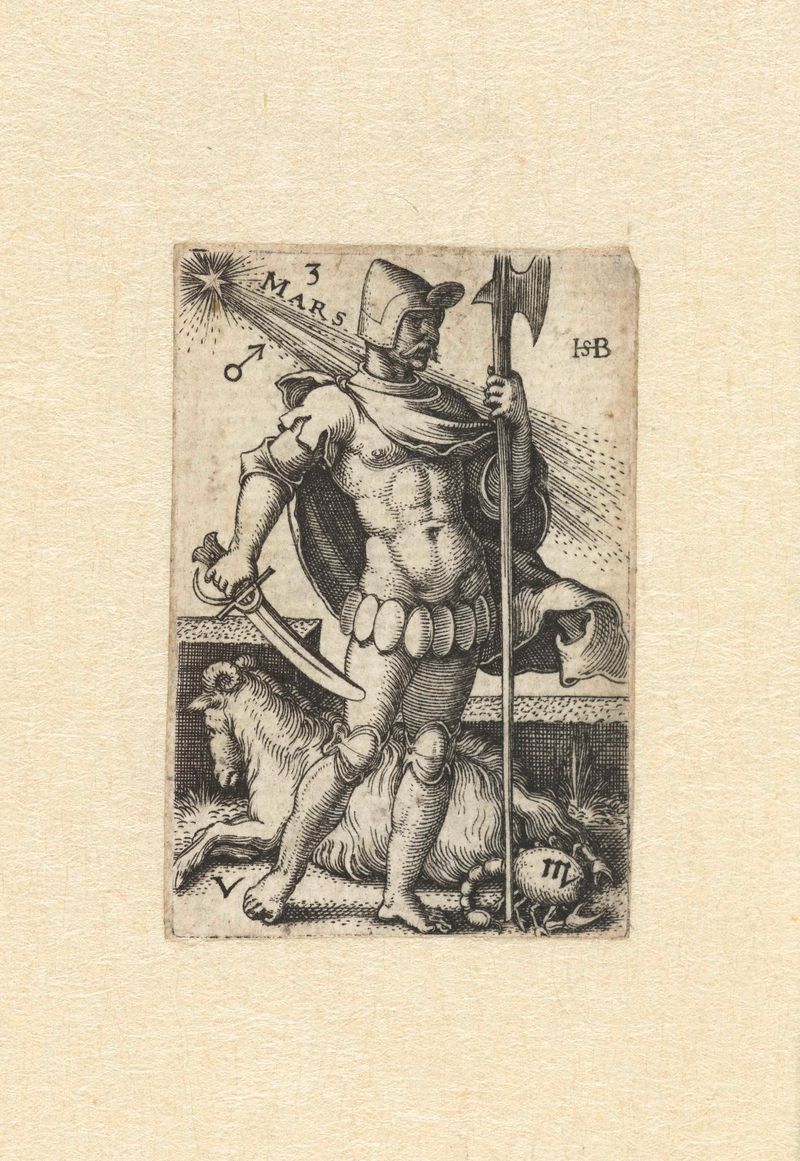
Mars met sterrenbeelden Ram en Schorpioen
Hans Sebald Beham

Achilles in gevecht met Hector
Hans Sebald Beham
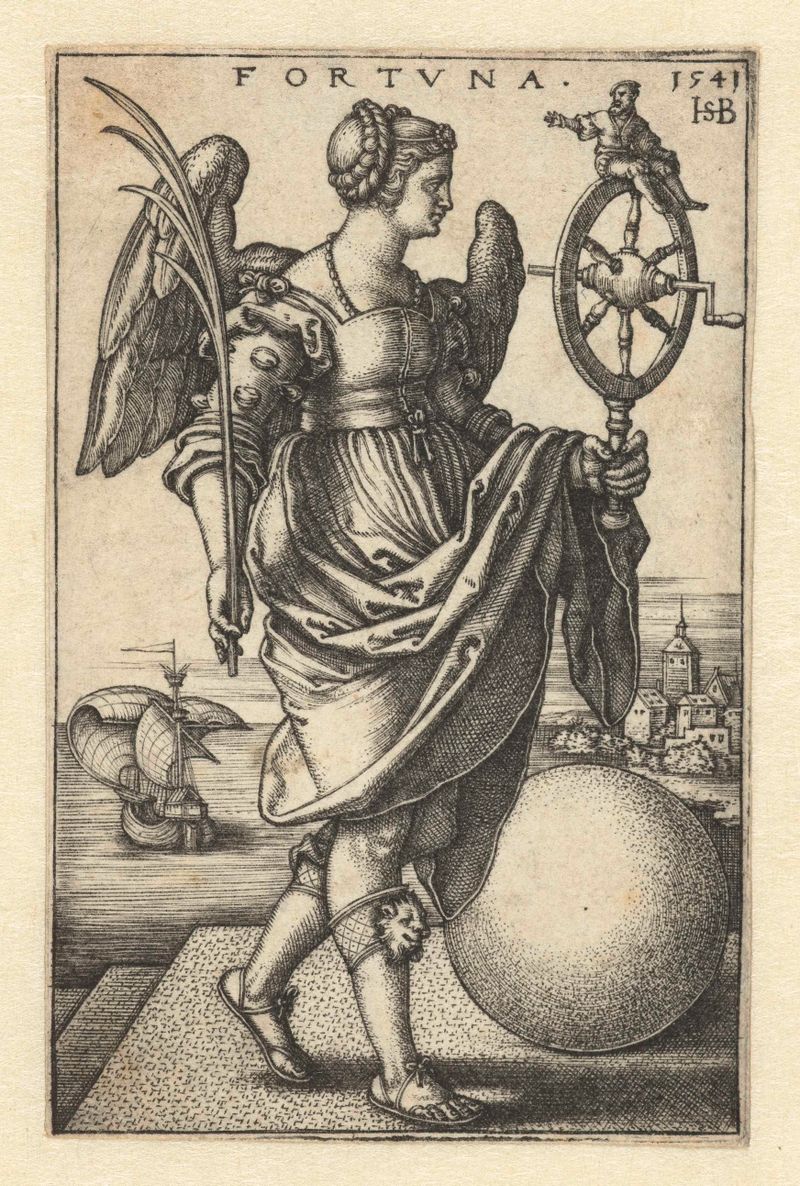
Fortuna
Hans Sebald Beham

Hercules worstelt met Antaeus
Hans Sebald Beham

Twee muzikanten met schalmey en doedelzak
Hans Sebald Beham

Voorzichtigheid (Prudentia)
Hans Sebald Beham

Hercules in gevecht met de Trojanen
Hans Sebald Beham
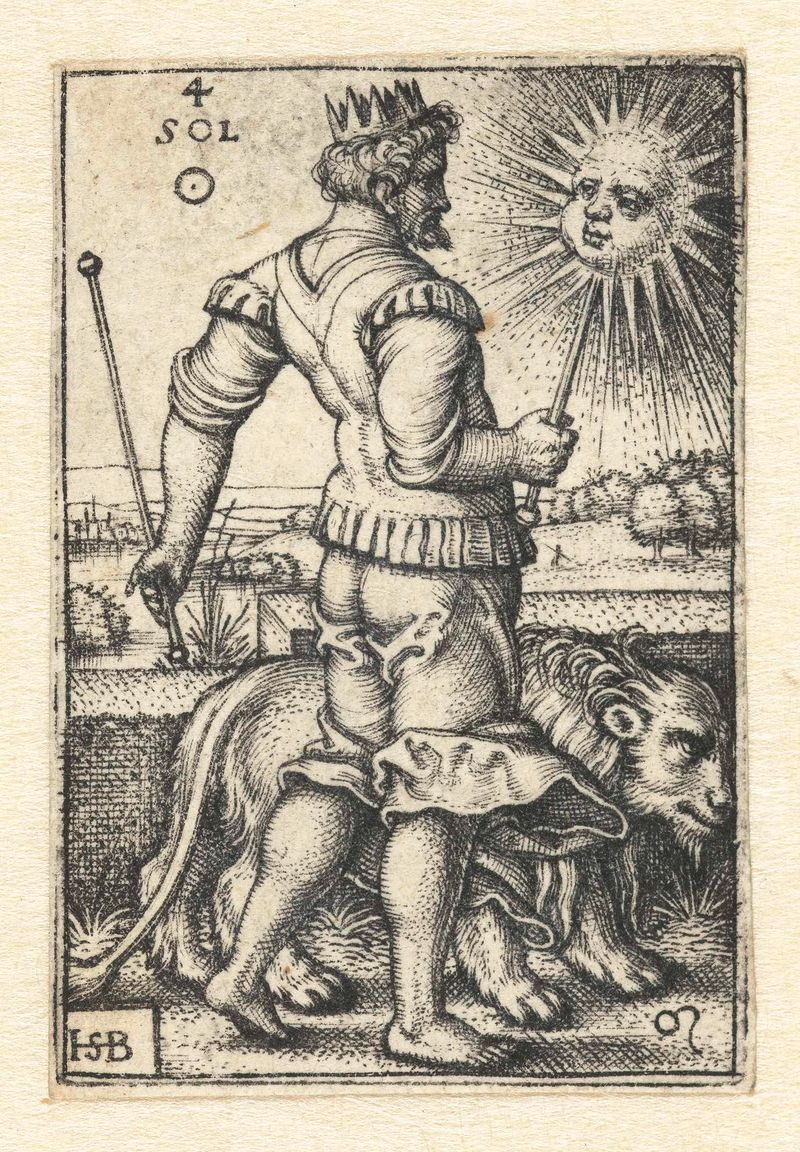
Apollo (Sol) met sterrenbeeld Leeuw
Hans Sebald Beham
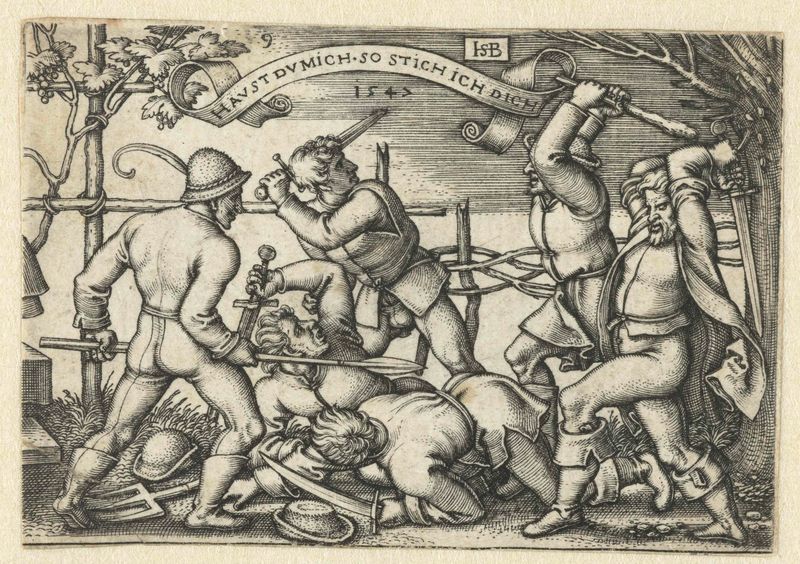
Vechtende boeren met zwaarden
Hans Sebald Beham
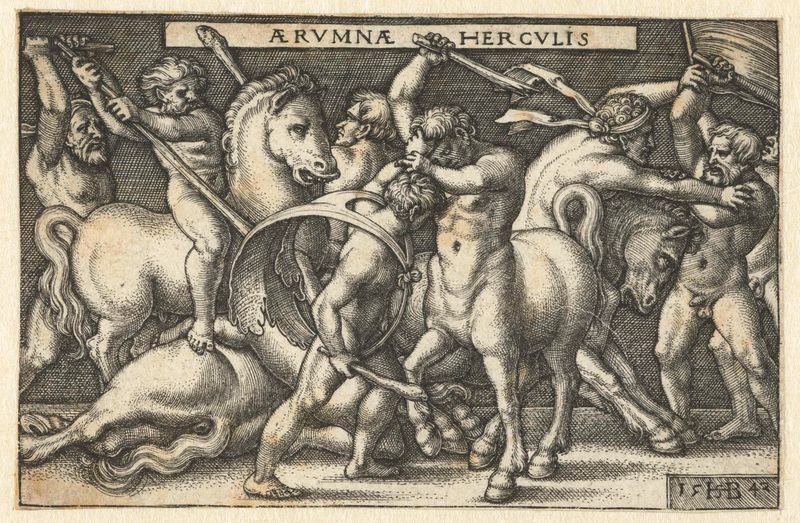
Hercules in gevecht met centaurs
Hans Sebald Beham