
Herzogenbuchsee — History & Facts
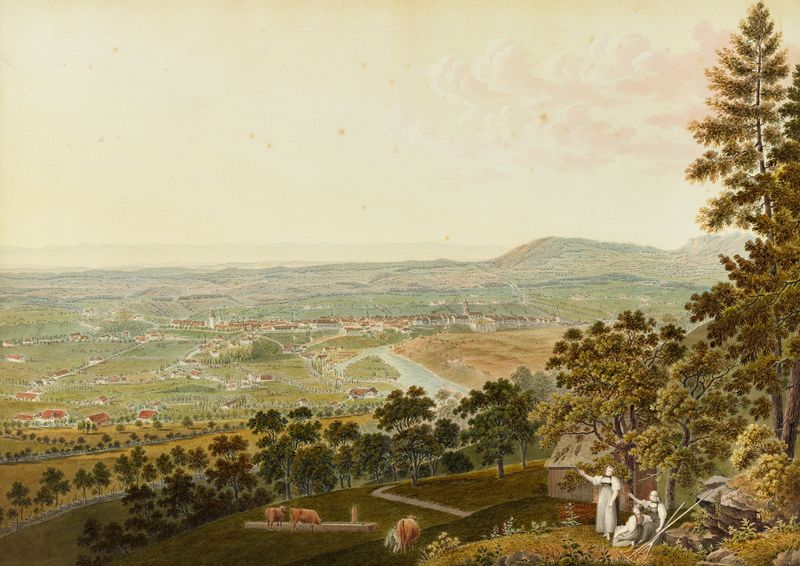
Could a single brushstroke hold eternity? In Herzogenbuchsee, the space invites a quiet reflection, a moment suspended where the canvas breathes life into stillness. Look to the left at the soft palette of blues and greens, where gentle hues merge effortlessly into one another. The delicate brushwork creates a sense of movement, as if the clouds themselves are drifting across the canvas. Notice how the light plays along the surface, casting an ethereal glow that suggests the awakening of dawn or the onset of dusk.
The nuanced transitions of color guide the viewer deeper into the landscape, making you feel like an observer perched on the brink of nature’s awakening. Within this tranquil scene lies a contrast between chaos and serenity. The amalgamation of color evokes both the vibrancy of life and the stillness of the landscape, capturing the viewer's heart in a moment of contemplation. Small details, such as the faint outlines of distant hills and the gentle ripples of water, symbolize the delicate balance between the tangible and the ephemeral, inviting a deeper emotional connection with the environment. Jakob Samuel Weibel painted this piece during an era when the Romantic movement was gaining momentum, somewhere in the late 19th century.
Weibel, influenced by the natural beauty around him, sought to express the sublime in his work. At this time, artists were exploring spiritual connections with nature, reflecting a growing yearning for harmony in a rapidly industrializing world, and this painting stands as a testament to those desires.
More Artworks by Jakob Samuel Weibel
Browse all →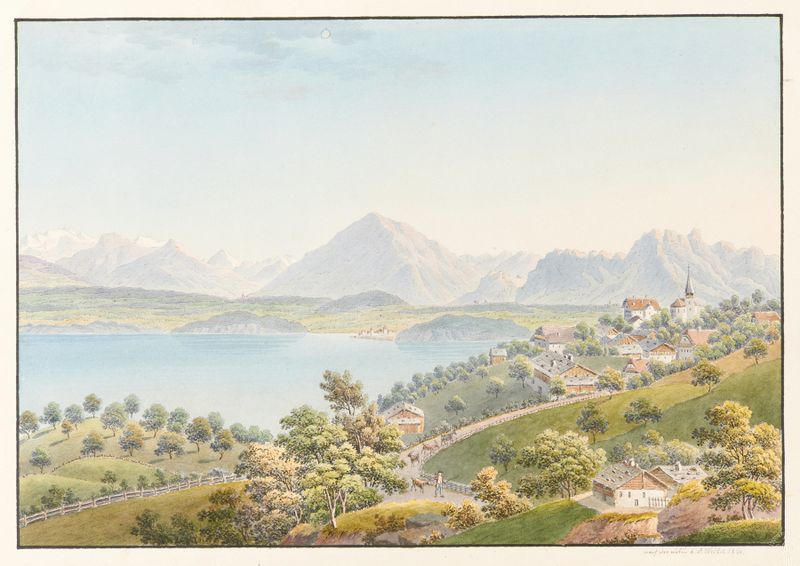
Vue dessiné depuis le Village de Sigriswil, audessus du Lac de Thoune
Jakob Samuel Weibel
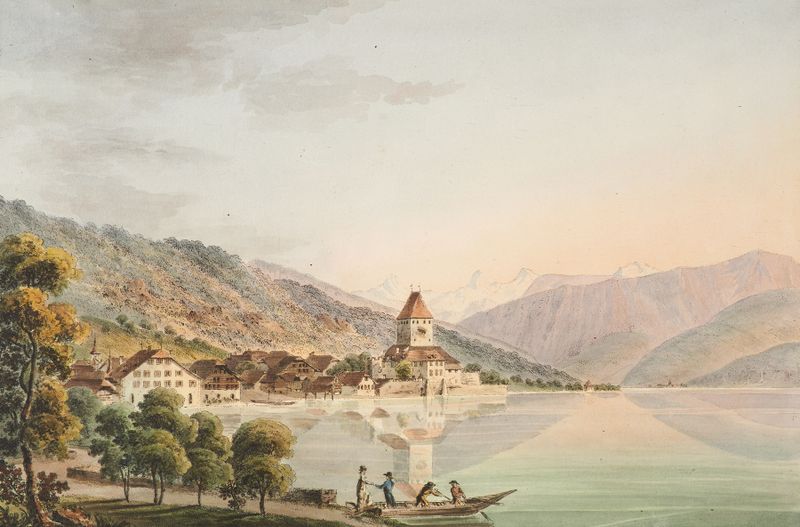
Vûe du Chateau d’Oberhofen au Lac de Thoune
Jakob Samuel Weibel
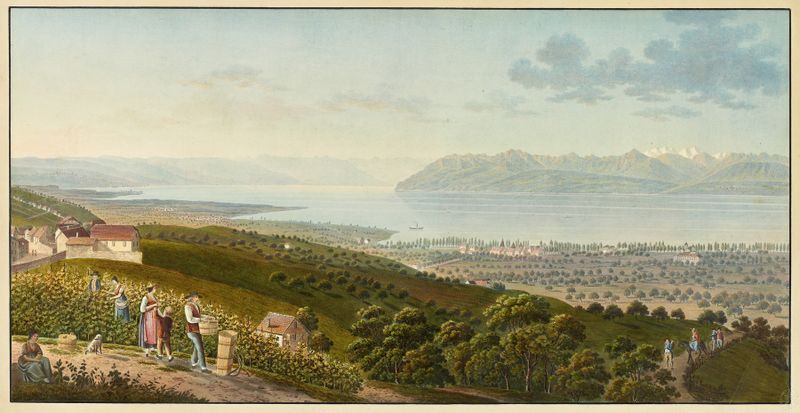
Vue genérale du Lac de Geneve
Jakob Samuel Weibel
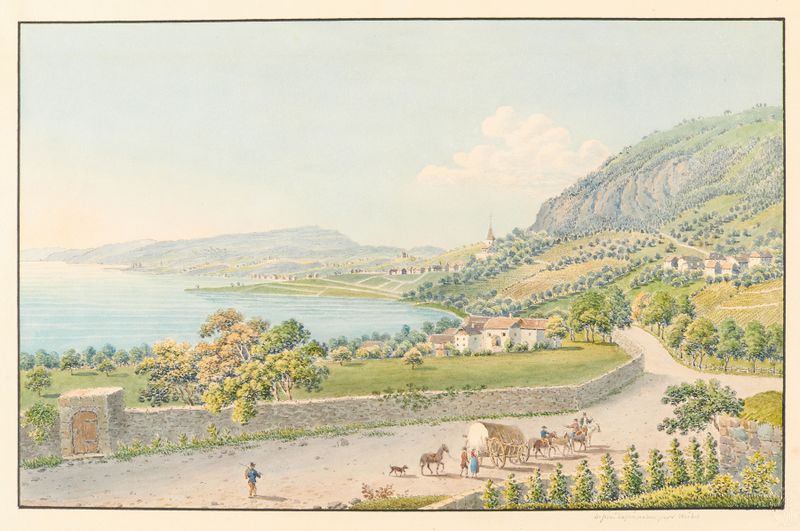
Vue des environs de Montreux et de Clarens
Jakob Samuel Weibel
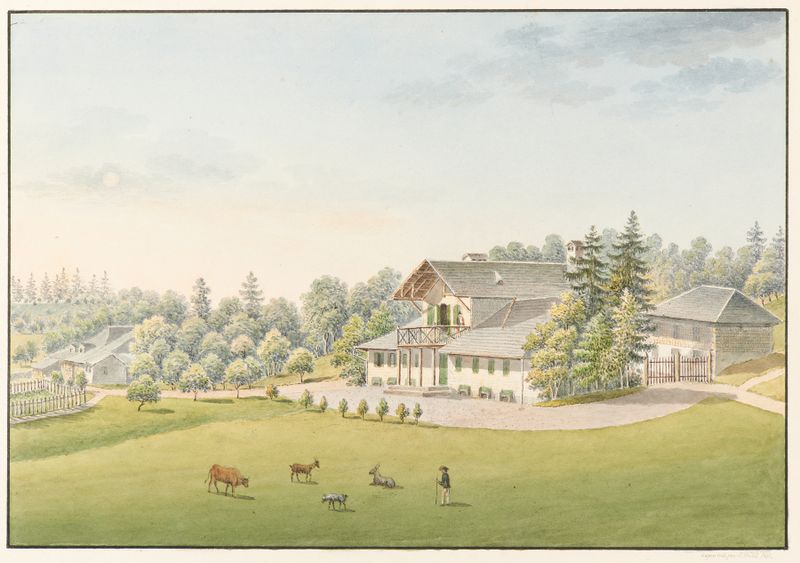
Vue du nouveau Châlet de Vernand
Jakob Samuel Weibel
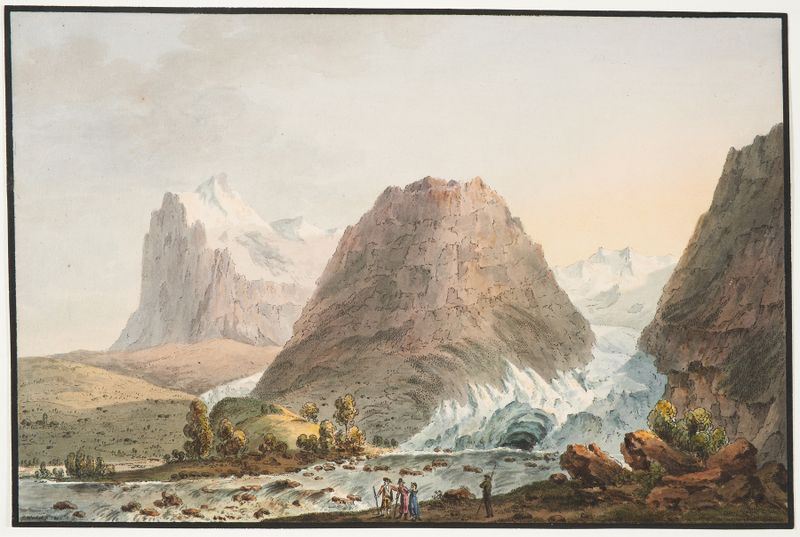
Vûe des Glacieres de Grindelwald
Jakob Samuel Weibel
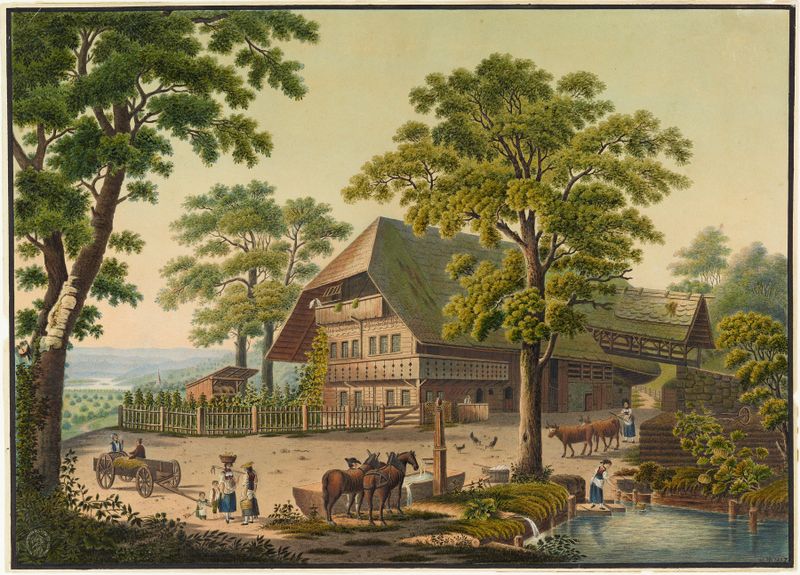
Maison de paysan près Wichtrach
Jakob Samuel Weibel
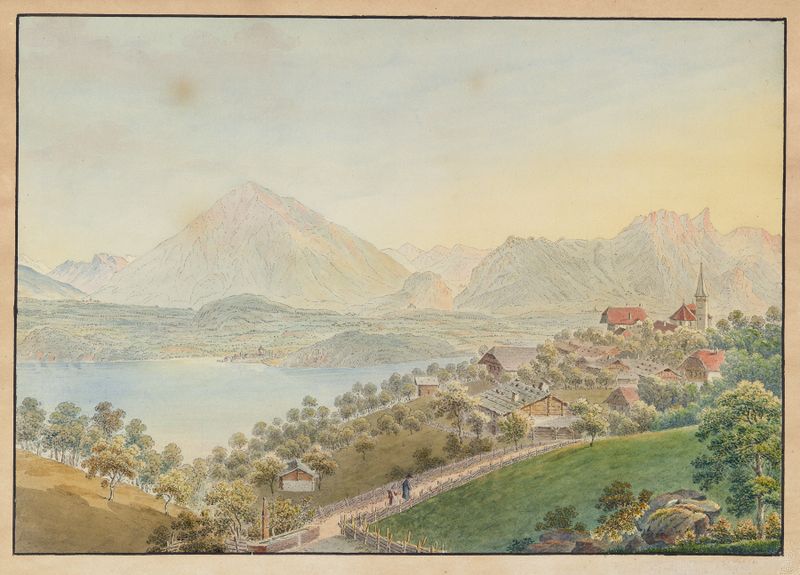
Ansicht von Sigriswil mit Niesen und Thunersee
Jakob Samuel Weibel
Ansicht Berns und der Aare vom Gurten aus
Jakob Samuel Weibel

Lausanne Ville capitale du Canton de Vaud
Jakob Samuel Weibel





