
Het oude gasthuis te Hasselt — History & Facts
In the stillness of Het oude gasthuis te Hasselt, a delicate balance unfolds, inviting the viewer to pause and reflect on the layers of time captured within its frame. Focus on the tranquil façade of the old inn, poised at the center of the composition. Notice how the gentle light bathes the structure in warmth, highlighting the intricacies of the brickwork and casting soft shadows that dance across the cobblestones. The artist’s expert use of muted earth tones draws the eye, allowing the surrounding greenery to frame the building, establishing a harmonious relationship between manmade and natural elements. There exists a subtle tension between stability and impermanence in this scene.
The weathered stones of the inn speak to a history of resilience, while the surrounding trees, lush yet fleeting, evoke the inevitability of change. This juxtaposition of the enduring and the ephemeral resonates with the viewer, inviting contemplation on the passage of time and the stories held within these walls. Cornelis Springer painted this work in 1861, during a period marked by the Dutch Romantic movement's exploration of landscape and architecture. Living in the Netherlands, he was influenced by the picturesque beauty of his surroundings and the growing interest in capturing local heritage.
This piece reflects a moment in his career where the balance between artifice and nature began to define his legacy, contributing to the broader narrative of 19th-century art.
More Artworks by Cornelis Springer
Browse all →
The Royal Palace and the Nieuwe Kerk on the Dam, Amsterdam
Cornelis Springer
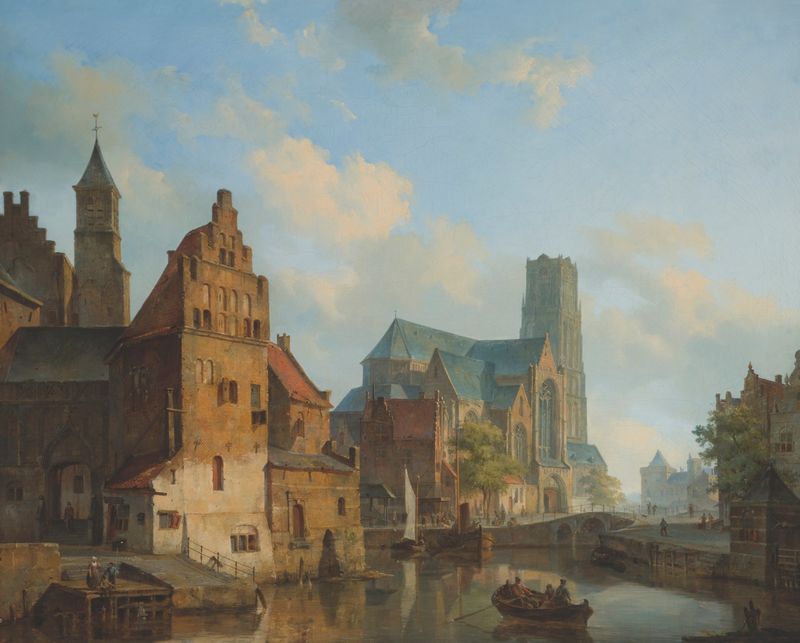
A View Of The Delftse Vaart And St Laurens Church, Rotterdam
Cornelis Springer

The Kerkgracht In Leiden
Cornelis Springer
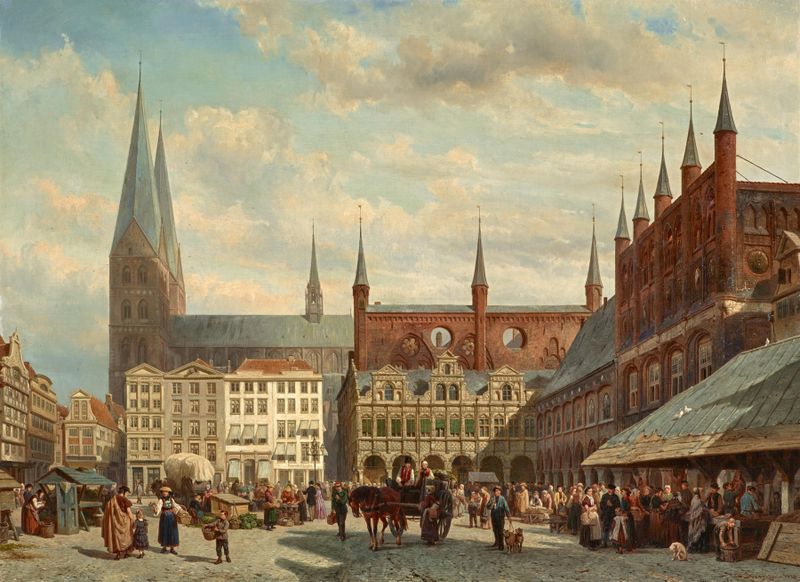
Ansicht des Lübecker Marktes
Cornelis Springer

View of The Hague
Cornelis Springer
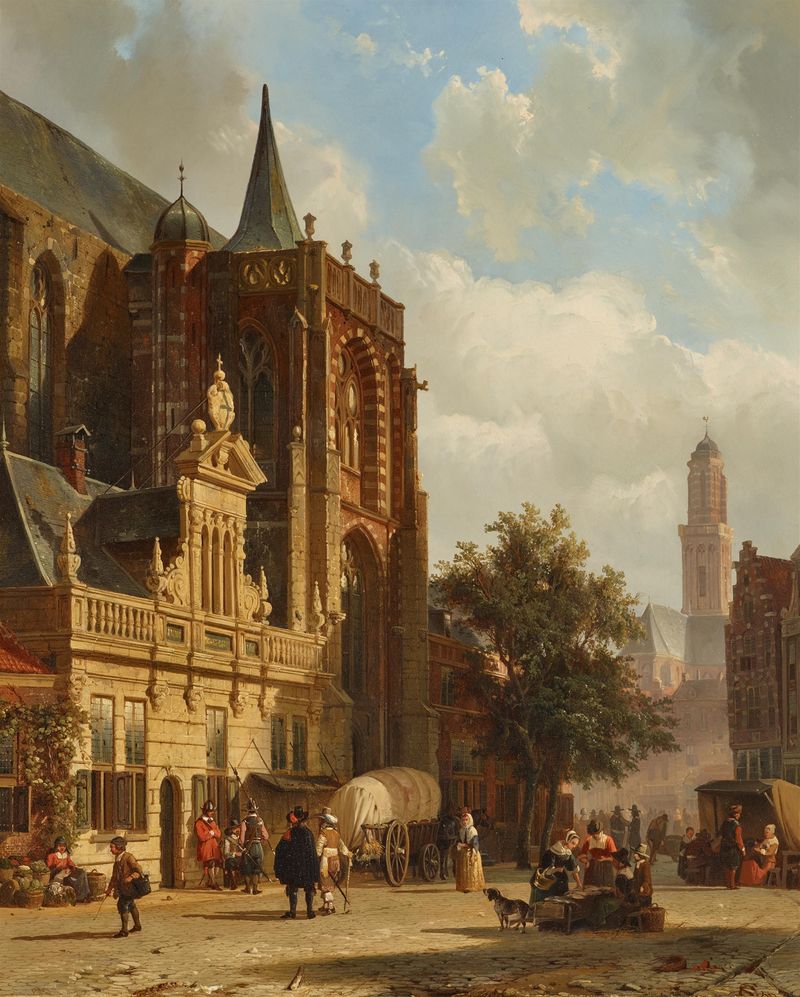
Der Grote Markt in Zwolle
Cornelis Springer
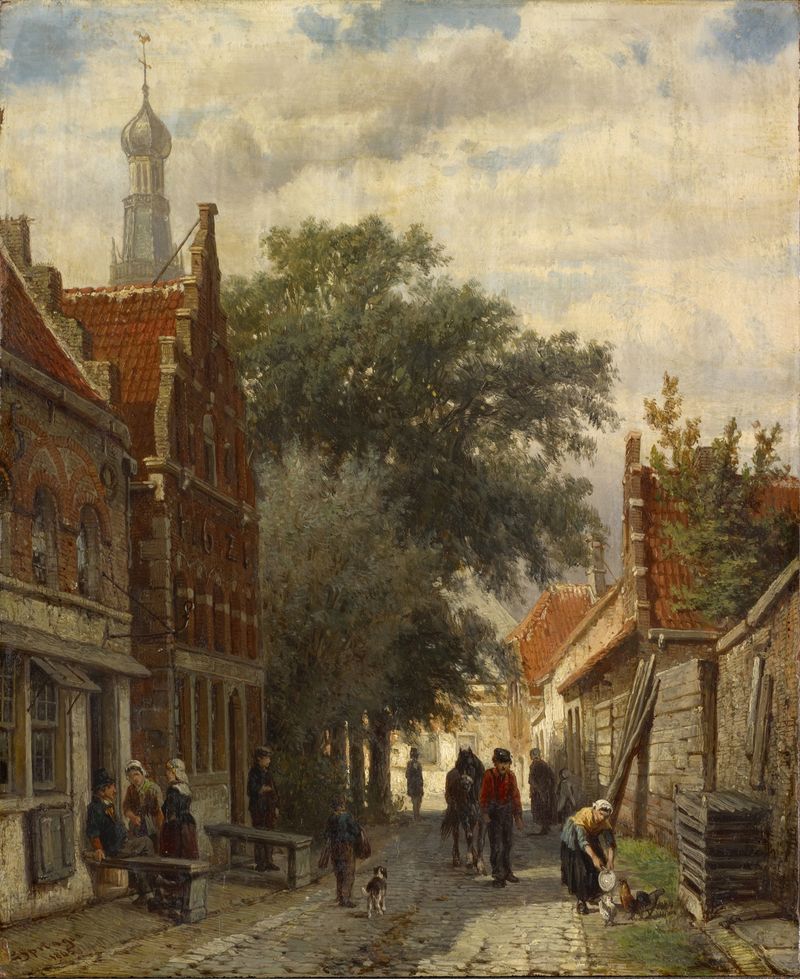
Street in Enkhuizen
Cornelis Springer

View of The Hague from the Delftse Vaart in the Seventeenth Century
Cornelis Springer
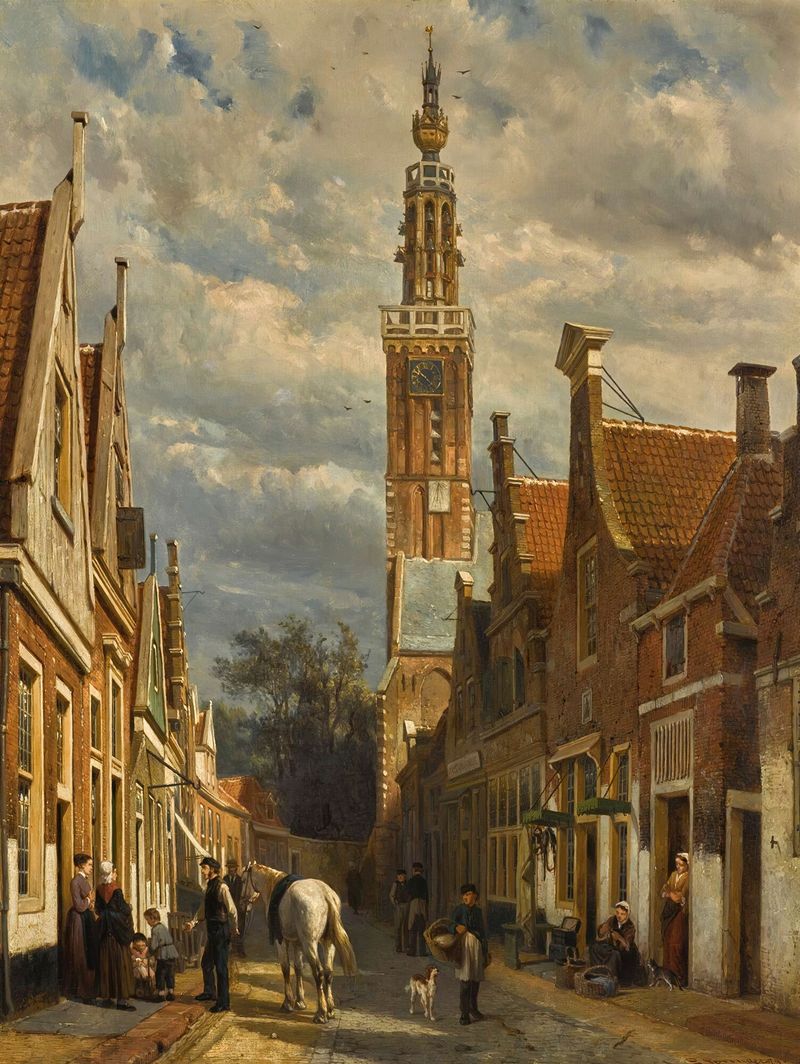
The carillon tower in Edam
Cornelis Springer
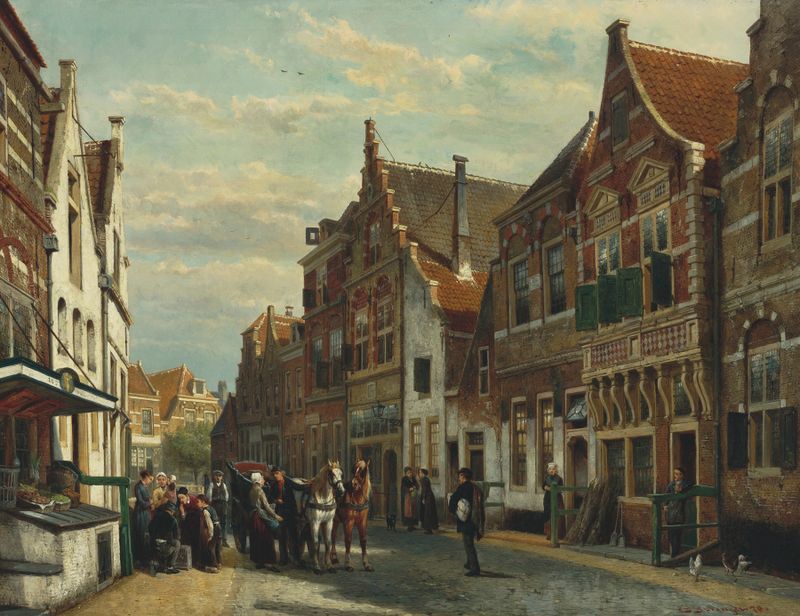
The Wijdstraat, Oudewater, in summer
Cornelis Springer
More Architecture Art
Browse all →
The statue of Liberty
Frédéric Auguste Bartholdi

View of Houses in Delft, Known as ‘The Little Street’
Johannes Vermeer

View of Houses in Delft, Known as ‘The Little Street’
Johannes Vermeer

The Cathedral in Rouen. The portal, Grey Weather
Claude Monet

The yellow house
Vincent van Gogh

The Church in Auvers-sur-Oise, View from the Chevet
Vincent van Gogh