
Heuvel met bebossing — History & Facts
In the intricate layers of Heuvel met bebossing, this notion reverberates, hinting at the obsessive nature of the human gaze when it encounters the sublime. The verdant hill beckons, a paradox of tranquility firmly rooted in the complexities of nature and emotion, whispering of the depths hidden beneath its serene surface. Look to the left at the cascading greens and browns, where the trees cradle the hillside with their dense foliage. Notice how the light dances across the leaves, casting an ethereal glow that contrasts vividly with the darker shadows lurking below.
The composition is carefully balanced, drawing the viewer's eye toward the peak of the hill, where the sun seems to hold dominion over the land, offering an invitation to explore further into the verdancy that surrounds it. Within this serene landscape lies a tension; the coexistence of beauty and solitude becomes palpable. The vivid greens may suggest life and vibrancy, yet they also mask an underlying isolation that speaks to obsession—a fixation on nature's façade that may ultimately lead to a longing unfulfilled. The juxtaposition of light and shadow evokes a sense of mystery, hinting at the complexity of desire that lies beneath the surface of this idyllic scene. Created during a time of artistic exploration in the Netherlands, Heuvel met bebossing was painted by Simon de Vlieger between 1610 and 1653.
As Dutch landscapes gained prominence, this artist found himself immersed in a world where nature was both revered and scrutinized, reflecting the changing dynamics of society and the profound relationship between humans and their environment. This period marked a blossoming of Dutch genre painting, of which de Vlieger became a notable contributor, harnessing the beauty of nature to convey deeper emotional truths.
More Artworks by Simon de Vlieger
Browse all →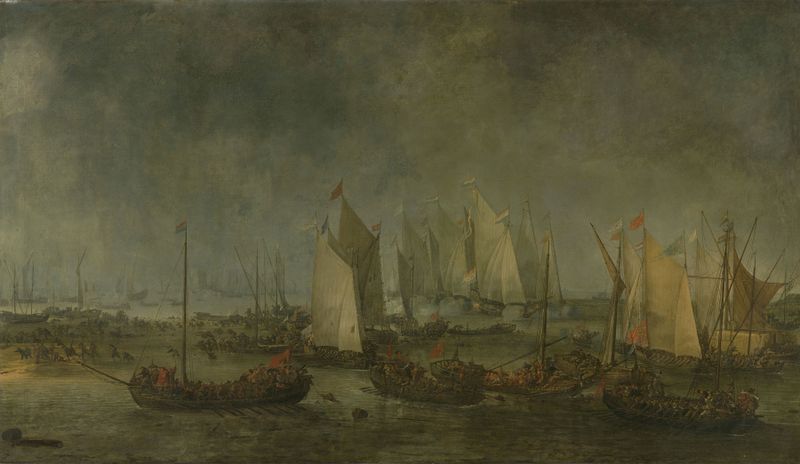
The Battle on the Slaak between the Dutch and Spanish Fleets during the Night of 12-13 September 1631
Simon de Vlieger

Stretch of coast by the Zuiderzee
Simon de Vlieger

Seaside in Scheveningen with fishing boats
Simon de Vlieger
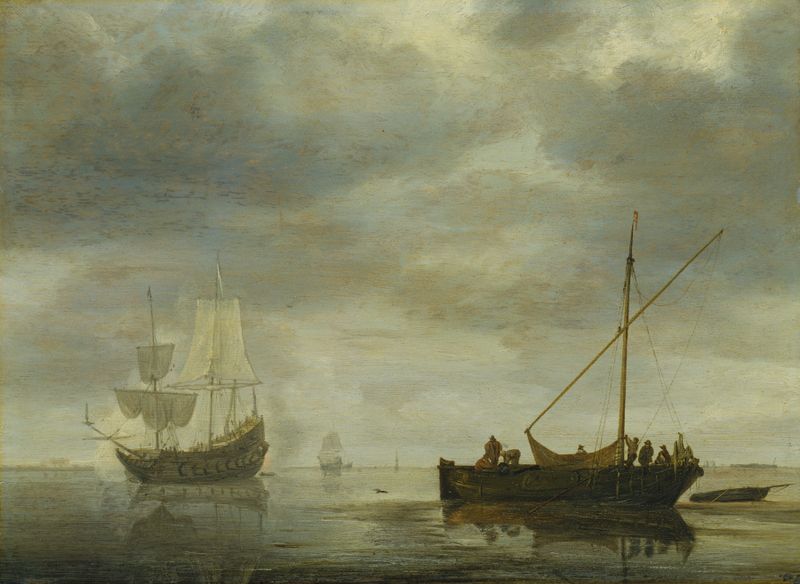
Single-Master and Frigate Firing Salute on a Calm Sea
Simon de Vlieger
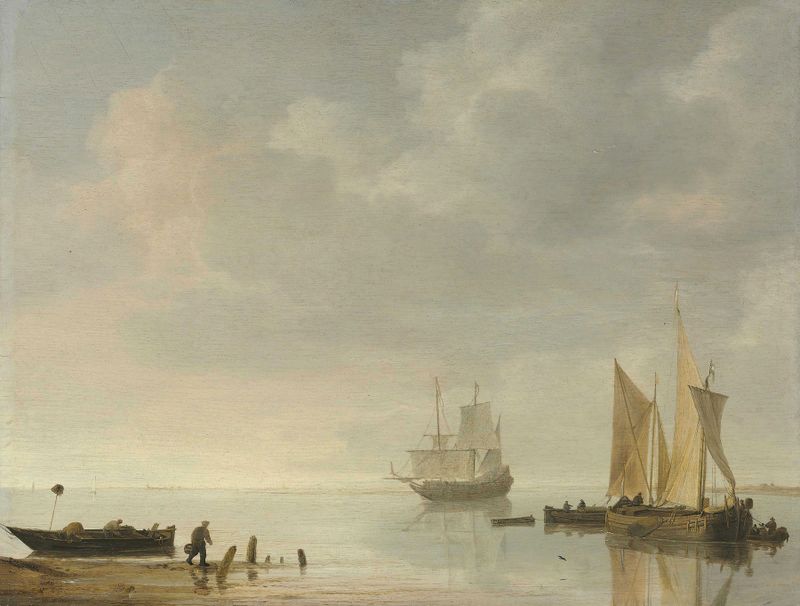
Coastal Scene With Ships Resting On Calm Waters
Simon de Vlieger

A calm estuary with a smalschip and a waterschip at anchor, with other ships in the distance
Simon de Vlieger
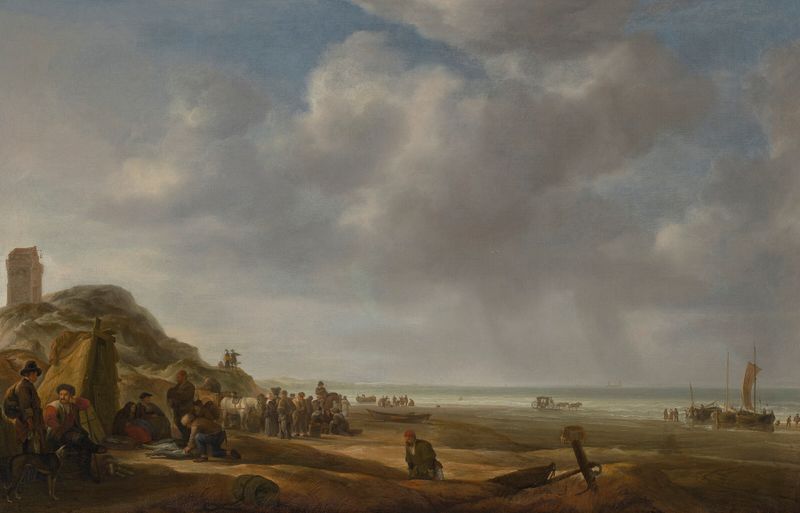
A beach scene with fishermen displaying their catch
Simon de Vlieger

Ship in Distress off a Rocky Coast
Simon de Vlieger
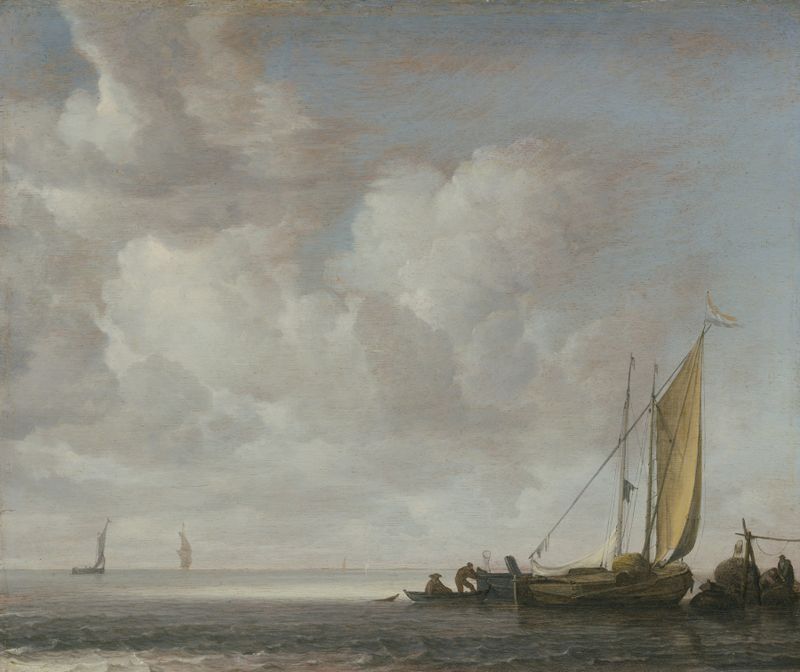
Calm Sea
Simon de Vlieger
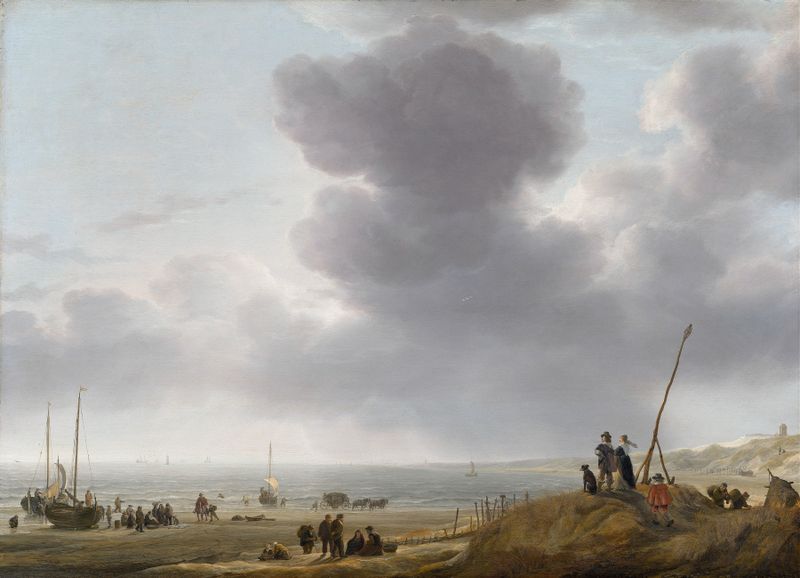
Beach View
Simon de Vlieger





