
Highlands — History & Facts
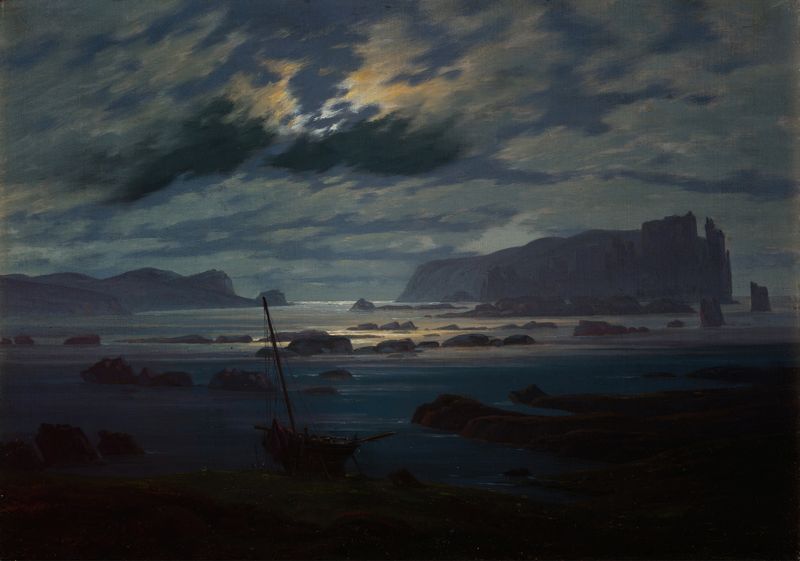
In Highlands, the essence of creation mingles with the melancholy of nature’s ephemerality, inviting us to explore a landscape steeped in memory and emotion. Focus your gaze on the sweeping crags and verdant valleys that dominate the canvas, where hues of moody greens and soft grays evoke a sense of tranquility and introspection. The sky, a delicate wash of pastel pink and blue, suggests dawn or dusk, a liminal moment that calls to mind the unending cycle of life. Notice how the light bathes the peaks, creating a subtle play of shadows that highlights the rugged terrain, while a solitary figure gazes into the distance, embodying both solitude and connection to the sublime landscape. As you delve deeper, consider the juxtaposition of the majestic mountains against the small human presence; it speaks to the vastness of nature and the fragility of human existence.
The tension between the serene beauty of the highlands and the figure's isolation prompts reflection on our relationship with the natural world. The serene ambiance, woven with a hint of melancholy, reminds us of the transient beauty that surrounds us and the poignancy of moments lost in time. In 1828, at a pivotal moment in his career, Friedrich painted this work in Germany, a period marked by his rise as a leading figure in German Romanticism. The artist was deeply influenced by the landscape around him, as well as the philosophical ideals of the time, exploring themes of nature, memory, and the sublime in a world undergoing rapid change.
This piece stands as a testament to Friedrich's quest to capture the ineffable spirit of the highlands and the introspective journey it inspires.
More Artworks by Caspar David Friedrich
Browse all →
Wanderer above the Sea of Fog
Caspar David Friedrich
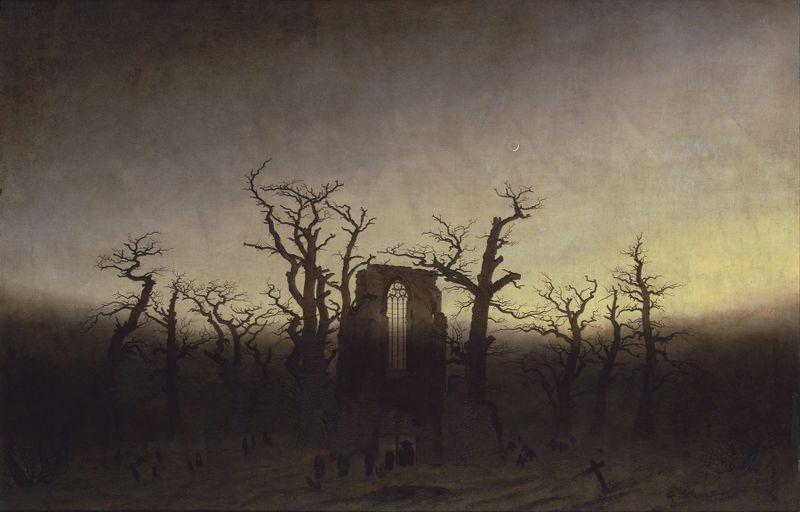
The Abbey in the Oakwood
Caspar David Friedrich
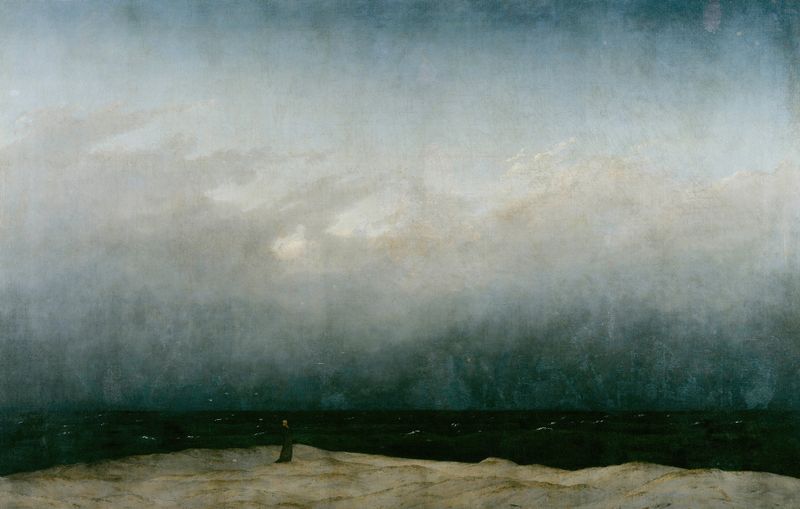
The Monk by the Sea
Caspar David Friedrich
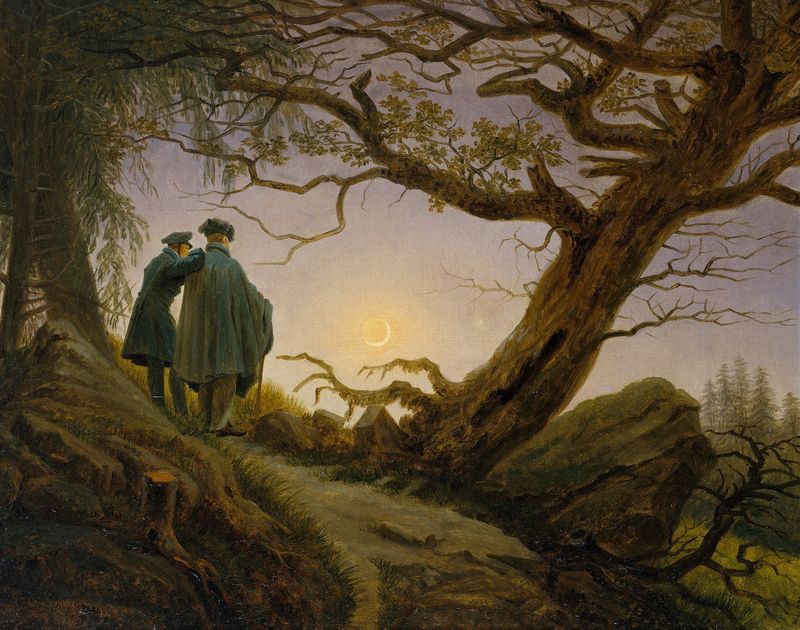
Two Men Contemplating the Moon
Caspar David Friedrich
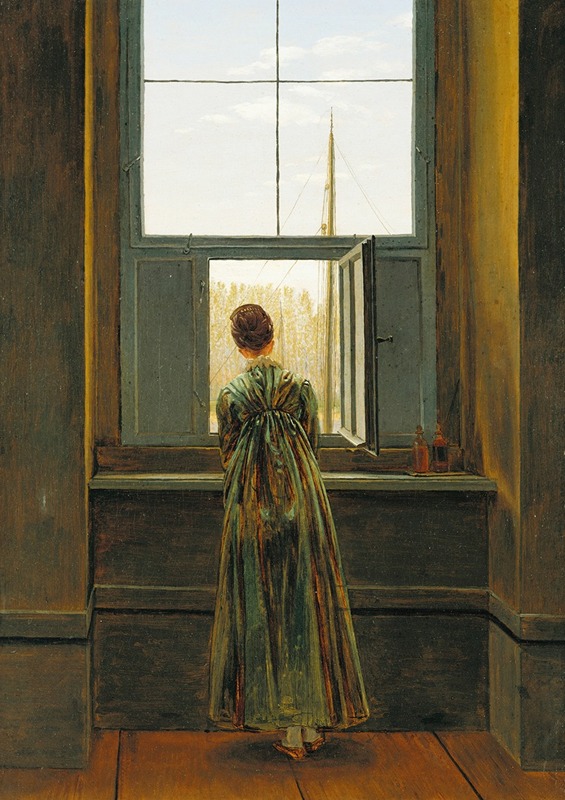
Woman at a Window
Caspar David Friedrich
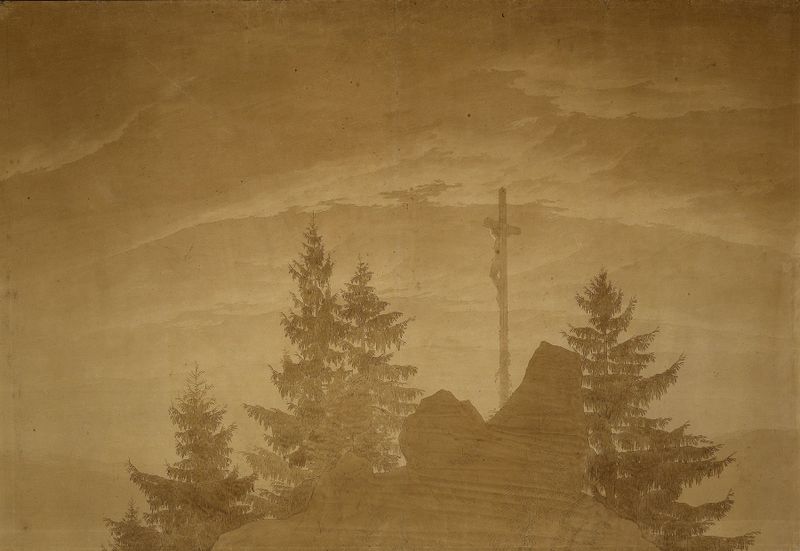
Cross in the Mountains
Caspar David Friedrich
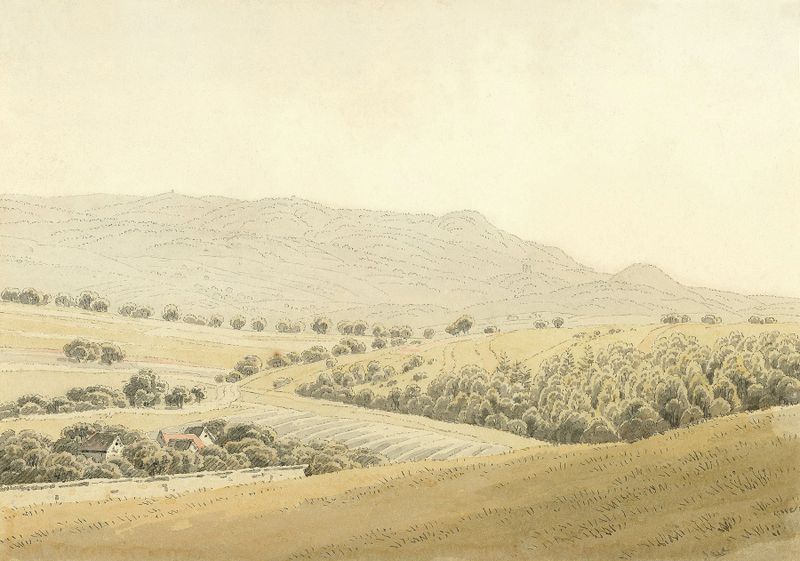
Mittelgebirgslandschaft
Caspar David Friedrich
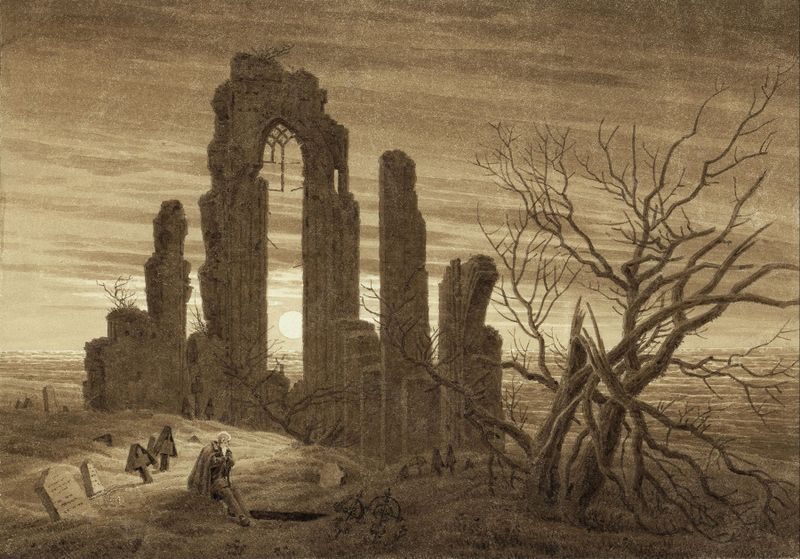
Winter – Night – Old Age and Death (from the times of day and ages of man cycle of 1803)
Caspar David Friedrich
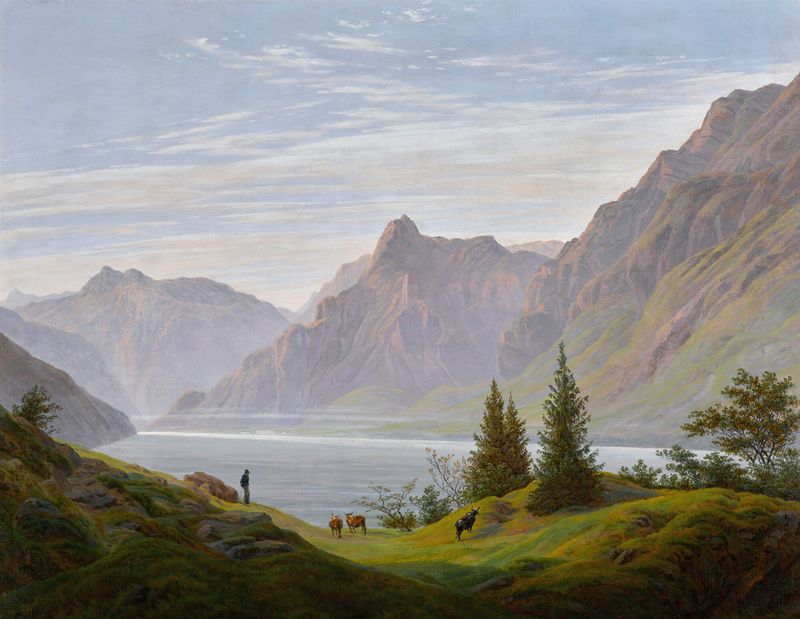
Landschaft mit gebirgsee, morgen
Caspar David Friedrich
Northern Sea in the Moonlight
Caspar David Friedrich





