Hilly Landscape with Ships — History & Facts
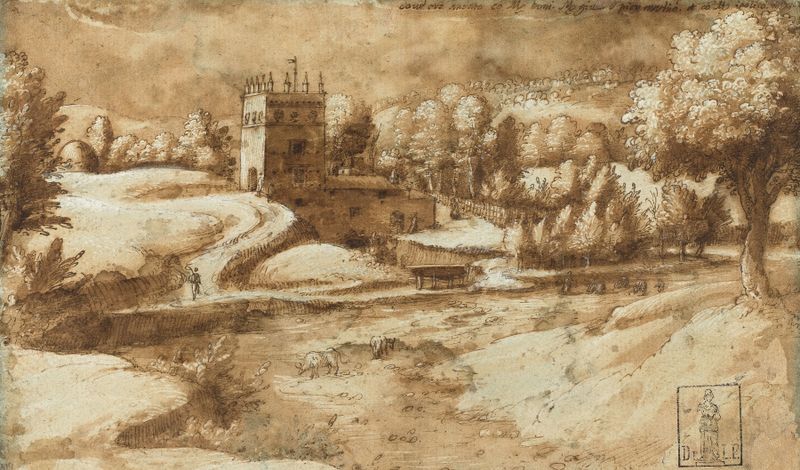
In the quiet embrace of a hilly landscape, a transcendent moment unfolds — one that invites contemplation amid the chaos of life. Look to the right at the gentle flow of the hills, where soft greens blend seamlessly into deeper, almost ethereal blues. The ships, delicate specks on the horizon, balance the vivid colors below, suggesting movement and life beyond the stillness of the land. Notice how the light dances across the undulating terrain, casting shadows that deepen the valleys, while brighter patches highlight the peaks, creating a dynamic interplay that pulls the viewer into the scene. Yet, it is the juxtaposition of the serene landscape and the distant, vibrant ships that beckons deeper reflection.
These ships, representing human ambition and exploration, contrast with the tranquil hills, perhaps hinting at the tension between nature and human endeavor. Cibo captures not merely a moment in time but a dialogue between the mundane and the sublime, inviting a sense of longing and transcendence. In the late 1560s, Gherardo Cibo painted this work, while the Italian Renaissance was flourishing. During this period, artists were exploring new techniques and styles, emphasizing realism and emotional depth.
Cibo, based in northern Italy, was influenced by the evolving art scene, weaving his own interpretations into landscapes that reflect the world around him, creating a bridge between the earthly and the divine.