
Hitterøe — History & Facts
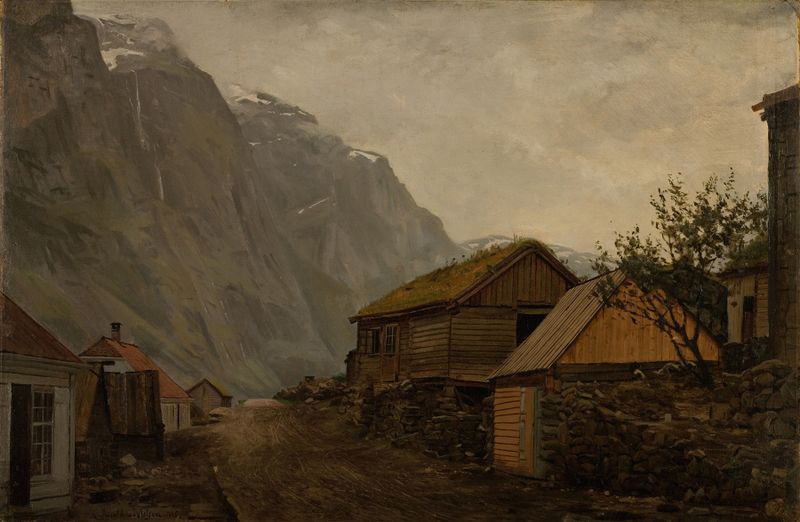
In Hitterøe, the weight of absence looms heavy, each brushstroke capturing a poignant interplay between what remains and what is no longer there. Focus on the foreground, where a lone figure stands at the precipice, gazing out over a tumultuous sea. The tumult of waves crashing against the rocks contrasts sharply with the stillness of the solitary observer. The earthy browns and muted greens envelop the scene, while the cool blues of the water evoke a sense of longing.
Light dances across the surface, drawing your eye towards the horizon, hinting at distant shores yet untraveled. Delve deeper into the composition: notice the tension between the figure's stillness and the restless ocean, a metaphor for grief and the unending cycle of loss. Each wave represents a memory, crashing and receding, drawing the viewer into a contemplation of absence. The figure, though alone, creates a connection with the viewer, inviting shared reflection on personal experiences of yearning and solitude. Amaldus Nielsen painted Hitterøe in 1860, during a time when Romanticism influenced the art world, emphasizing emotion and nature’s grandeur.
At this juncture, Nielsen was grappling with personal challenges, which infused his work with a deep sense of introspection. The painting encapsulates not only the artist's internal struggles but also the broader societal shifts as individuals sought solace in the beauty of the natural world amidst the chaos of life.
More Artworks by Amaldus Nielsen
Browse all →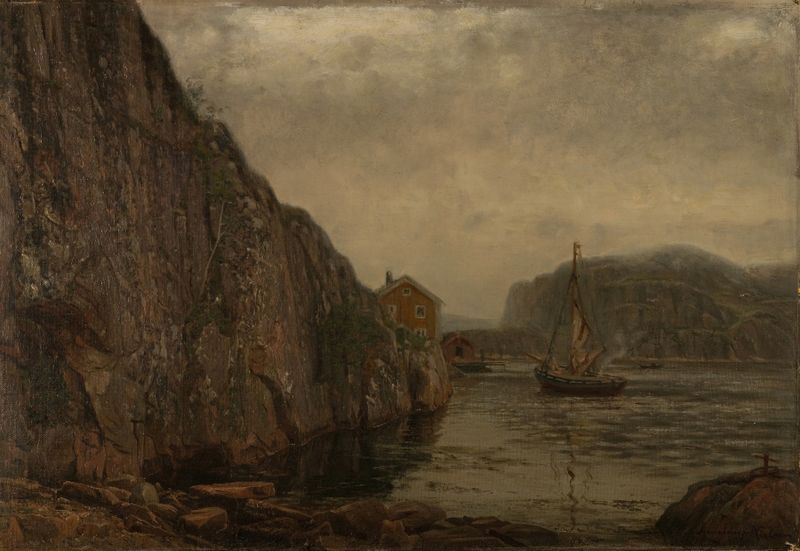
Skjærgård, Ny-Hellesund
Amaldus Nielsen
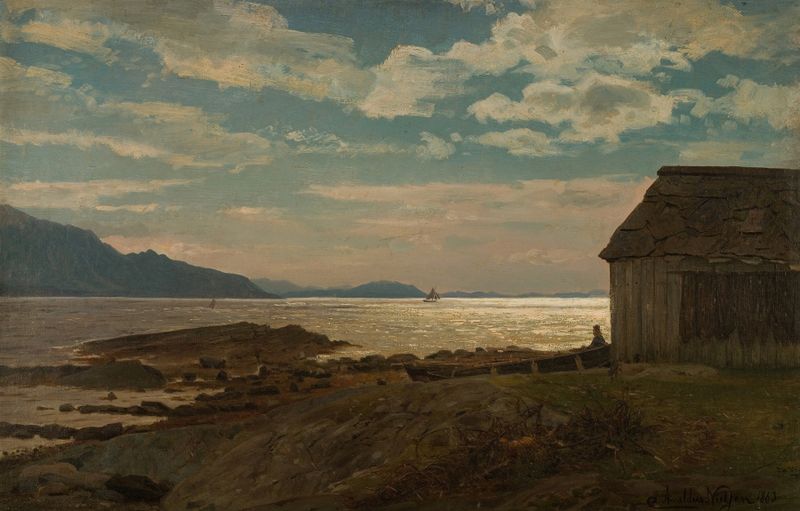
Fra Ølvestranden, Hardanger
Amaldus Nielsen
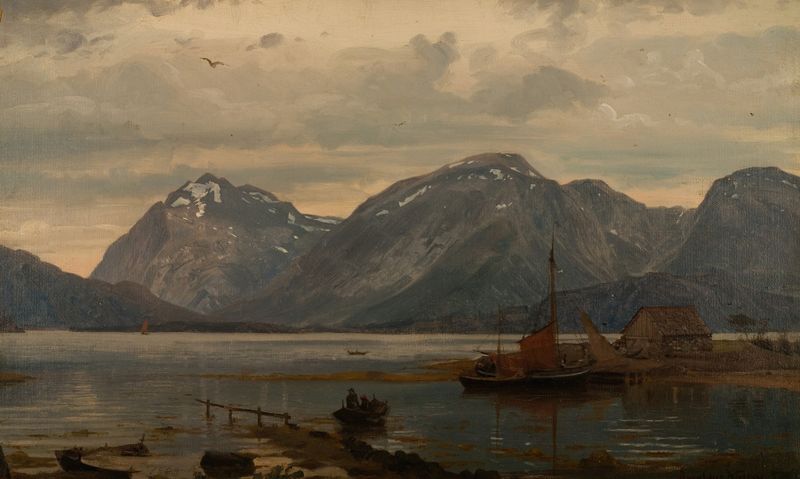
Fra Englafjellene, Hardanger
Amaldus Nielsen
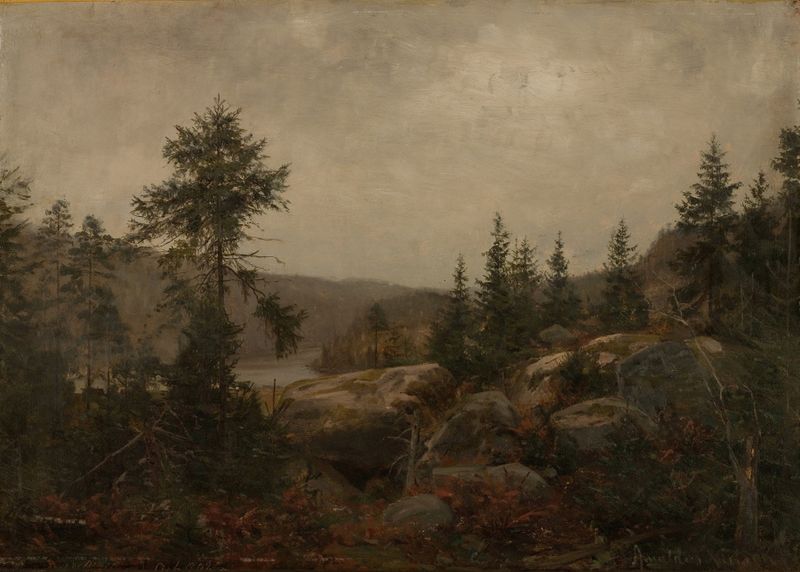
Duskregn . Gården Foss, Mandalselven
Amaldus Nielsen
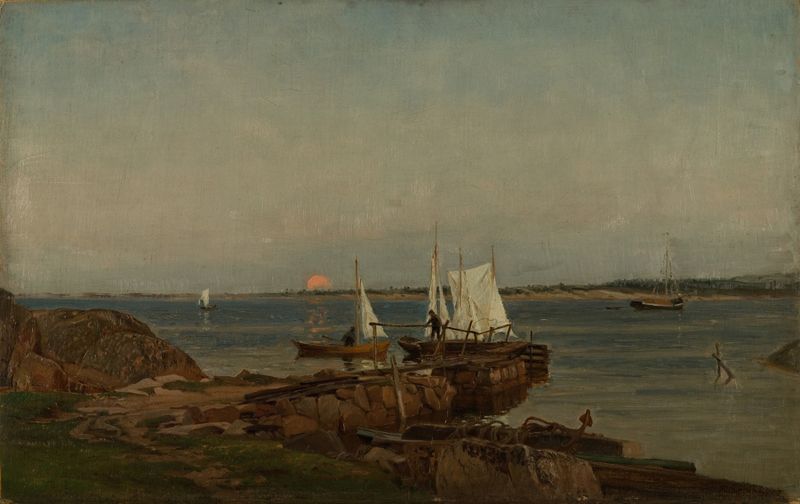
Sommernatt, Hvaler
Amaldus Nielsen
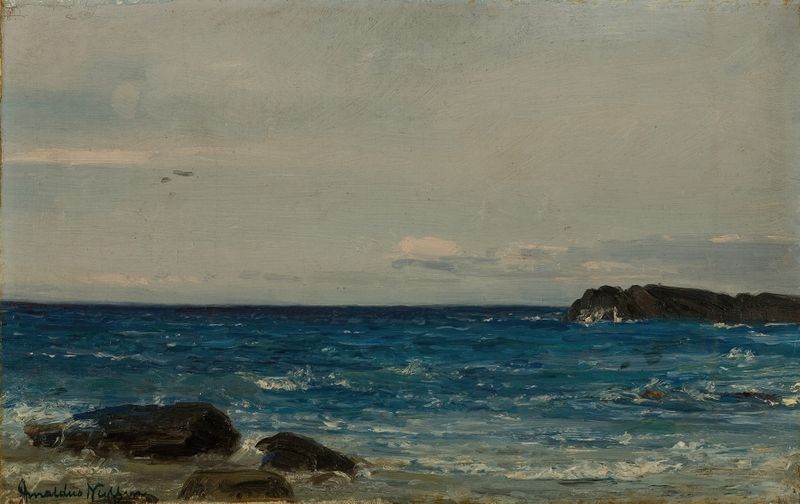
Fra Jæren
Amaldus Nielsen
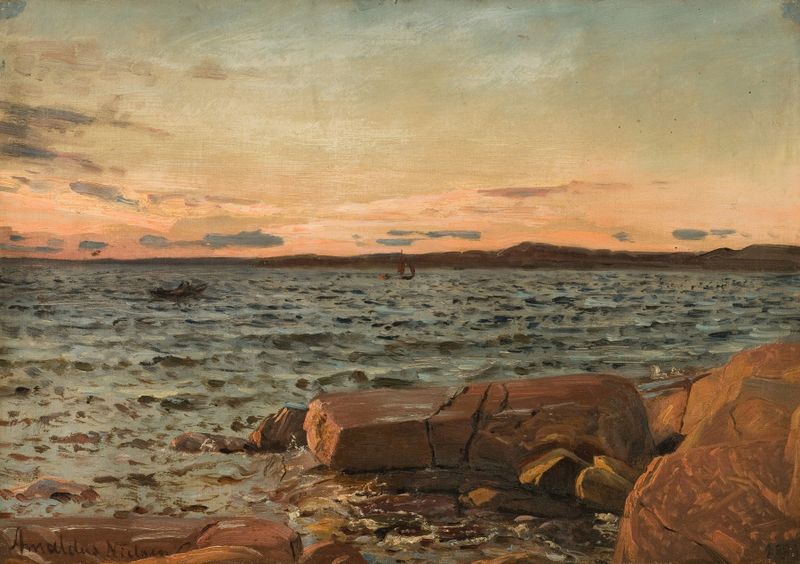
Solgangsvind, Hvaløene
Amaldus Nielsen
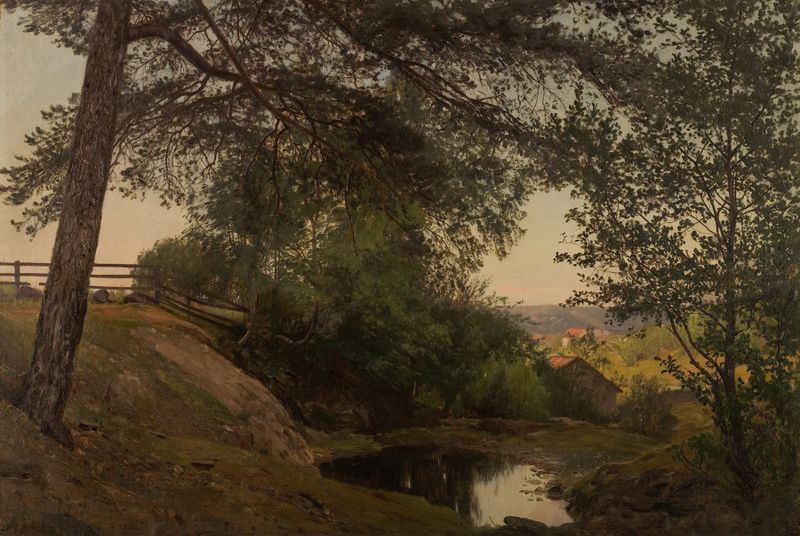
Mellom trærne. Lervik, Stord
Amaldus Nielsen

Båtbyggeri, Lillesand
Amaldus Nielsen
Regnstemning, Gudvangen
Amaldus Nielsen





