
Homeward Bound — History & Facts
In the quiet spaces of life, loneliness transforms into a poignant beauty, echoing through time and art. Look closely at the center of the canvas, where the gentle curves of a river cradle a solitary figure. The water’s surface reflects a delicate interplay of light and shadow, beckoning the eye to follow the gentle flow towards the horizon. Notice how Hunt employs a palette of muted blues and greens, creating an atmosphere that feels both tranquil and haunting.
The brushstrokes convey a sense of movement, suggesting that the figure, though still, is caught in the currents of deeper thoughts and longings. As you explore further, hidden meanings emerge within this serene landscape. The solitary boat can be seen as a metaphor for isolation, journeying through the vastness of life’s uncertainties. The contrasting elements of still water and distant mountains amplify the sense of longing, inviting viewers to ponder the dichotomy of solitude and connection.
The soft glow of twilight hints at hope, even amid the poignant silence. In Homeward Bound, painted during the late 19th century, Hunt sought to convey the emotional landscape of the human experience. Living in an era marked by rapid industrial change, he was deeply invested in exploring themes of spirituality and nature. This work reflects his commitment to capturing the subtleties of emotion in a world that often feels disconnected, revealing the enduring relevance of solitude.
More Artworks by William Holman Hunt
Browse all →
The Shadow of Death
William Holman Hunt

The Triumph of the Innocents
William Holman Hunt
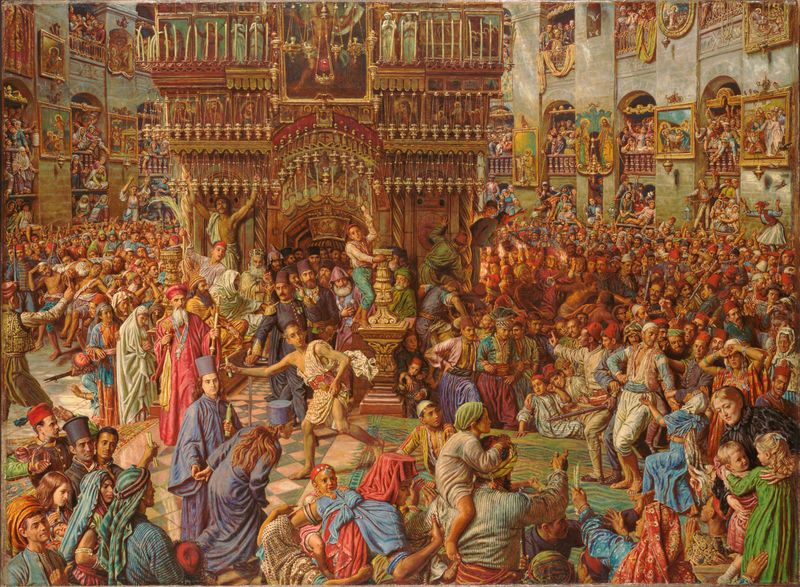
The Miracle of the Sacred Fire, Church of the Holy Sepulchre
William Holman Hunt

View from a Terrace of a River Landscape at Night
William Holman Hunt

The Lizard, Cornwall
William Holman Hunt
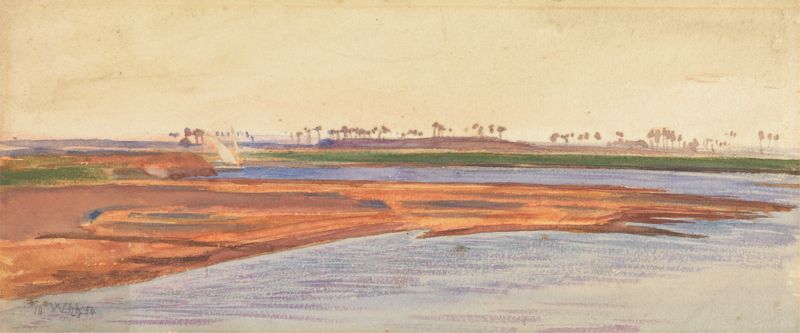
The Nile
William Holman Hunt
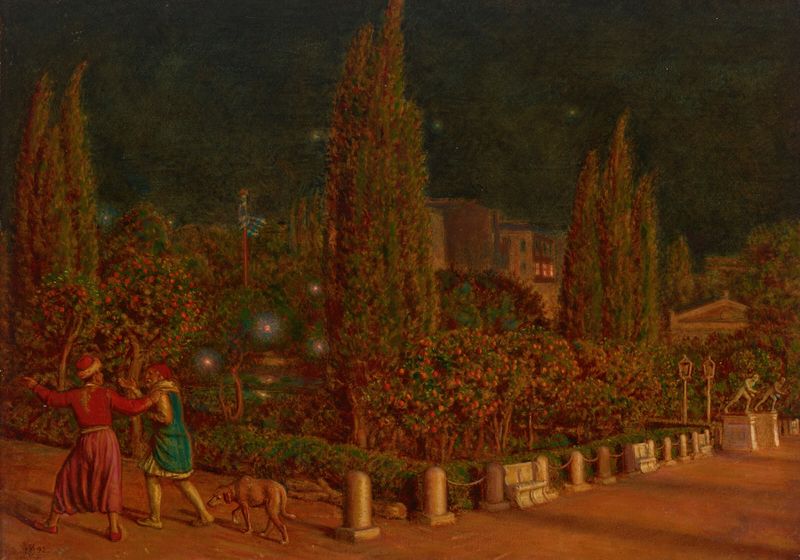
Piazza della Constituzione, Athens, by Night
William Holman Hunt





