
The Shadow of Death — History & Facts
Where does light end, and longing begin? In a world where shadows loom large, the haunting emptiness of The Shadow of Death delves deep into the human psyche, exploring the intersection between existence and oblivion. To truly appreciate this remarkable piece, focus on the figure of the young carpenter at the center. Notice how the warm light cascades from a nearby window, illuminating his face and hands while casting elongated shadows across the floor. The textures of his workbench, laden with tools and shavings, create a stark contrast to the darkened corner where the figure of Death looms ominously.
The vivid reds and earthy browns exude warmth, yet a chill lingers, as the shadows reveal an unsettling presence that seems to whisper of fate’s inevitability. As you examine the details, consider the significance of the pointed tools and the circular saw, symbolizing creation and destruction in tandem. The juxtaposition of the laborious act of carpentry with the specter of death evokes a poignant tension between life and mortality. Each element in the composition speaks to the duality of existence—the light representing hope and creation, while the shadow represents the ever-present reality of what lies beyond. Painted between 1873 and 1874, this work emerged during Hunt's time in England, a period marked by an evolving Pre-Raphaelite movement and a fascination with themes of life, death, and spirituality.
At this juncture, the artist sought to blend religion with realism, reflecting both his personal beliefs and the broader societal shifts occurring in art. Hunt's reflections on mortality, coupled with the naturalistic detail for which he was known, create a compelling narrative that resonates across time.
More Artworks by William Holman Hunt
Browse all →
The Triumph of the Innocents
William Holman Hunt
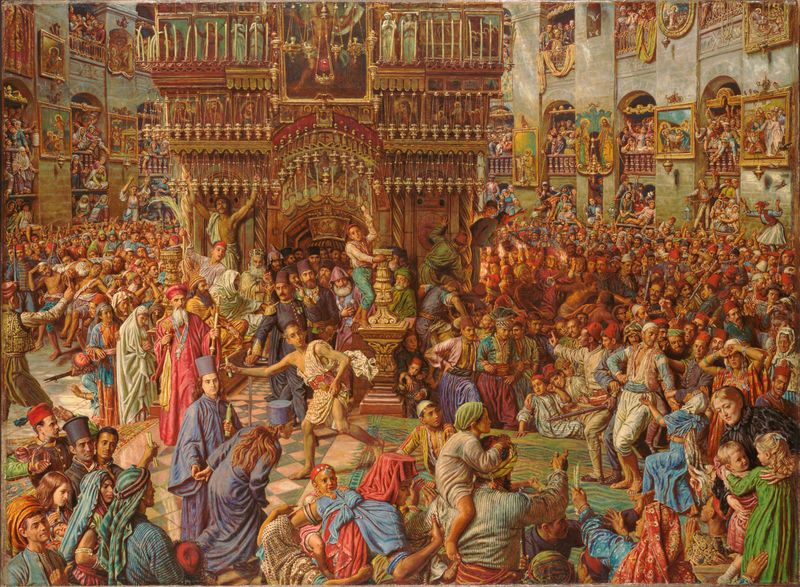
The Miracle of the Sacred Fire, Church of the Holy Sepulchre
William Holman Hunt

View from a Terrace of a River Landscape at Night
William Holman Hunt

The Lizard, Cornwall
William Holman Hunt
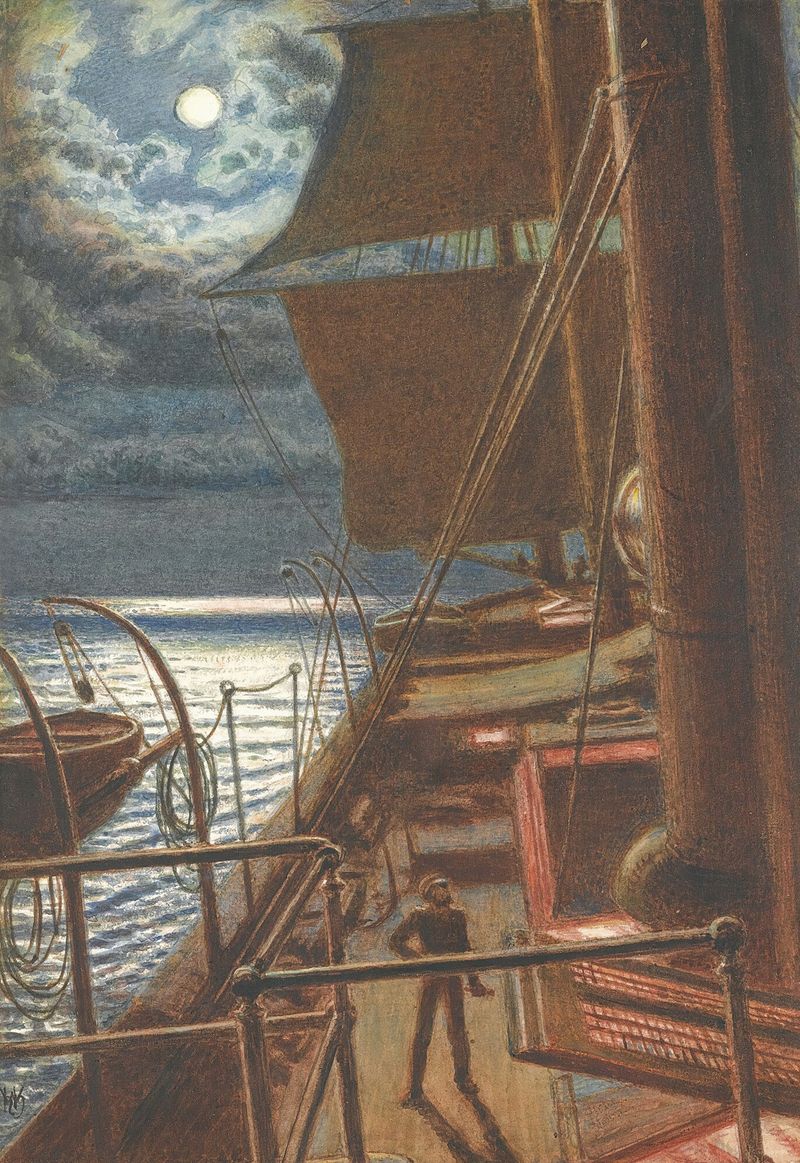
Homeward Bound
William Holman Hunt
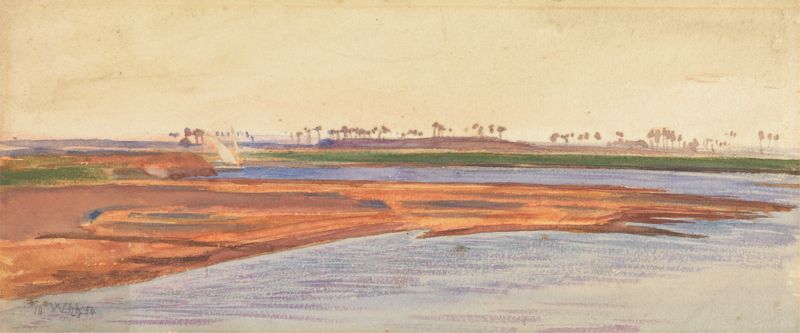
The Nile
William Holman Hunt
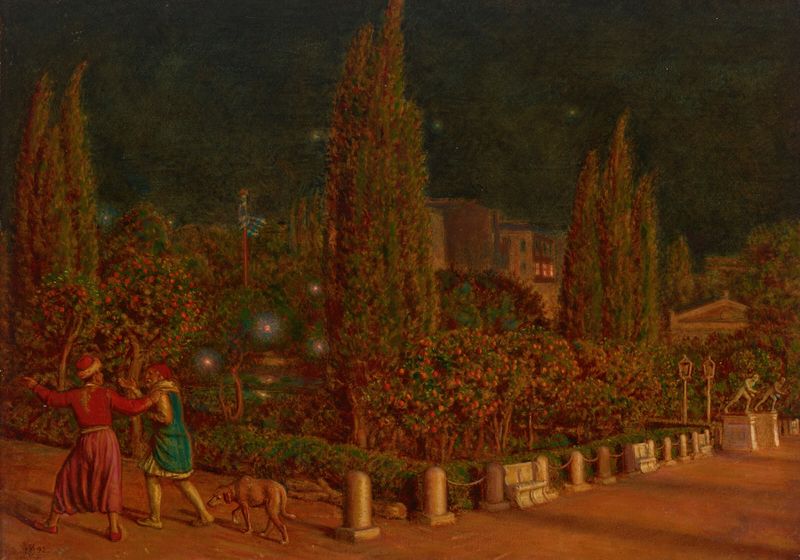
Piazza della Constituzione, Athens, by Night
William Holman Hunt





