The Lizard, Cornwall — History & Facts
Can beauty exist without sorrow? In the delicate interplay of color and form, we are reminded that resurgence often emerges from the ashes of despair, like life blooming anew amidst decay. Look to the center of the canvas where the lizard stands out in vibrant green against a backdrop of warm earth tones. The creature, poised on a leaf, draws the viewer's gaze immediately. Notice how the meticulous detailing of its scales catches the light, shimmering with vitality.
Surrounding the lizard, the intricate foliage is rendered with painstaking precision, showcasing Hunt's mastery of nature and the interplay of light and shadow. This careful composition invites contemplation, urging us to consider the harmony and fragility of life. These details hint at deeper meanings beneath the surface. The lizard, often symbolizes rebirth, embodies the cycle of life with its vibrant yet vulnerable presence.
The contrasting shadows evoke a sense of lurking danger, an ever-present tension between life and mortality. This duality invites the viewer to reflect on the transient nature of existence — that beauty often coexists with the reality of loss, suggesting that regeneration springs forth from both struggle and survival. William Holman Hunt painted this work during the late 19th century, a time when the Pre-Raphaelite Brotherhood aimed to challenge conventional norms in art. Living in a rapidly industrializing world, he infused this piece with a yearning for nature and spirituality, echoing a society grappling with the loss of innocence amidst change.
His fascination with the natural world and its symbols of renewal is palpable, urging us to pause and reflect on the cycles that shape our lives.
More Artworks by William Holman Hunt
Browse all →
The Shadow of Death
William Holman Hunt

The Triumph of the Innocents
William Holman Hunt
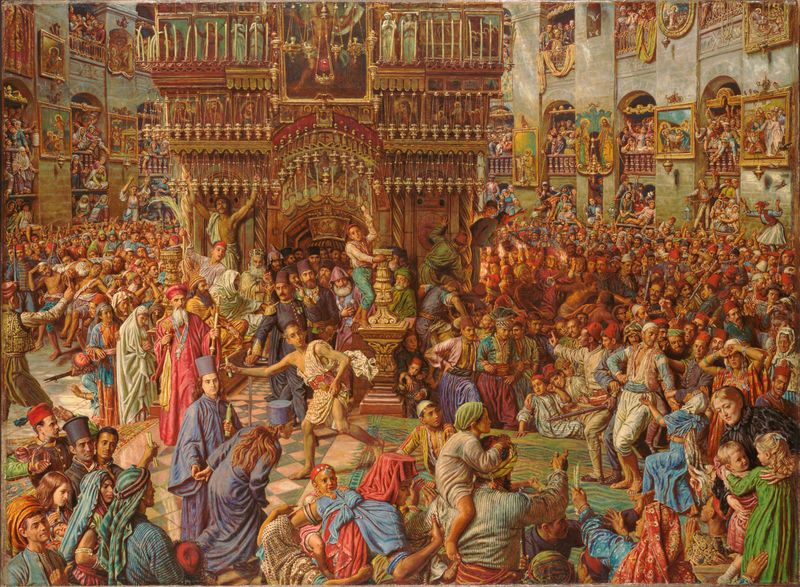
The Miracle of the Sacred Fire, Church of the Holy Sepulchre
William Holman Hunt

View from a Terrace of a River Landscape at Night
William Holman Hunt
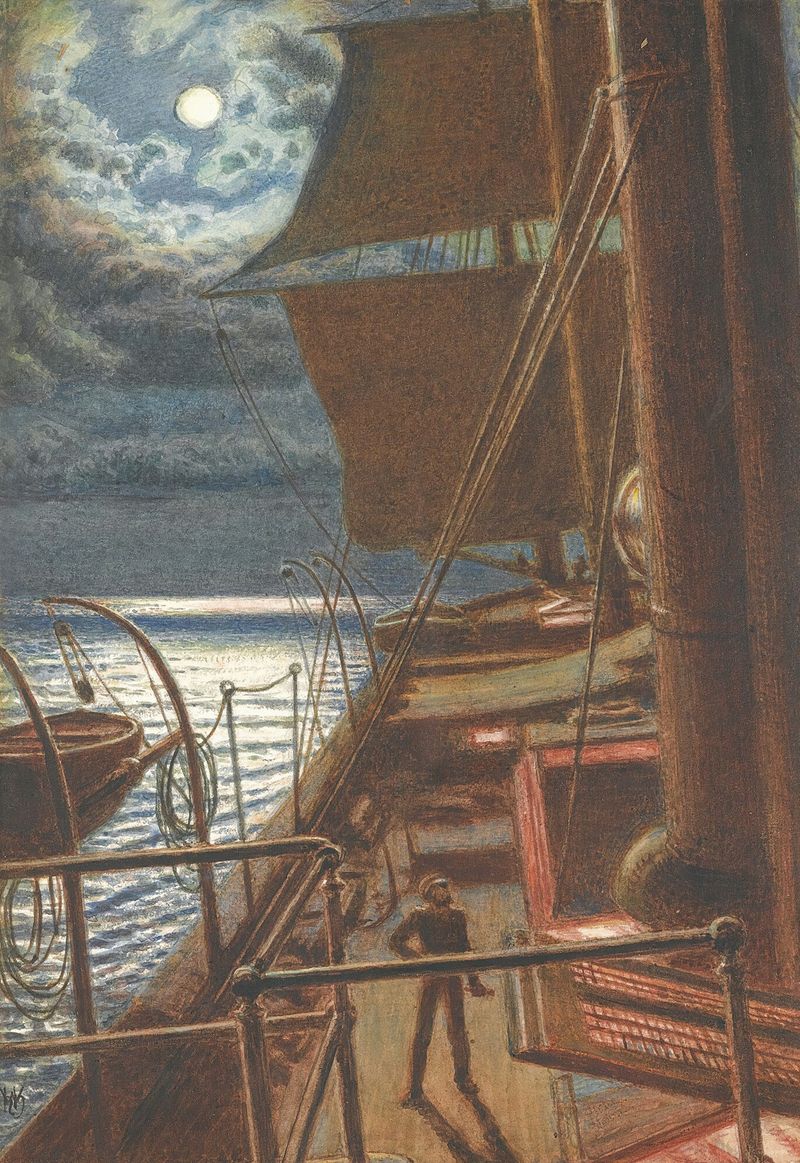
Homeward Bound
William Holman Hunt
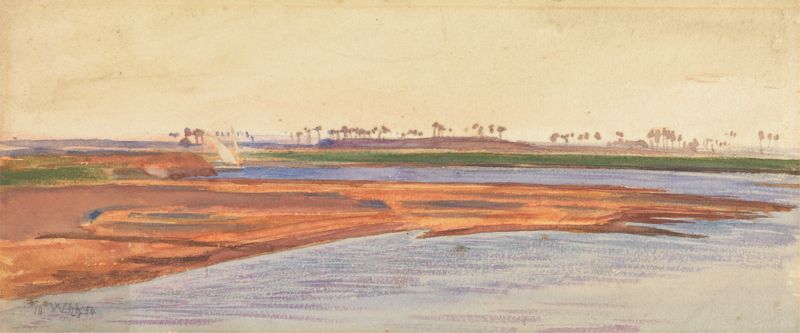
The Nile
William Holman Hunt
Piazza della Constituzione, Athens, by Night
William Holman Hunt