Hong Kong Harbor — History & Facts
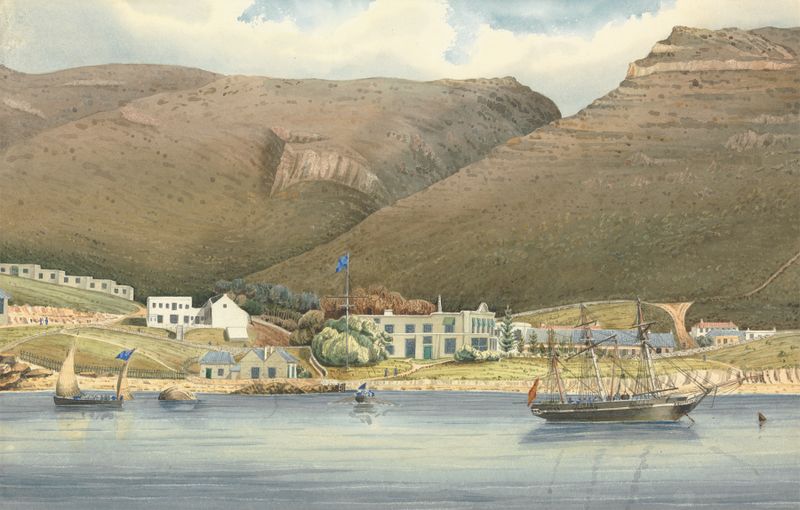
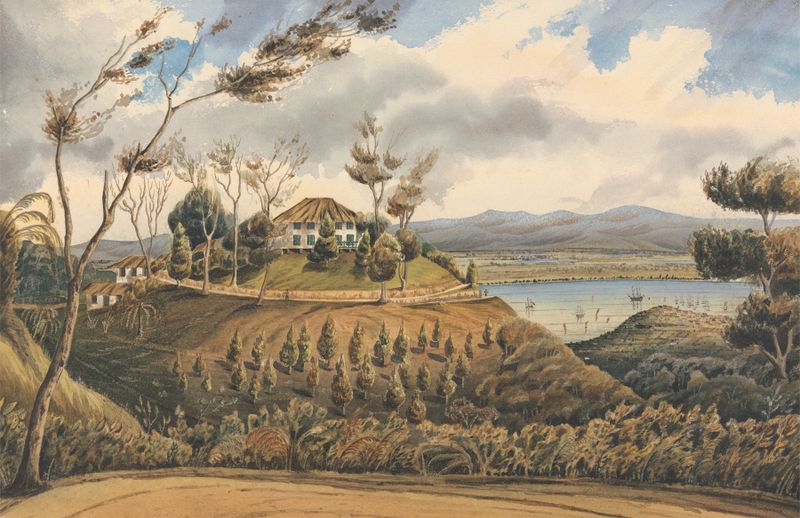
What secret hides in the quiet of the canvas? The stillness of Hong Kong Harbor whispers the stories of a world poised on the brink of change, where destiny clings to the air like a thick mist. Look to the left at the elegantly rendered ships, their sails taut against the backdrop of a fading sky. The delicate brushwork captures the soft blend of blues and grays, evoking a sense of tranquility that belies the bustling life that once filled this harbor. Notice how the light glimmers on the water's surface, creating a shimmering pathway that invites the viewer to wander deeper into the scene.
The composition is meticulously arranged, drawing the eye toward both the distant hills and the vibrant activity in the foreground, hinting at a narrative of commerce and connection. Beneath the serene surface lies a tension between the natural beauty and the encroaching industrialism of the era. The ships symbolize not just trade but a transformation; the harbor was a nexus of east and west, a meeting point of cultures. Small details, like the figures on the docks, suggest a bustling exchange, while their still poses evoke a moment of contemplation in the heart of change.
This juxtaposition of movement and stillness lends the painting an emotional weight, as it captures a pivotal moment before destiny fully unfolds. In 1843, Lt. Humphrey John Julian painted this piece while stationed in Hong Kong, a time when the region was undergoing significant transformation due to British colonial influence. It represented a shift not just for the harbor but for the world, as trade networks expanded and new cultural landscapes emerged.
This work reflects the artist's keen observation of a rapidly changing world, capturing both its beauty and its uncertainty.