
Houses near Plymouth — History & Facts
Can beauty exist without sorrow? Francis Towne's Houses near Plymouth invites us to explore this poignant dichotomy within a landscape where divinity and melancholy intertwine. Look to the foreground, where the soft strokes of pastel colors delineate quaint houses nestled amidst lush greenery. Notice how the light bathes the scene, casting gentle shadows that create a delicate interplay between the structures and their surroundings. The hazy blue sky, with clouds that drift lazily across the canvas, evokes a sense of calm, while the artist’s loose brushwork lends an air of immediacy to the scene's tranquility. Yet beneath this serene exterior lies a deeper narrative.
The houses, though charming, are isolated, suggesting a longing for connection that remains unfulfilled. The contrasts of light and shadow hint at the fleeting nature of happiness; the brightness illuminating the homes juxtaposes starkly against the darker, more ambiguous areas, reflecting the tension between life's beauty and the inevitable shadows that accompany it. This duality evokes contemplation, beckoning the viewer to recognize the coexistence of joy and sorrow in everyday life. In 1810, Towne painted this work during a period of great artistic evolution in England, where the Romantic movement was taking root.
Living and working in a rapidly changing world, he captured both the picturesque qualities of the English landscape and the emotional undercurrents that defined his experience as an artist. This painting stands as a testament to a moment when the beauty of nature was often overshadowed by the complexities of the human condition.
More Artworks by Francis Towne
Browse all →
The Grange at the Head of Keswick Lake
Francis Towne

Vauxhall Stairs, from Millbank, July 5, 1797
Francis Towne

View in Borrowdale of Eagle Crag and Rosthwaite
Francis Towne

View of Lake Como with Monte Leoni
Francis Towne
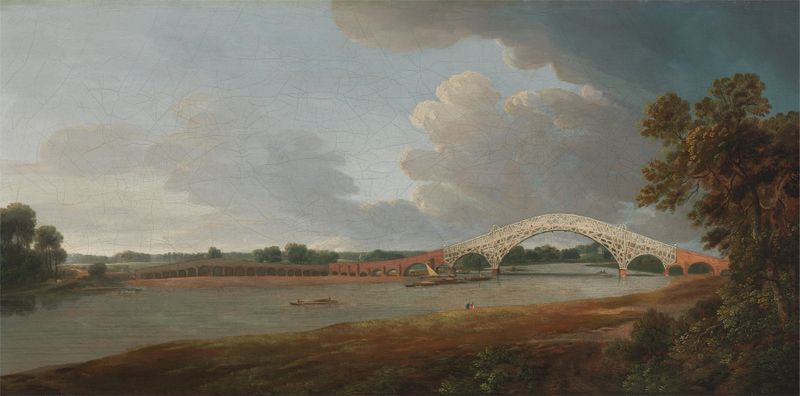
Old Walton Bridge
Francis Towne
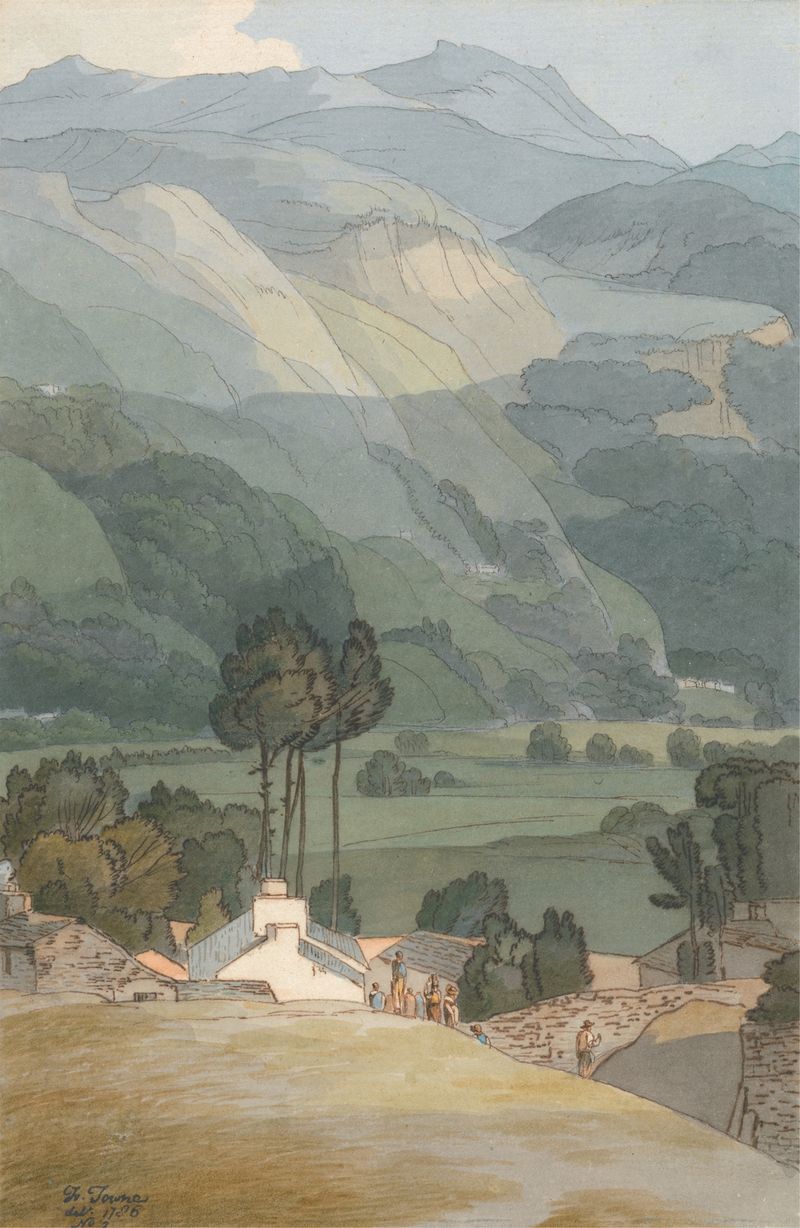
Ambleside
Francis Towne
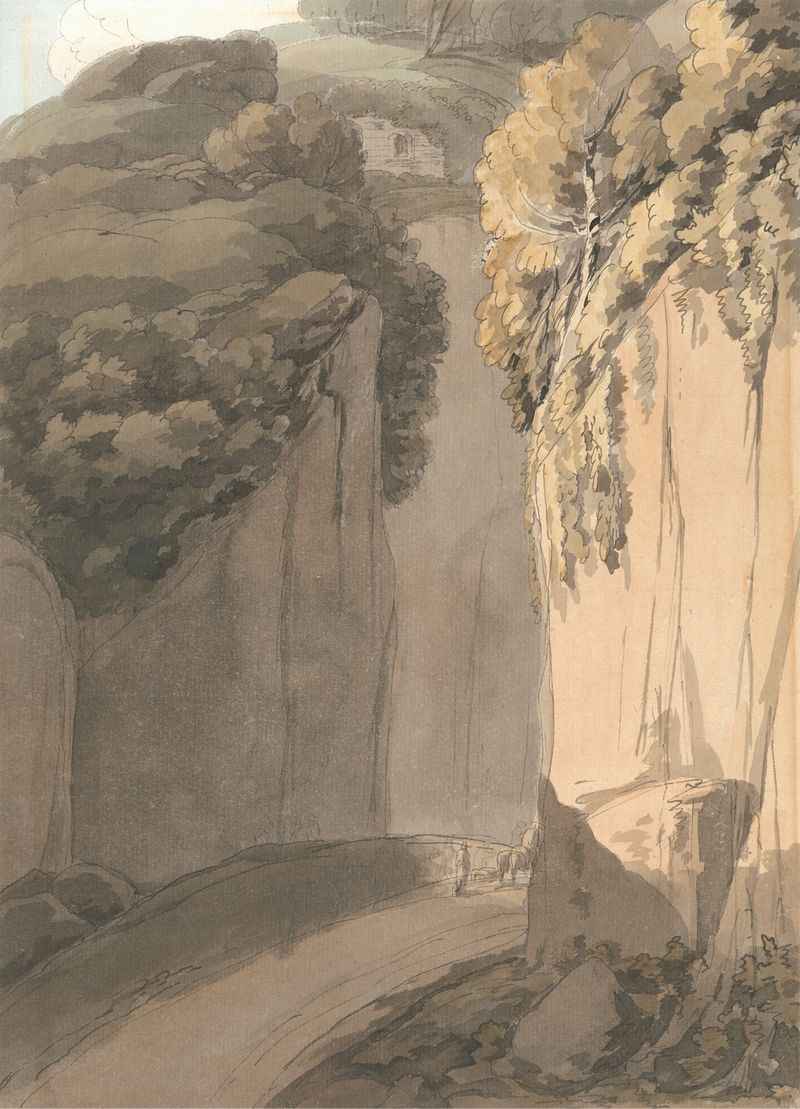
Entrance to the Grotto at Posilippo, Naples
Francis Towne

The Claudian Aquaduct, Rome
Francis Towne

A View Near the Arco Scuro, Looking Towards the Villa Medici, Rome
Francis Towne

View of the Rhydaer
Francis Towne





