
The Grange at the Head of Keswick Lake — History & Facts
Could beauty survive in a century of chaos? In The Grange at the Head of Keswick Lake, the answer is a resounding yes, as a serene landscape whispers of tranquility amidst the tumult of the 18th century. Focus first on the gentle curve of the lake that cradles the grange, the architectural centerpiece of the painting. Notice how the soft blues and greens meld seamlessly, creating a sense of harmony. The light dances across the water’s surface, prompting reflections that shimmer like fleeting memories.
To the left, the verdant hills rise, their soft contours a counterpoint to the solidity of the grange, evoking a balance between human presence and nature's grandeur. Delve deeper into the contrasts here—the stillness of the lake against the subtle movement of wind in the trees. Each brushstroke speaks of life and fluidity, as if the landscape breathes in tandem with the viewer. The juxtaposition of the sturdy grange against the ephemeral clouds suggests a dialogue between permanence and transience, inviting contemplation on the fragile nature of existence amidst the backdrop of a rapidly changing world. Francis Towne painted this work in 1786 while living in England, a period marked by the shifting tides of the Enlightenment and the Industrial Revolution.
These influences loomed large in the artistic landscape, challenging traditional notions of beauty and representation. Towne, however, chose to immortalize a moment of calm, reflecting his desire to capture the essence of the sublime in a world often overshadowed by upheaval.
More Artworks by Francis Towne
Browse all →
Vauxhall Stairs, from Millbank, July 5, 1797
Francis Towne

View in Borrowdale of Eagle Crag and Rosthwaite
Francis Towne

View of Lake Como with Monte Leoni
Francis Towne
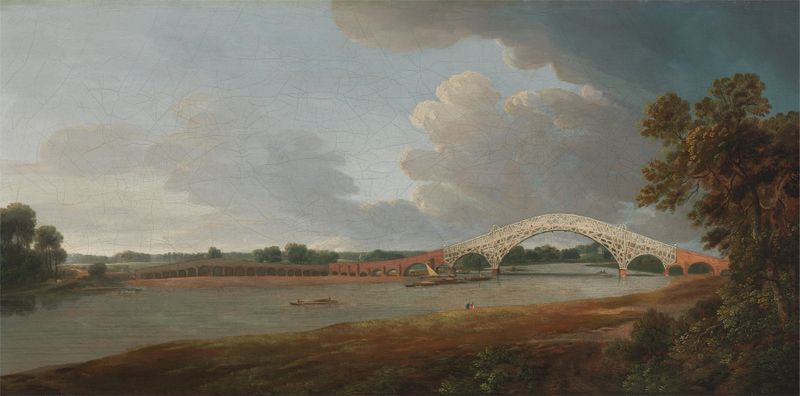
Old Walton Bridge
Francis Towne
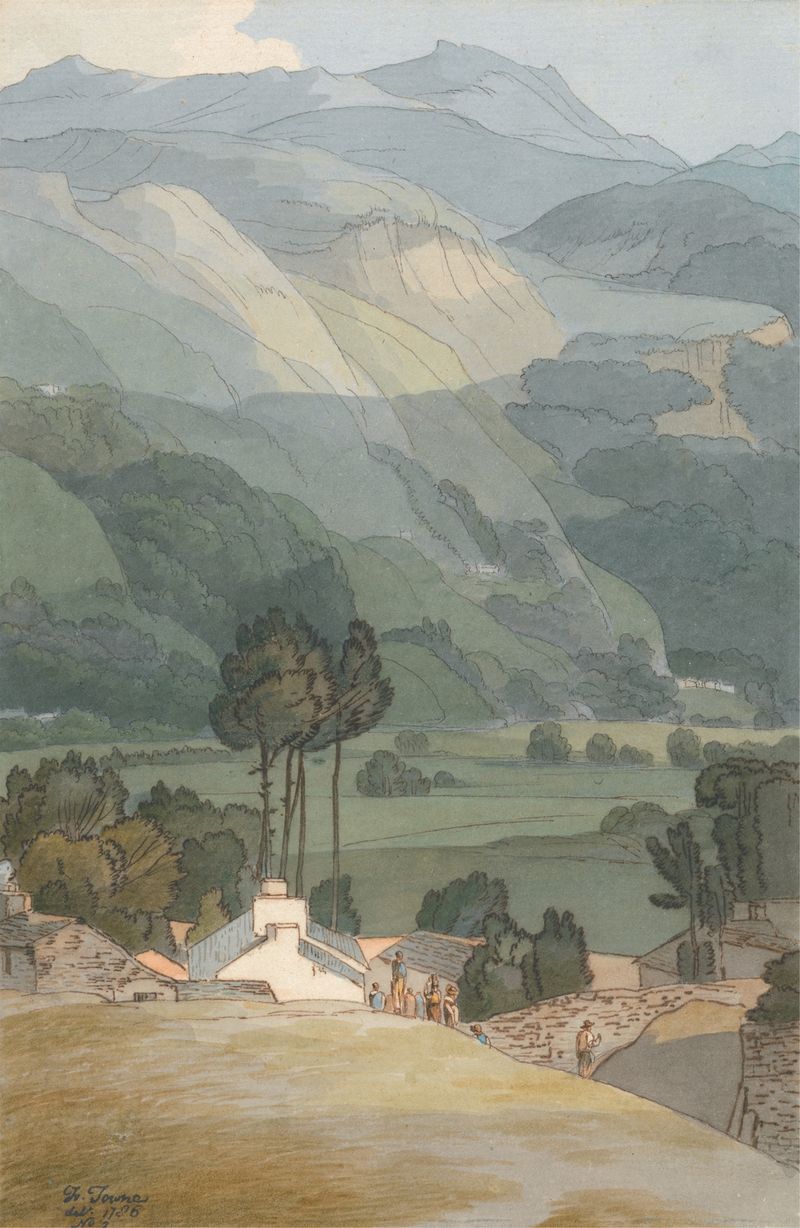
Ambleside
Francis Towne
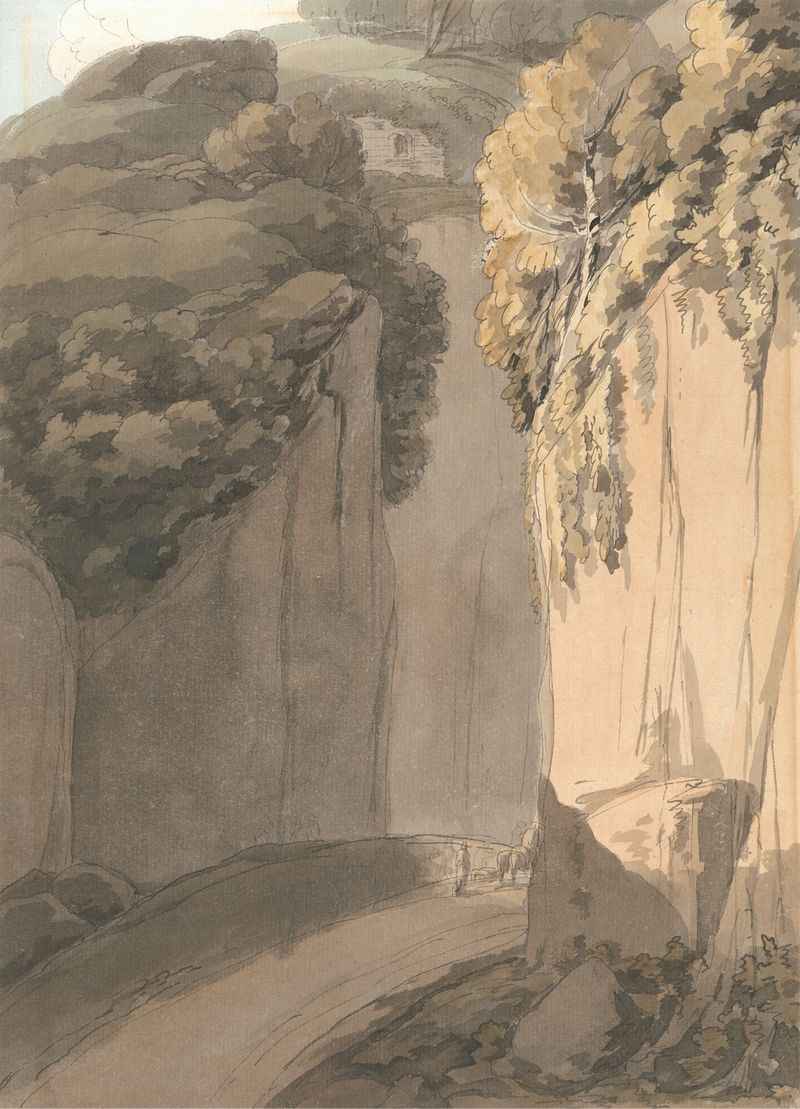
Entrance to the Grotto at Posilippo, Naples
Francis Towne

The Claudian Aquaduct, Rome
Francis Towne

A View Near the Arco Scuro, Looking Towards the Villa Medici, Rome
Francis Towne

View of the Rhydaer
Francis Towne

Houses near Plymouth
Francis Towne





