
Houses on high rocks — History & Facts
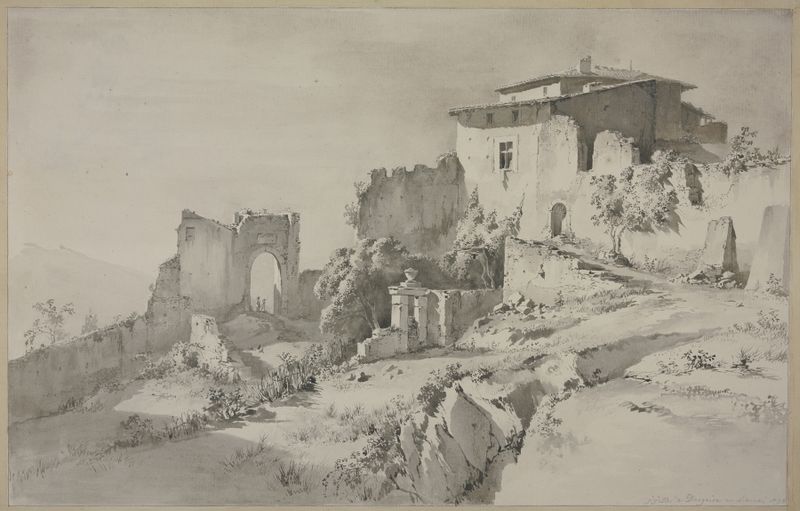
When did color learn to lie? In a world painted with the hues of despair, the interplay of light and shadow reveals a deeper truth, one tinged with hope. Look to the left at the carefully rendered houses perched precariously on high rocks, each structure etched delicately against a backdrop of soft, swirling clouds. The artist employs a muted yet harmonious palette, where gentle grays and earthy tones are juxtaposed with splashes of vibrant greens, drawing the eye toward the promise of life nestled amidst the stark cliffs. Notice how the light filters through the clouds, casting ethereal shadows that dance upon the rocky terrain, inviting contemplation of the scene's precarious beauty. Beneath the surface, this artwork encapsulates a struggle: the tension between isolation and community.
The houses, seemingly abandoned yet resilient, evoke a sense of longing for connection while simultaneously suggesting a defiance against nature's forces. The ruggedness of the rocks symbolizes life's challenges, while the idyllic colors hint at an underlying hope—reminding us that even in solitude, we can find fortitude and solace. During its creation, Jean-Jacques de Boissieu was navigating the complexities of 18th-century France, a time when the art world was shifting towards Romanticism, embracing emotion and the sublime. Working in relative obscurity, he focused on the delicate balance between realism and romantic landscapes.
This period marked a burgeoning interest in nature's grandeur, reflecting both personal introspection and broader societal changes that would soon shape modern art.
More Artworks by Jean-Jacques de Boissieu
Browse all →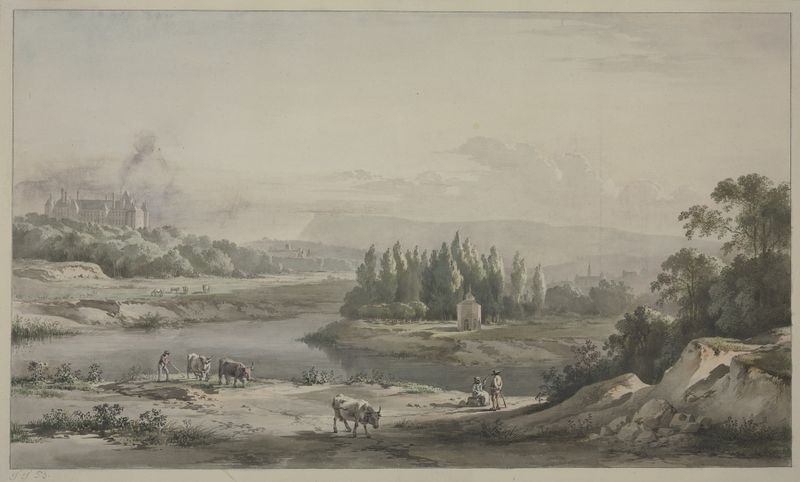
River Landscape
Jean-Jacques de Boissieu

Vestiges du temple d’Apollon au bord du Lac d’Auverne
Jean-Jacques de Boissieu

Vue du pont de la Guillotière à Lyon
Jean-Jacques de Boissieu
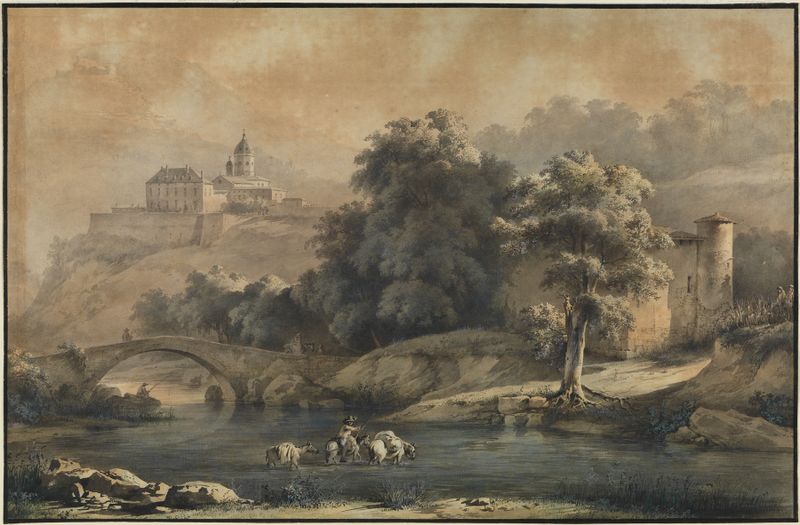
Flußlandschaft mit Bergkloster
Jean-Jacques de Boissieu
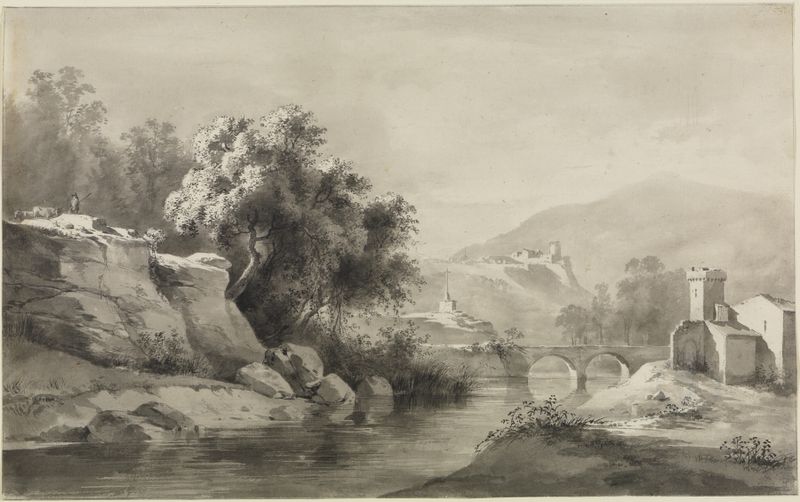
Flusslandschaft mit Doppelbogenbrücke und Kreuz
Jean-Jacques de Boissieu
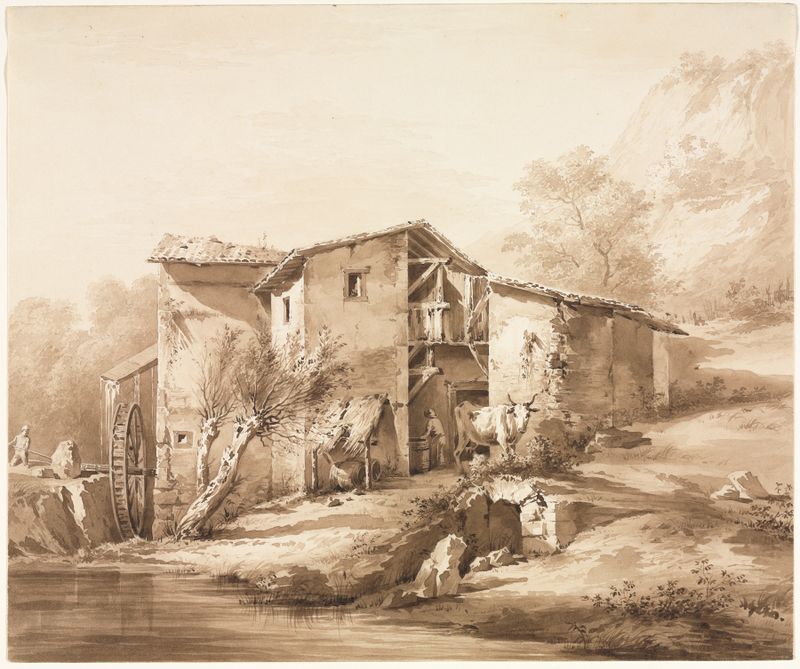
Landscape with Watermill
Jean-Jacques de Boissieu

Château Galliard
Jean-Jacques de Boissieu

Flußlandschaft bei L’Arbresle im Lyonnais
Jean-Jacques de Boissieu
Landscape near Dargoire
Jean-Jacques de Boissieu

Tree with leafless treetop
Jean-Jacques de Boissieu





