Hunter and Horsemen on a Wooded Road, with a Village in a Valley beyond — History & Facts
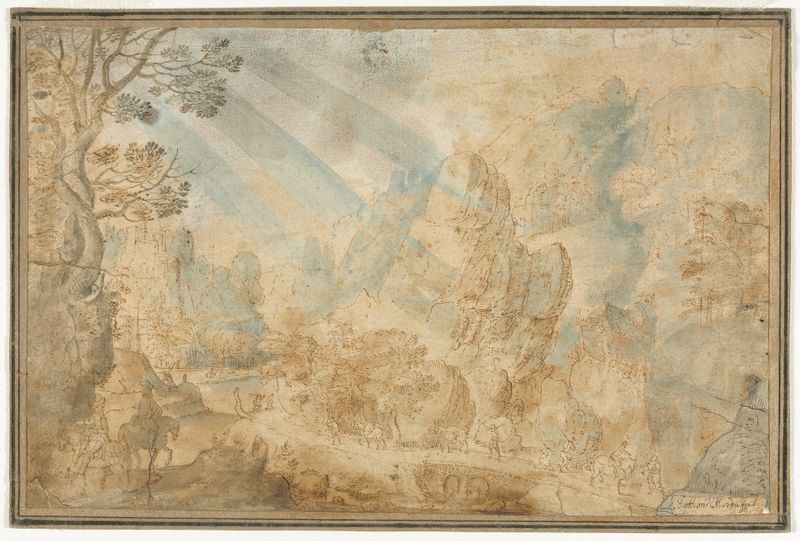
What secret hides in the quiet of the canvas? In Hunter and Horsemen on a Wooded Road, with a Village in a Valley beyond, the stillness speaks volumes, whispering of loss and longing. Look to the left, where shadows dance among the dense foliage, the rich greens of the trees contrasting with the muted earth tones of the road. Notice how the light filters through the canopy, casting dappled patterns upon the horsemen and their steadfast mounts. The figures, poised yet contemplative, invite the viewer into a world suspended in time — an interplay of movement and stillness that suggests an impending journey or perhaps a return to something once sacred. Delve deeper into the expressions of the riders; their faces reveal traces of weariness and determination, hinting at untold stories of sacrifice.
The distant village, nestled in the valley, stands as a poignant reminder of what may have been left behind — a vivid backdrop that elicits a sense of nostalgia and loss. The path winding through the woods symbolizes the complexities of choice and consequence, urging us to reflect on the weight of decisions made in the pursuit of purpose. Anton Mirou painted this work in 1608, during a period characterized by burgeoning artistic exploration and the flourishing of landscape painting. Living in the Netherlands, he was influenced by the dramatic use of light and shadow that defined the Baroque style.
At this moment in his career, the melding of natural beauty and human emotion began to take form, embodying the personal and collective experiences of his time.