Discover insights about this artwork
I Raro te Oviri (Under the Pandanus) — History & Facts
In I Raro te Oviri (Under the Pandanus), vibrant colors dominate the canvas, showcasing lush greens and deep blues. The figures, likely Tahitian women, are depicted in traditional attire, surrounded by the rich foliage of the pandanus tree. The composition is lively, filled with movement and energy.
The overall setting conveys a sense of tropical paradise. The painting is executed in oil on canvas, a medium that allows for rich texture and depth of color. Gauguin's brushwork is distinct, with bold strokes that create a sense of rhythm in the foliage and figures. The dimensions are approximately 90 x 73 cm, making it a substantial work that invites close examination.
The use of color is particularly striking, with contrasts that draw the viewer's eye. Paul Gauguin created I Raro te Oviri during his time in Tahiti, where he sought to escape European civilization. This work reflects his fascination with the local culture and landscapes. An interesting fact is that Gauguin often used local models, which adds authenticity to his depictions.
This painting is a prime example of his Post-Impressionist style, characterized by bold colors and simplified forms.
More Artworks by Paul Gauguin
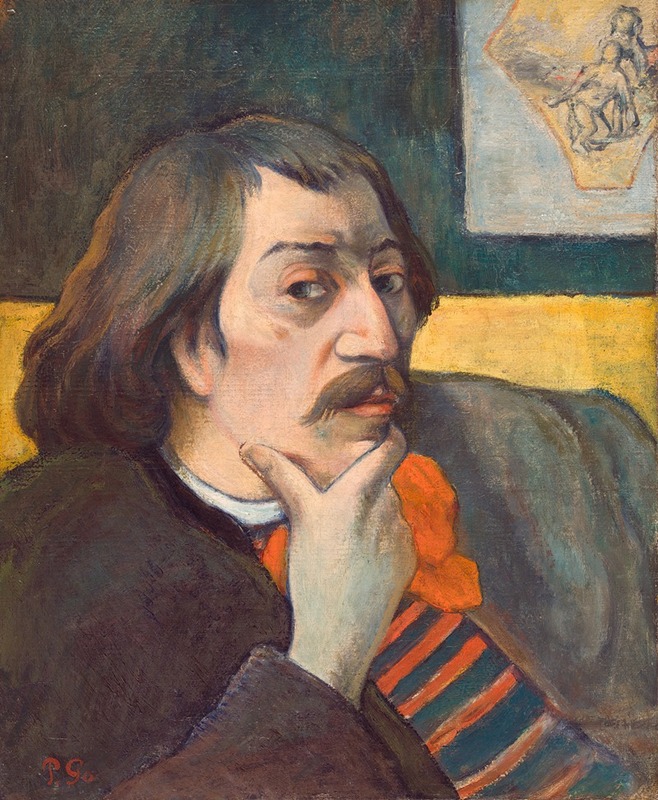
Self Portrait
Paul Gauguin
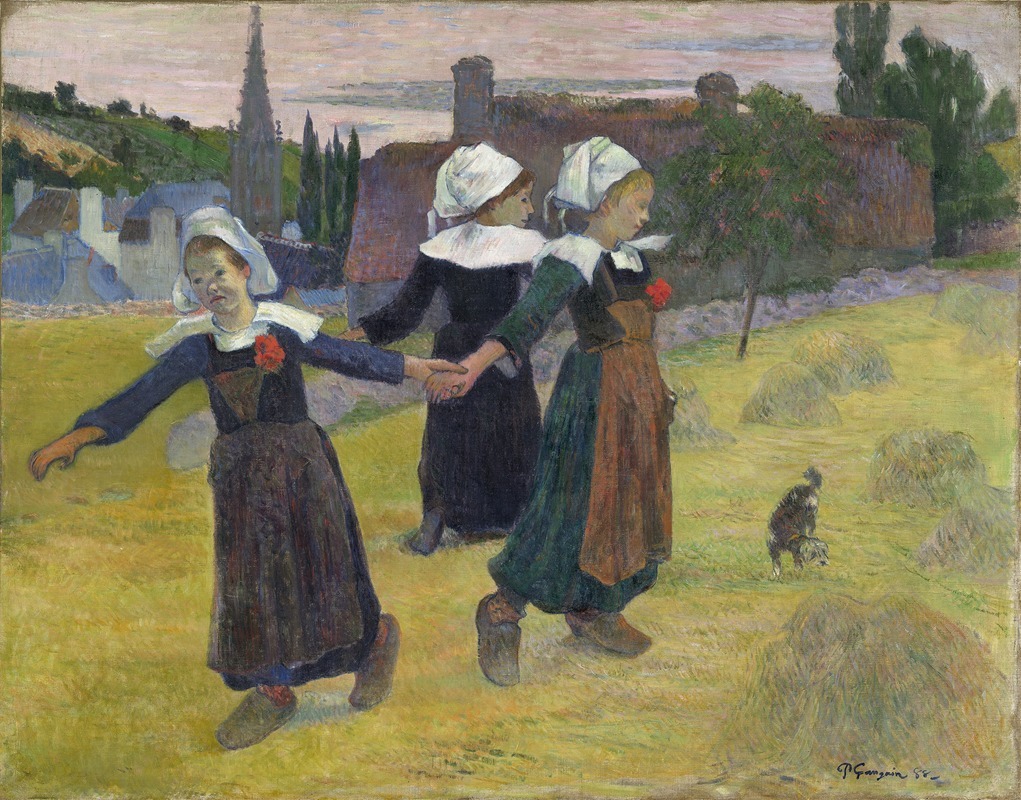
Breton Girls Dancing,Pont-Aven
Paul Gauguin
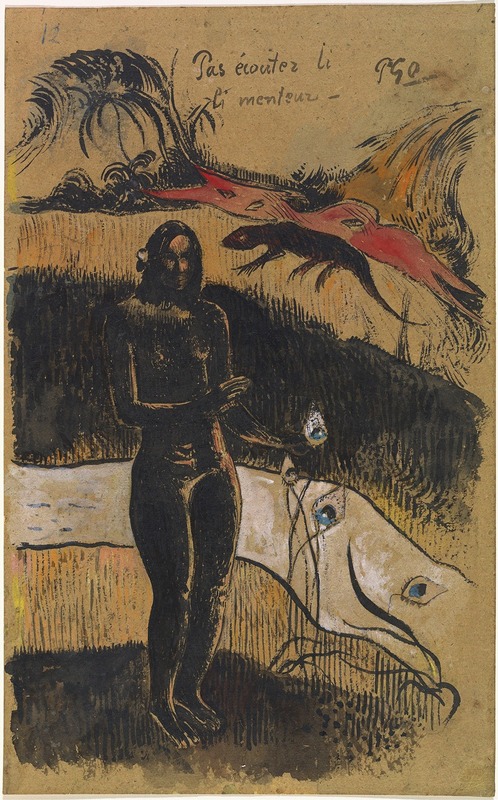
Nave Nave Fenua
Paul Gauguin
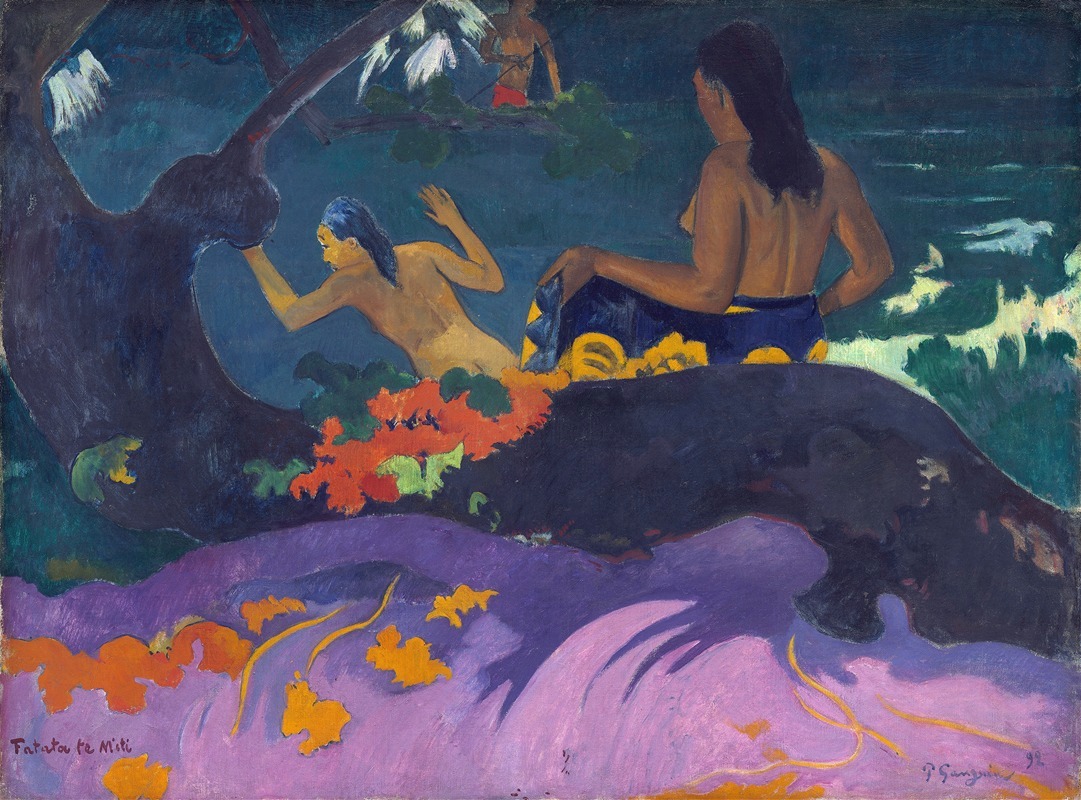
Fatata te Miti (By the Sea)
Paul Gauguin
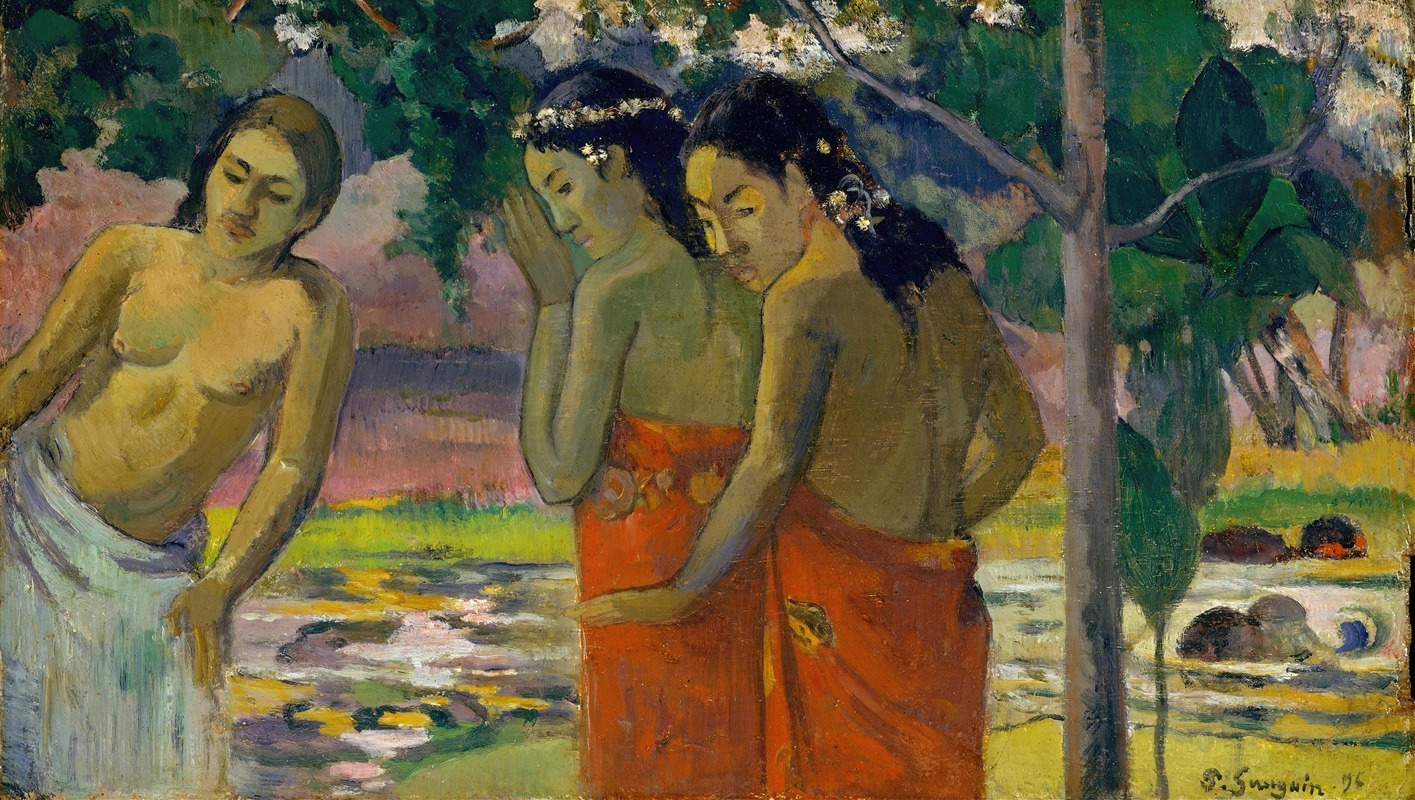
Three Tahitian Women
Paul Gauguin
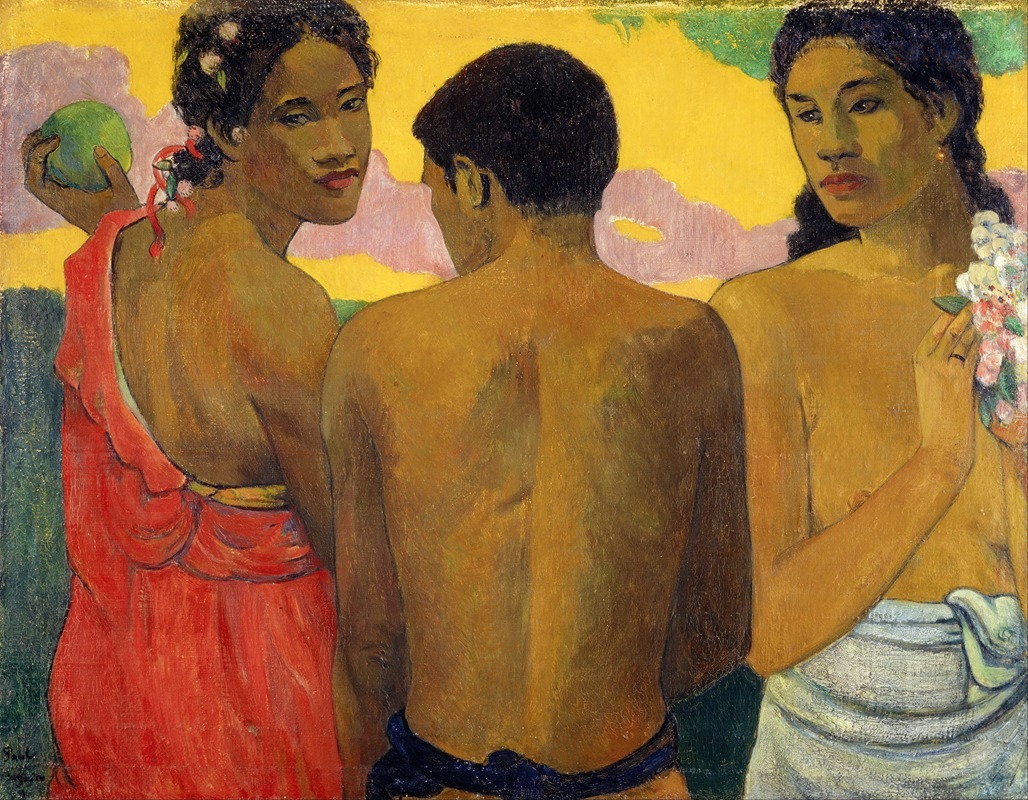
Three Tahitians
Paul Gauguin
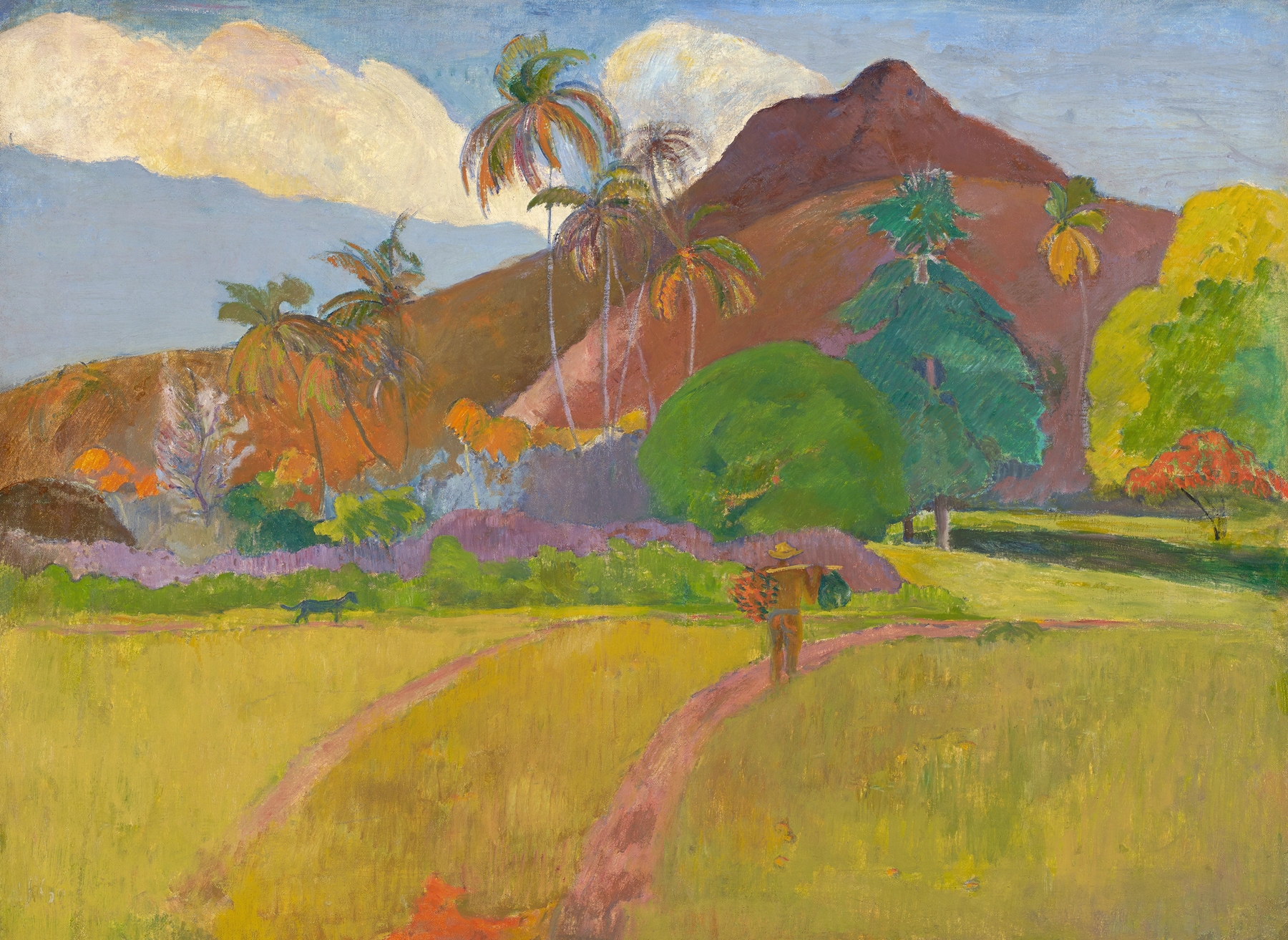
Tahitian Landscape
Paul Gauguin
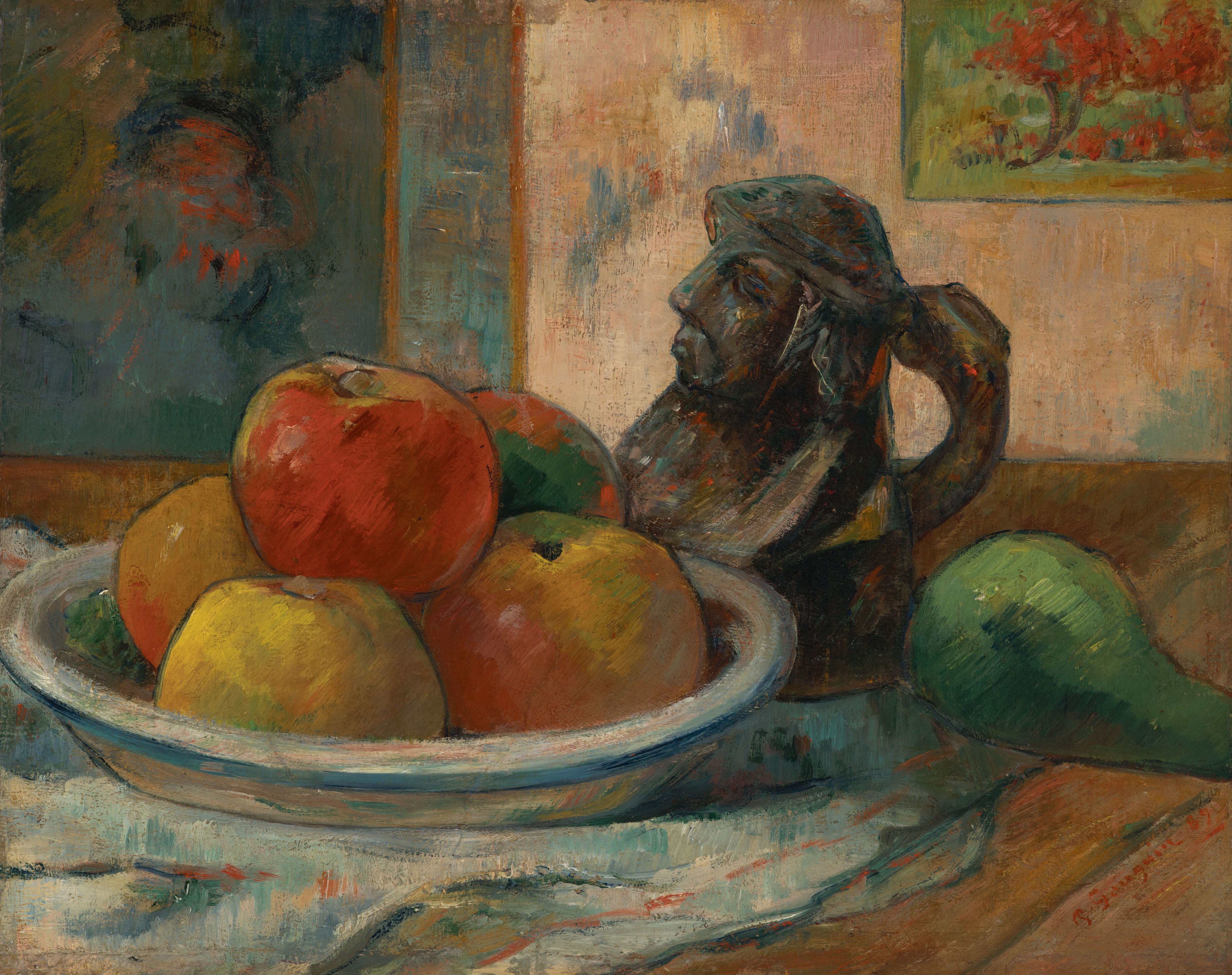
Still Life with Apples, a Pear, and a Ceramic Portrait Jug
Paul Gauguin
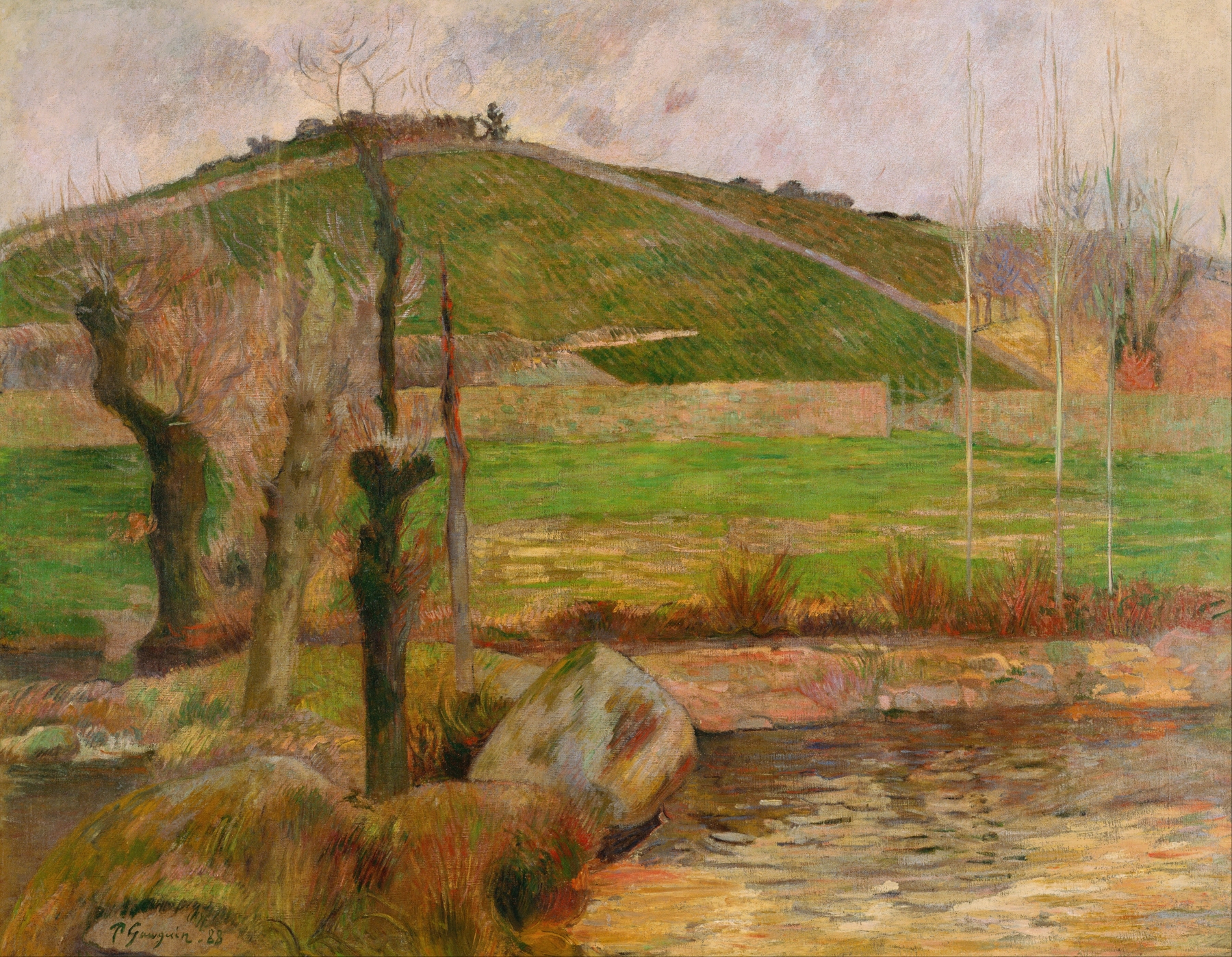
Landscape near Pont-Aven
Paul Gauguin

No te aha oe riri (Why Are You Angry?)
Paul Gauguin