Ideale Landschaft mit Bauernkirmes — History & Facts
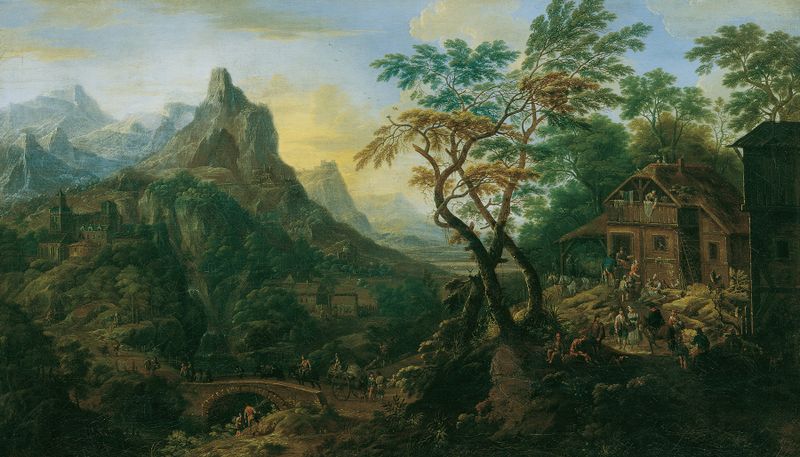
In moments of silence, the heart reflects the beauty hidden within the ordinary, waiting for the artist to reveal it. Focus on the vibrant greens that dominate the canvas, inviting you into a serene yet lively landscape. Look to the lower right, where figures dance with joy, their vibrant clothing a playful contrast against the soft pastels of the rural backdrop. Notice how the gentle strokes create a rhythm, guiding your gaze from the merriment of the harvest festival to the distant hills that cradle the scene.
Light spills across the image, illuminating the laughter, and yet there's a stillness in the air that suggests this moment is both fleeting and eternal. Delve deeper, and you’ll find an intricate balance between the noise of the festival and the profound quiet of the surrounding nature. The joyous celebration of the villagers, with their hands raised in laughter, juxtaposes the calm, watchful trees that stand sentinel, embodying a harmony that speaks to the unity of man and nature. Each brushstroke signifies a connection to tradition, while the muted background suggests a longing for simpler times, creating a poignant contrast between vibrancy and tranquility. Josef Orient painted this work during a period when the art world was grappling with the upheavals of modernity.
Though the exact date remains uncertain, it is believed to be created in the late 19th century, a time when artists were seeking to capture the essence of rural life amidst the rapid industrial changes. This piece reflects not only a celebration of communal life but also a yearning for stability in a world increasingly defined by chaos.