Idylle am Seeufer — History & Facts
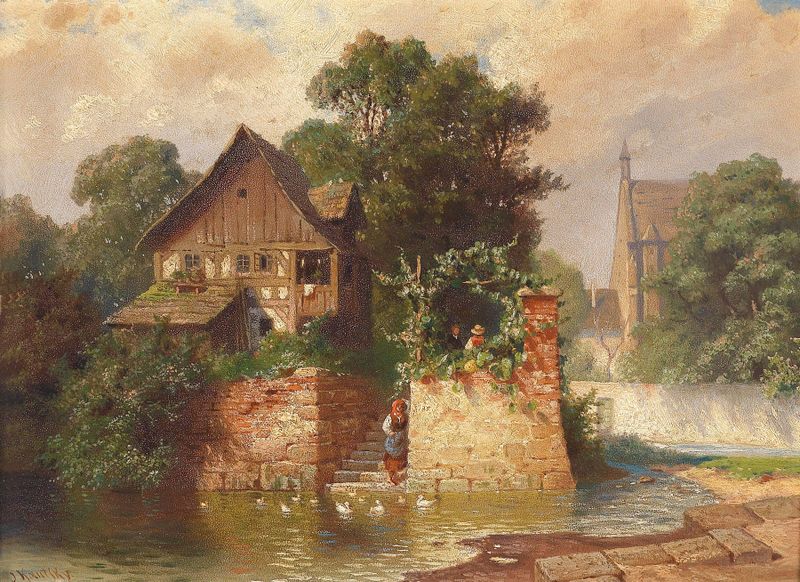
What secret hides in the quiet of the canvas? In a still moment captured in time, we find ourselves drawn into the serene embrace of a lakeside landscape, where movement is suggested yet barely tangible. The gentle ripples of water, the flutter of leaves, and the distant figures all speak to an underlying rhythm, a life that breathes just outside the frame. Look to the center of the canvas, where the shimmering lake reflects a kaleidoscope of colors—deep blues dappled with hints of gold. Here, the artist employs soft brushstrokes to create a dreamlike atmosphere, with the foliage framing the scene in lush greens.
The figures, seemingly at a pause, appear engaged in contemplation, their movements implied through the way they lean or gesture. The composition balances tranquility and activity, drawing the viewer’s eye across the landscape with an inviting flow. Beneath the surface, the interplay of light and shadow reveals deeper narratives—an intimate conversation between nature and humanity, where both coexist in harmony. The contrasting stillness of the water against the animated foliage evokes a sense of peace intertwined with a yearning for connection.
Each detail, from the shimmering reflections to the textured bark of the trees, resonates with the theme of movement—both physical and emotional—reminding us how fleeting moments can echo through quiet spaces. In an undated period of his career, Johann Kautsky created this work during a time when the art world was shifting towards Impressionism, embracing the beauty of everyday life. Living in a region rich with scenic landscapes, Kautsky was inspired by the natural world, often depicting tranquil scenes that encouraged viewers to pause and reflect. The absence of a specific date allows us to appreciate the timeless quality of his vision, which echoes a universal longing for peace amid life’s constant motion.