Idylle am Stadtgraben — History & Facts
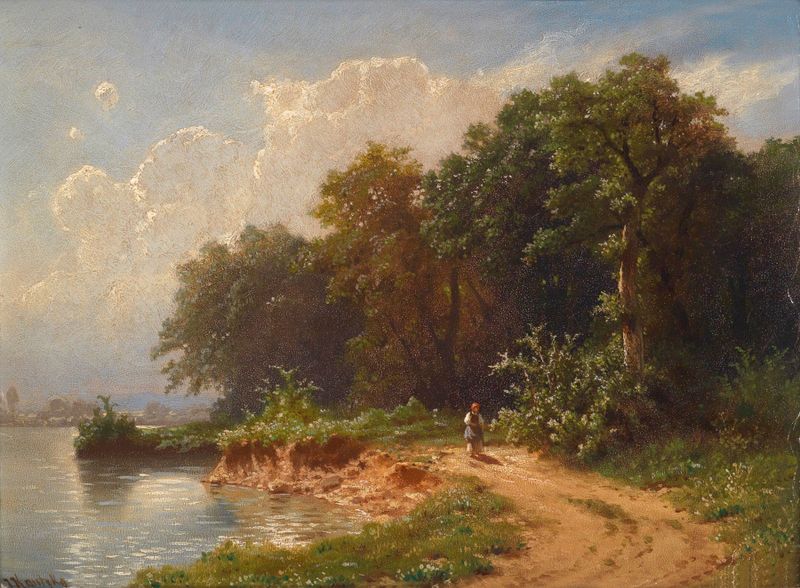
Who listens when art speaks of silence? In a world saturated by noise, the unvoiced yearnings and delicate tensions of desire often remain unacknowledged. Look closely at the lush greenery that envelops the scene, drawing your eyes to the gentle curves of the landscape. Notice how the soft brushstrokes weave a tapestry of life and tranquility; every blade of grass seems to whisper secrets of longing. The light plays delicately across the surface, creating a soft glow that invites you to linger, while shadows dance subtly, hinting at the complexity beneath the surface of this idyllic setting. As you delve deeper, the juxtaposition between the stillness of nature and the unfulfilled desires it evokes becomes apparent.
The figures, though seemingly at peace, exude a subtle tension; their gazes wander, lost in thoughts unexpressed. The interplay of light and shadow heightens this emotional landscape, reflecting the bittersweet nature of aspirations that remain just beyond reach. Here, the artist captures not just a scene, but a profound sense of yearning that resonates within each viewer. During the time this work was crafted, Johann Kautsky was immersed in an artistic milieu undergoing profound changes.
The late 19th century saw the rise of Impressionism and an increasing focus on capturing fleeting moments and emotions. Kautsky's work reflects this shift, embodying both the beauty of the natural world and the intricate dance of human desire within it, despite its undated nature leaving some aspects of his intention open to interpretation.