
Ilam Rock, Dovedale — History & Facts
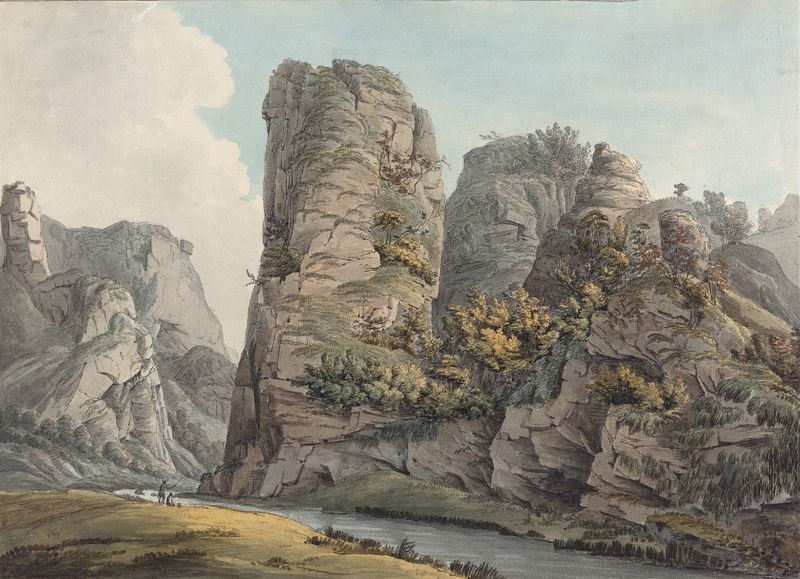
This sentiment resonates deeply with Ilam Rock, Dovedale, where the striking landscape presents an enchanting illusion that veils deeper emotions lurking beneath its surface. Look to the center of the canvas, where the majestic Ilam Rock rises dramatically, its textured surface a testament to nature's resilience. Notice how the sunlight cascades over the edges, creating ethereal highlights that draw the eye. The palette of rich greens and muted browns mirrors the vibrancy of the English countryside while hinting at an undercurrent of tranquility that is almost deceptive.
The careful balance of light and shadow reveals the artist’s masterful technique, evoking both admiration and introspection. Beneath the idyllic surface lies a tension between the beauty of the landscape and the weight of solitude. The seemingly untouched wilderness invites a sense of peace, yet the absence of human life hints at isolation, amplifying the emotional depth of the scene. The contrasts in color and texture serve not only to celebrate nature's glory but to remind viewers of the fleeting nature of such beauty, as if it is always on the cusp of erosion or change. William Day created this work in 1789, during a period when the Romantic movement was burgeoning, encouraging artists to explore the emotional power of landscapes.
Living in England, Day was surrounded by the growing appreciation for nature's sublime qualities. This piece reflects both the ideals of his contemporaries and the artist's own introspective relationship with the world around him, capturing a moment that intertwines beauty with an underlying sense of melancholy.
More Artworks by William Day
Browse all →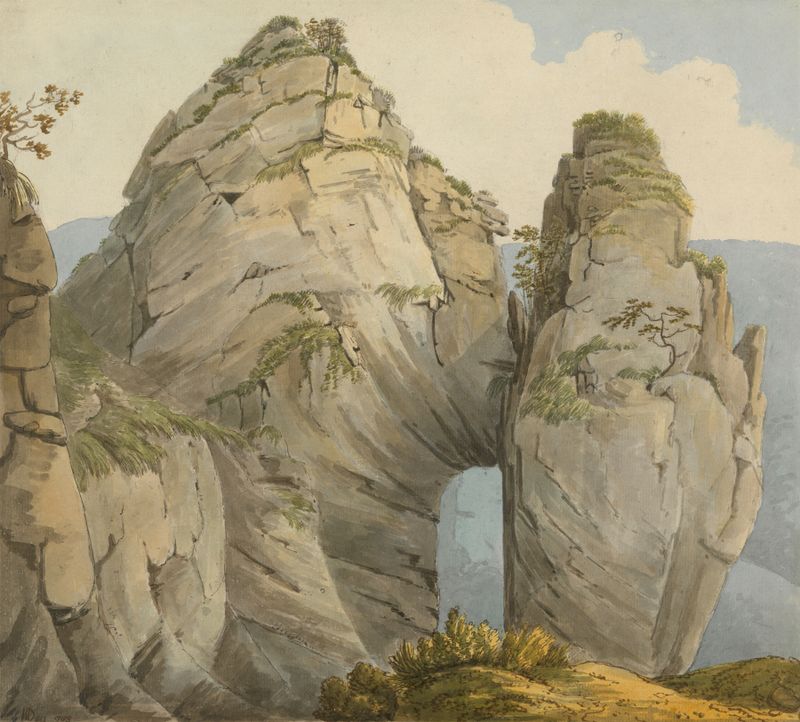
Renard’s Hole, Dovedale, Derbyshire
William Day
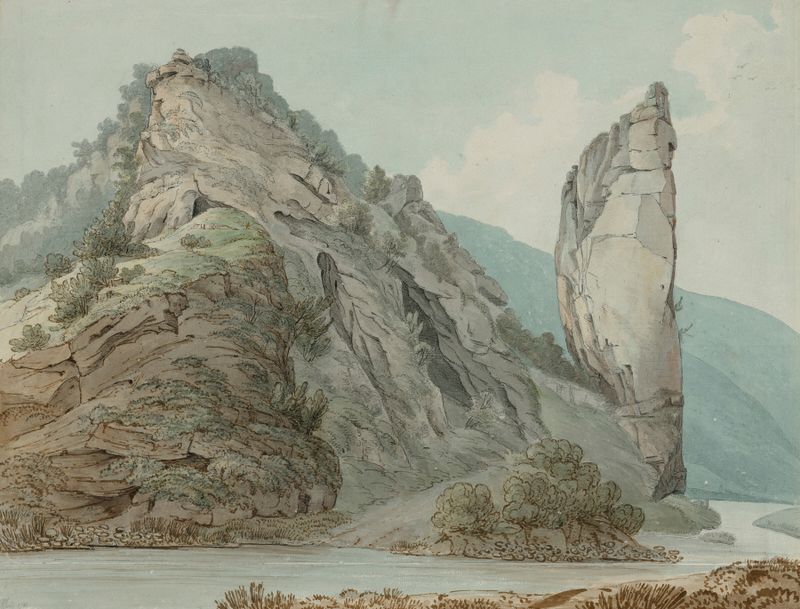
Ilam Rock, Dovedale
William Day
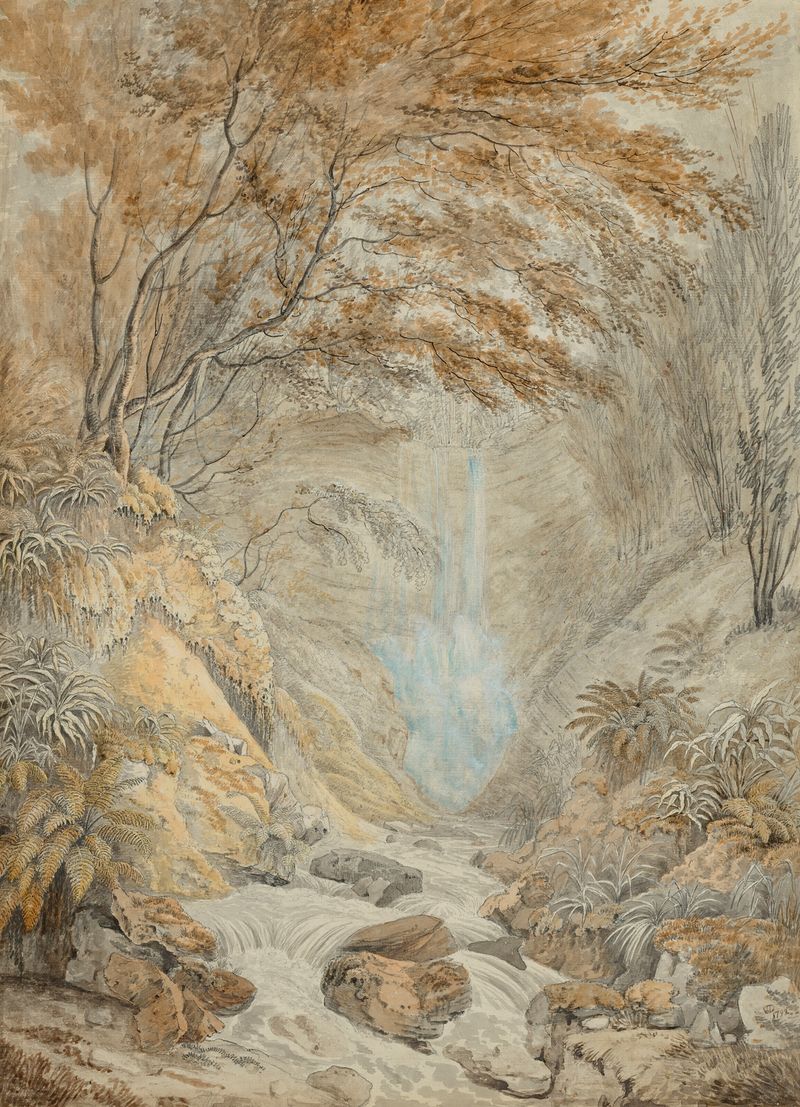
Old Roar Waterfall, near Hastings, Sussex
William Day

Portrait of a Lady
William Day
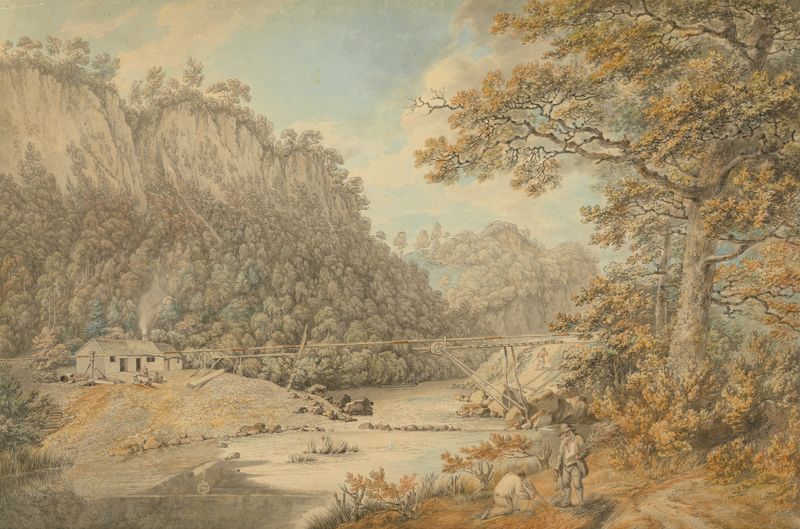
A Scene in Derbyshire: Industrial Works spanning a River
William Day
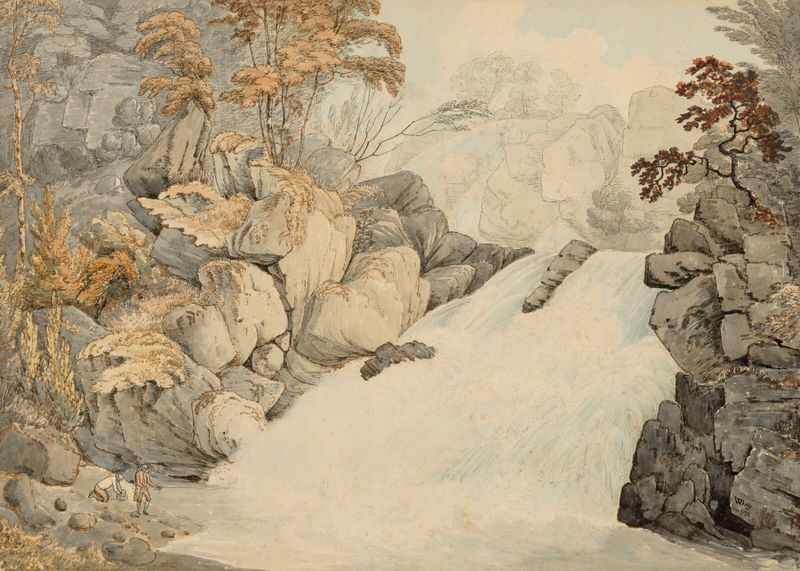
Dolmelynllyn Falls near Dolgellau, Wales
William Day
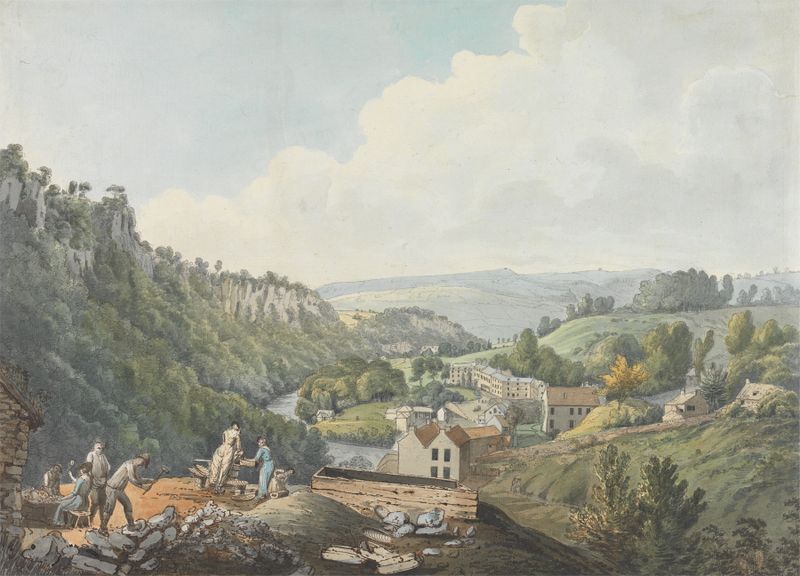
Matlock Baths, Derbyshire
William Day
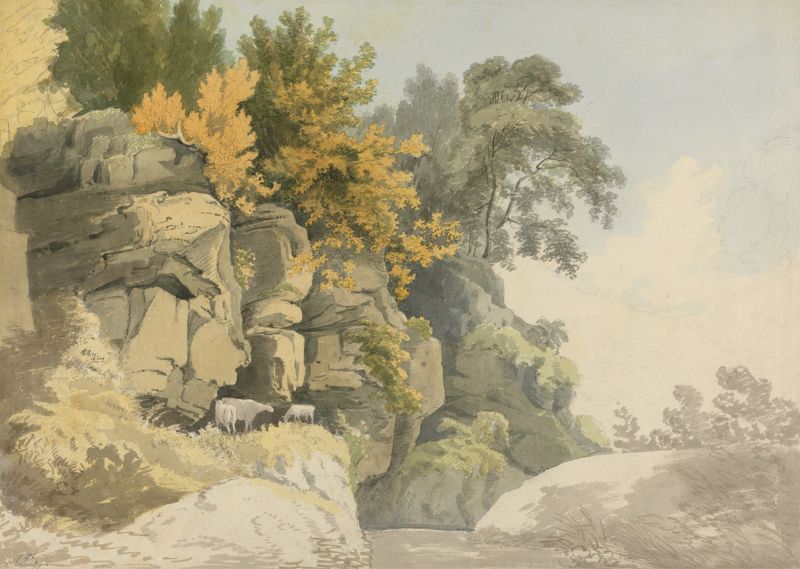
Wooded Rocks by a Stream
William Day
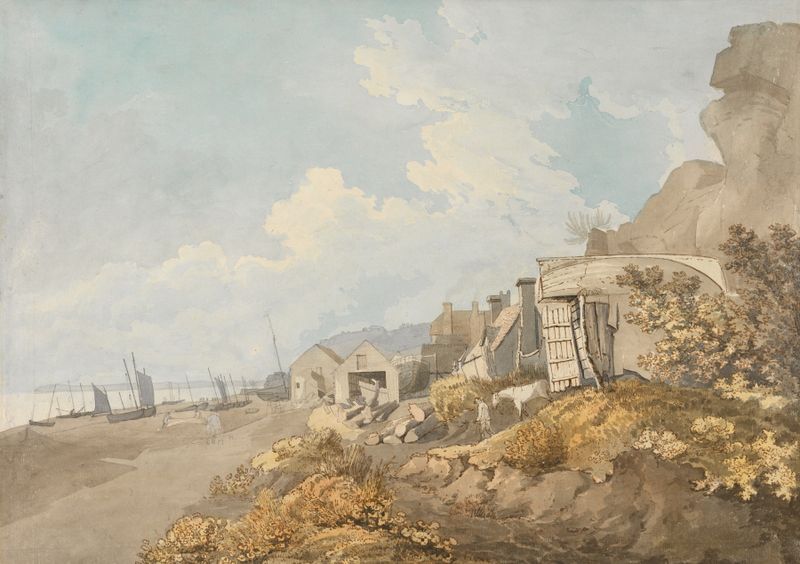
Hastings
William Day
A Singular Rock in Dove-Dale named the Pickerell
William Day





