Im Höllental — History & Facts
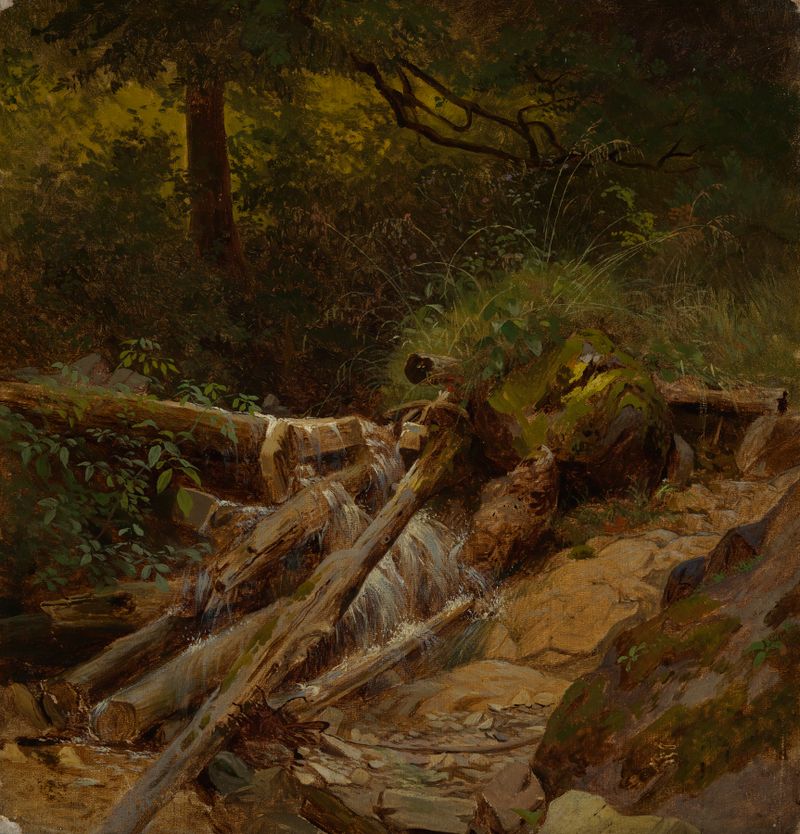
Can beauty exist without sorrow? In Im Höllental, the juxtap of shadow and light invites profound contemplation on the duality of existence. Look first to the left side of the canvas, where dramatic shadows cascade down the rugged cliffs, suggesting a hidden depth beyond the immediate beauty. The artist employs a palette of muted greens and grays, interspersed with stark white highlights that illuminate the treetops. Notice how the winding path, subtly defined, beckons the viewer to traverse the landscape—an invitation marked by both intrigue and unease.
Osterroht's brushstrokes lend a sense of movement to the foliage, as if the breeze whispers secrets of the valley. As you delve deeper into the work, the contrasts emerge; the warm hues of the sunlight juxtaposed against the cool shadows evoke a sense of longing. Each element—the rocky terrain, the trees, and the distant peaks—captures nature’s raw essence, while the shadowy depths hint at the unseen struggles that lurk beneath the surface. The tension between light and darkness encapsulates a world where beauty is inseparable from the sorrow of existence, creating an emotional resonance that lingers. In 1858, while painting this piece, Osterroht found himself amid a transformative period in landscape art, exploring Romanticism's tension between nature and human emotion.
Working in the scenic Höllental valley of Bavaria, he was influenced by the surrounding Romantic landscapes and the burgeoning movement that sought to convey the sublime. This backdrop informed his artistic exploration of light, shadow, and the emotional weight of the natural world.