Blühender Schierling — History & Facts
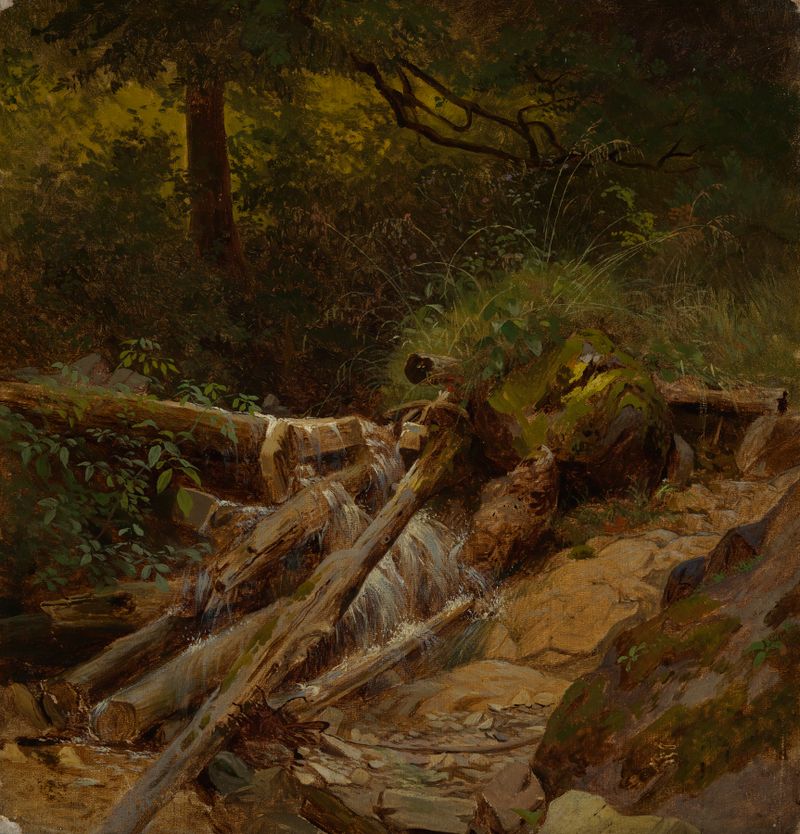
Is this a mirror — or a memory? Blühender Schierling invites us to explore the fragile boundary between beauty and danger, where hope entwines with the unsettling reminder of what lies within nature's allure. Focus on the striking contrast between the vivid greens and the ominous presence of the hemlock plant. The delicate blossoms rise majestically, their allure enveloping the canvas, while the sinuous leaves hint at something darker beneath the surface. Notice how the light dances through the foliage, casting playful shadows that evoke a sense of both serenity and foreboding.
The meticulous brushwork draws attention to the intricate details of the flowers, beckoning us closer to unravel the layered narrative woven into each petal. The juxtaposition of life and potential peril resonates deeply within this artwork. Each bloom represents fleeting beauty, a momentary glimpse of hope, while the hemlock itself serves as a reminder of the consequences that can accompany such allure. This duality invites introspection, as we are compelled to question our own perceptions of beauty and the hidden dangers that may lurk beneath.
Such contrasts amplify the emotional tension, echoing the complexities of human experience. Created in 1861, Blühender Schierling emerged during a period when Osterroht was grappling with the artistic challenges of his time, particularly amidst the burgeoning Romantic movement. As he explored the depths of emotion in his work, he sought to capture the essence of nature's contradictions, paralleling the broader societal shifts and the pursuit of deeper understanding that characterized the art world of the era.