Waldbach — History & Facts
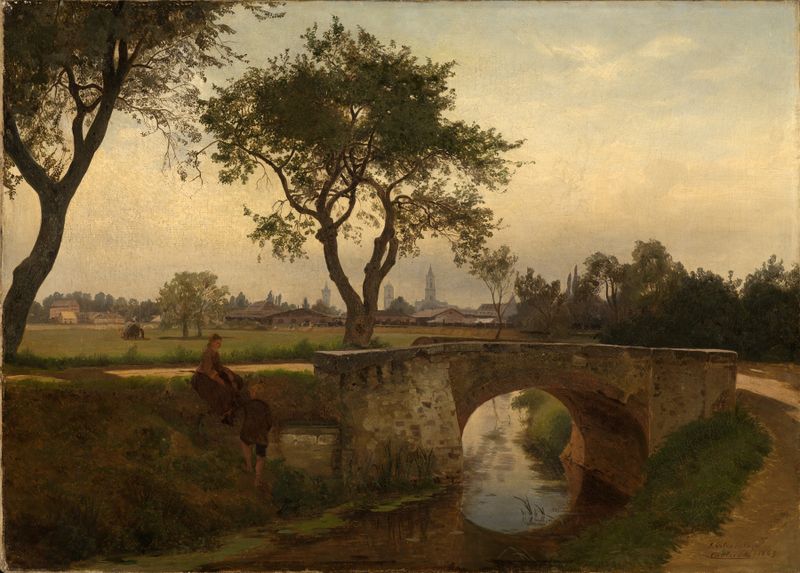
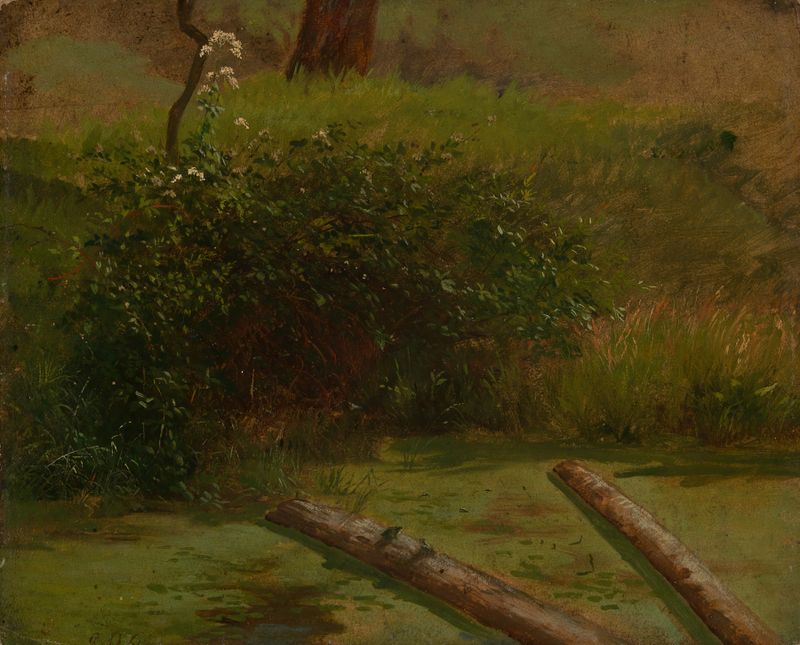
In the hush of the forest, nature breathes quietly, its essence waiting to be unveiled while we remain oblivious to the wonder surrounding us. Look to the center of the canvas, where sunlight streams through a fragmented canopy, illuminating a gentle brook that reflects the dappled light. The soft strokes of greens and browns invite the viewer to seek out the delicate interplay between shadow and light, while the brushwork evokes the movement of water, dancing as it meanders through stones and roots. The colors harmonize, creating a sense of tranquility that envelops the observer, urging them to step into this serene wilderness. Beneath the surface, there lies a profound connection between the wild and the untamed spirit within all of us.
The brook can be seen as a metaphor for life's journey—constantly flowing, encountering obstacles yet finding a way through. The surrounding foliage, lush and vibrant, serves as a reminder of nature's resilience, flourishing despite the passage of time. In this living tableau, one can sense both the awe of creation and the delicate balance required to maintain it—a juxtaposition of beauty and fragility. Gustav Osterroht painted this piece during a period when the late 19th century art movement was emphasizing naturalism and impressionism.
Although the exact date remains unknown, Osterroht’s work reflects a dedication to capturing the essence of nature at a time when artists were increasingly turning their attention toward the beauty of the natural world amidst rapid industrialization. As he immersed himself in the verdant landscapes of his surroundings, his paintings sought to evoke a sense of wonder, urging viewers to reconnect with the earth.