In Borrowdale, Cumberland — History & Facts
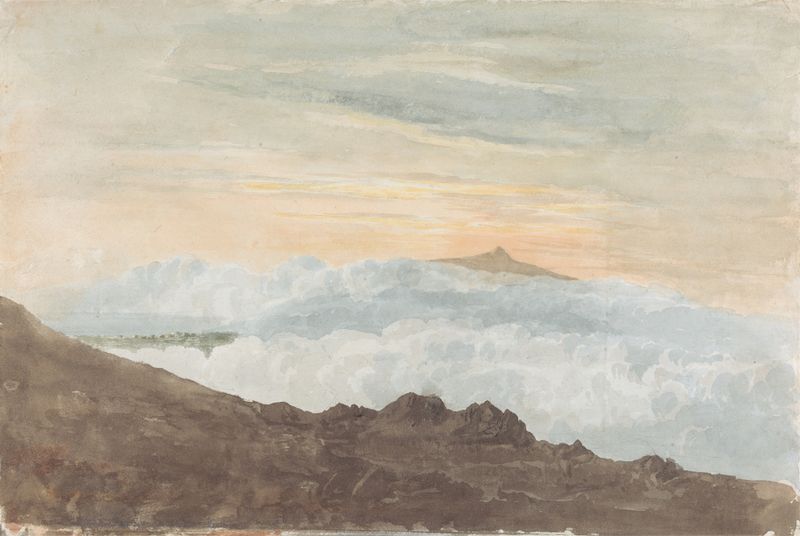
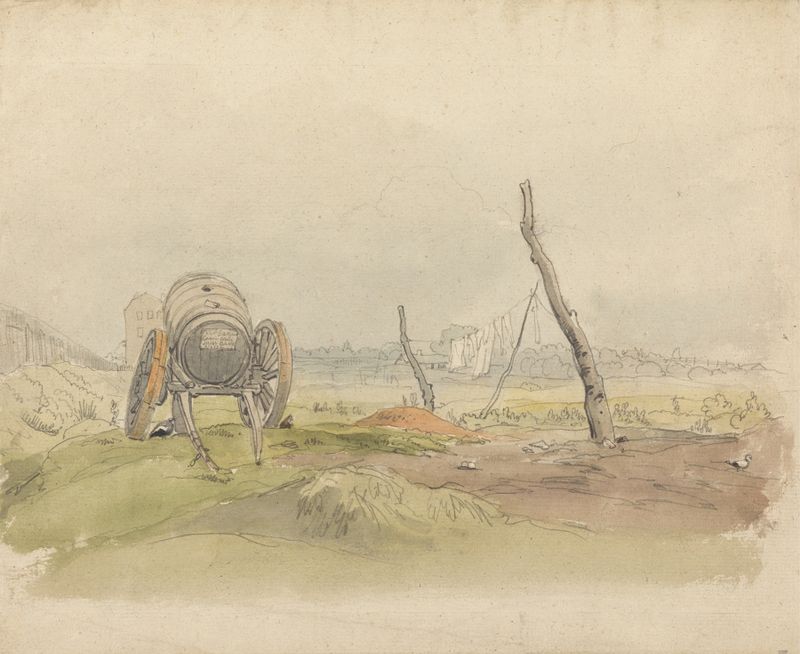
Could beauty survive in a century of chaos? In Joshua Cristall's In Borrowdale, Cumberland, the answer is a poignant, resonant yes, foretelling a future where nature remains a sanctuary amidst turmoil. Look to the foreground where a tranquil river meanders thoughtfully through a lush landscape. Notice how the artist’s delicate brushwork hints at the rippling water, while dappled light dances across the scene, creating a sense of warmth amidst the cool greens and browns. The distant hills loom softly in shades of blue, their silhouettes melding against a serene sky, drawing the eye upward and inviting contemplation. The interplay of light and shadow evokes a deep sense of melancholy, juxtaposing the serenity of nature with a hint of nostalgia for a simpler time.
Small figures of travelers on the riverbank become mere dots, reminding us of our insignificance in the grand tapestry of the landscape, while the sweeping vista encapsulates both beauty and solitude. Each element, from the vibrant foliage to the gentle water flow, speaks to an underlying yearning — a desire for connection in a world that often feels chaotic and disconnected. Painted in 1805, In Borrowdale, Cumberland reflects Cristall’s keen interest in the picturesque landscapes of Britain during a period marked by industrialization and social change. Living in a time when the Romantic movement flourished, he sought to capture the essence of nature’s beauty as a counterpoint to the encroaching chaos of modern life.
This piece stands as a testament to his ability to find solace in nature, even as the world around him shifted dramatically.