
In The Evening’s Tranquility — History & Facts
Who listens when art speaks of silence? In Alphonse Osbert's In The Evening’s Tranquility, serenity envelops the viewer, inviting introspection and contemplation. Look to the center of the canvas, where a gentle, dusky light bathes a calm landscape. The horizon stretches out, a soft gradient of blues and golds merging seamlessly, guiding the eye toward the distant trees. Notice how the delicate brushwork captures the whisper of the evening breeze, each stroke a tender caress of the scene.
The composition's balance creates a sense of harmony, skillfully drawing us into a moment of stillness that feels almost palpable. Delve deeper and you will find contrasts that speak volumes. The softness of the twilight sky contrasts with the sharp silhouettes of the trees, evoking a tension between the ephemeral and the enduring. There is a deliberate absence of human figures, enhancing the solitude of the landscape, suggesting both loneliness and peace.
Each element, from the gentle play of light to the muted color palette, communicates a profound sense of inner calm and an invitation to pause and reflect. In 1897, Osbert painted this work during a time when Symbolism was gaining momentum in the art world. Living in France, he was influenced by the era's fascination with conveying emotion through visual poetry. This piece emerged as part of his exploration into the subtleties of light and atmosphere, reflecting both his personal quest for tranquility and the broader cultural shift toward introspective themes.
More Artworks by Alphonse Osbert
Browse all →
Le coucher de soleil
Alphonse Osbert
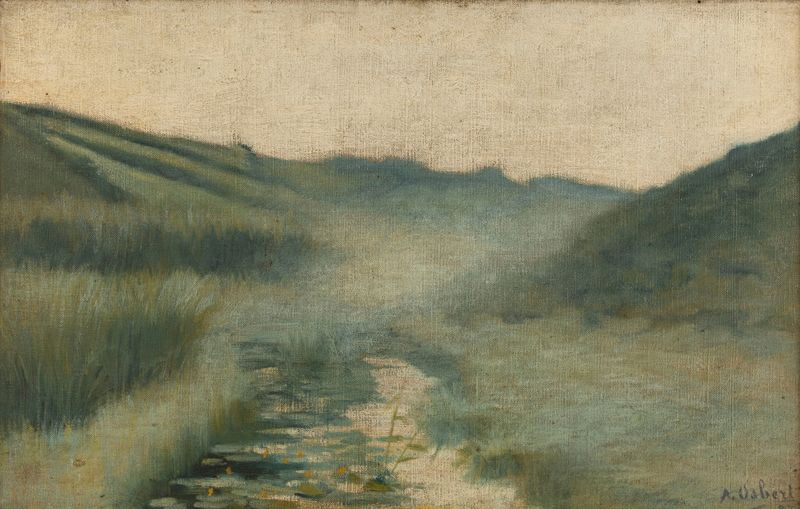
Brouillard du matin, Diélette – Flamanville
Alphonse Osbert
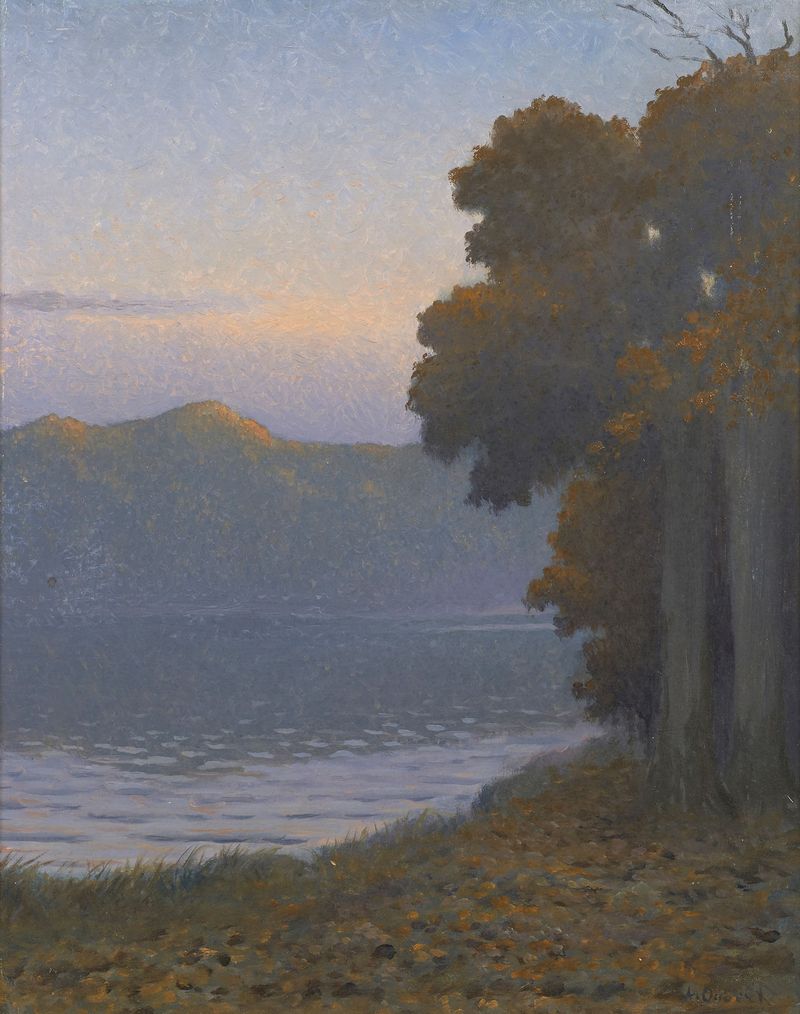
Le soir sur l’étang
Alphonse Osbert

Harmonie lunaire
Alphonse Osbert
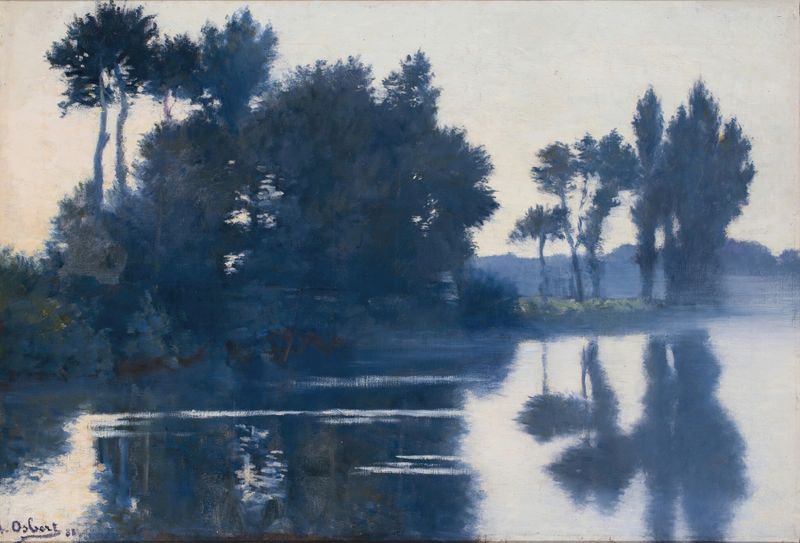
La tombée du soir sur l’Oise
Alphonse Osbert

Une mare dans les dunes, le soir, Siouville
Alphonse Osbert
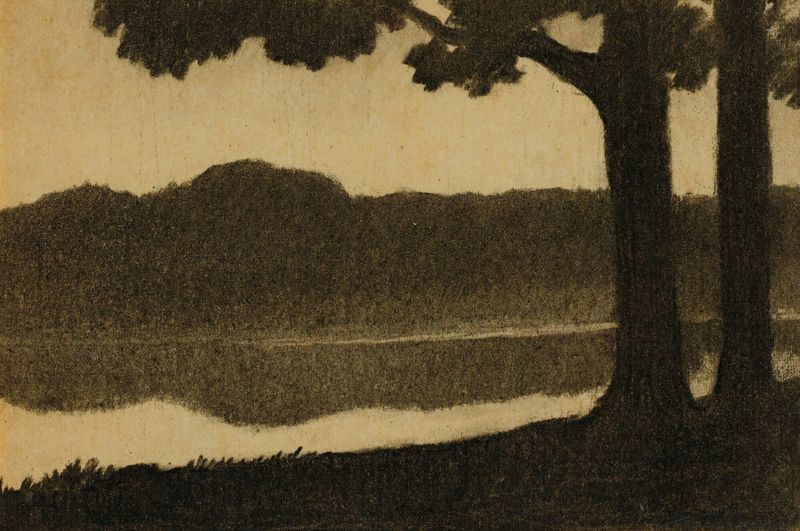
River Bank
Alphonse Osbert

Solitude
Alphonse Osbert

Dans les champs de Diélette (Manche)
Alphonse Osbert

A Morning’s Harmony
Alphonse Osbert





