
Solitude — History & Facts
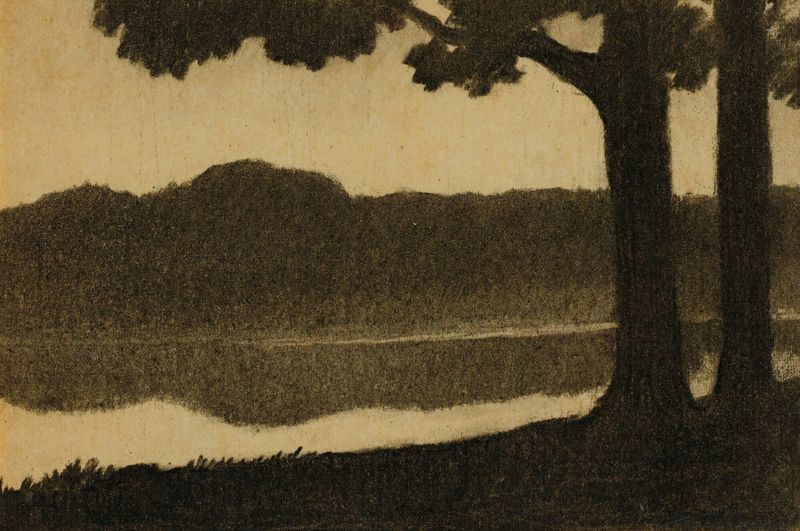
Is this a mirror — or a memory? In Alphonse Osbert's Solitude, the lines between reflection and nostalgia blur, inviting us to explore the depths of our own solitude. Look to the center of the canvas where a solitary figure stands, enveloped in soft hues of blues and grays. The light, almost ethereal, spills like liquid silver over the figure’s silhouette, cascading gently through the surrounding trees. Notice how the delicate brushwork creates an interplay of shadow and light, lending the scene an almost dreamlike quality.
The composition draws the eye inward, toward the quiet figure, while the surrounding landscape pulses with an unseen energy. Beneath the tranquil surface lies a profound tension between isolation and introspection. The solitary figure, lost in thought, seems to embody both the serenity and the weight of solitude. The surrounding trees, with their lush forms, stand sentinel, suggesting protection yet also a barrier between the figure and the world beyond.
This duality invites contemplation on the nature of memory itself — is solitude a refuge or a prison, a space for reflection or a reminder of absence? In 1895, Osbert painted Solitude during a time when Symbolism was gaining prominence in the art world, focusing on emotional depth and the exploration of inner realities. Living in Paris, he was influenced by the shifting sentiments around him, as artists sought to express the complexities of the human experience through evocative imagery. This work exemplifies his ability to convey profound emotional states with a masterful touch, capturing a moment that resonates across time.
More Artworks by Alphonse Osbert
Browse all →
Le coucher de soleil
Alphonse Osbert
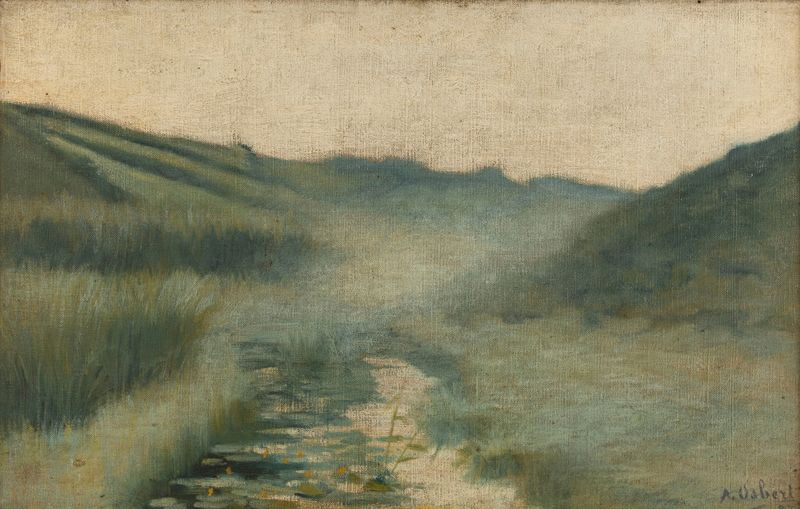
Brouillard du matin, Diélette – Flamanville
Alphonse Osbert
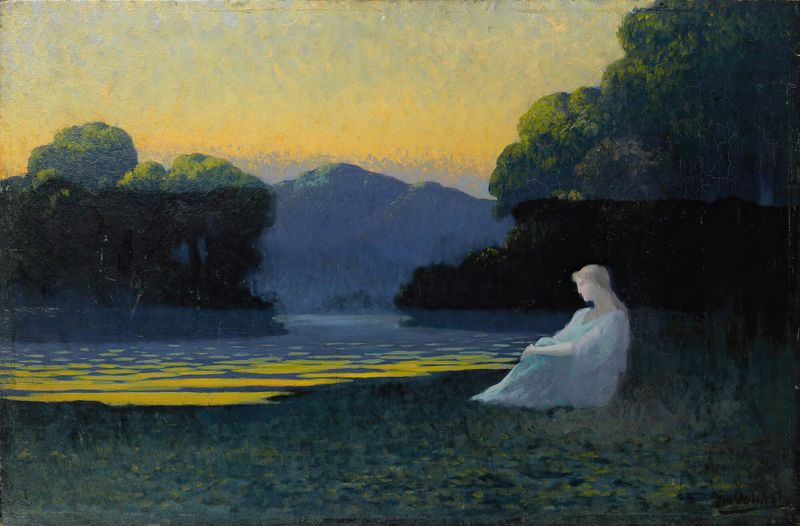
In The Evening’s Tranquility
Alphonse Osbert
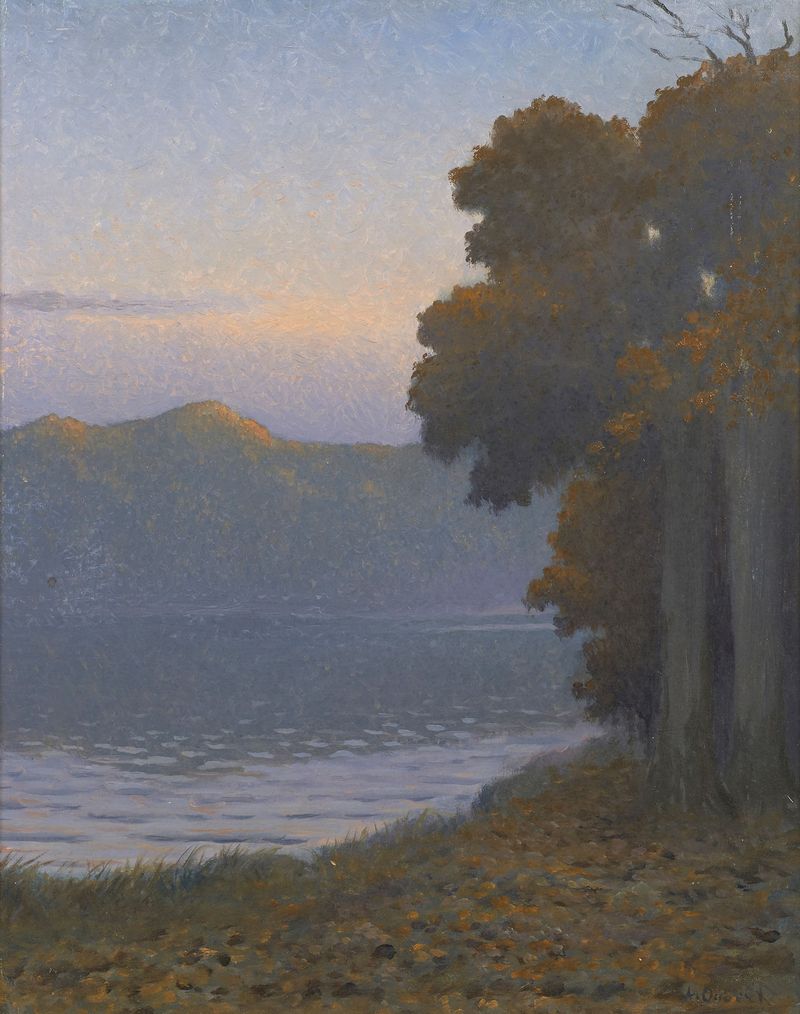
Le soir sur l’étang
Alphonse Osbert

Harmonie lunaire
Alphonse Osbert
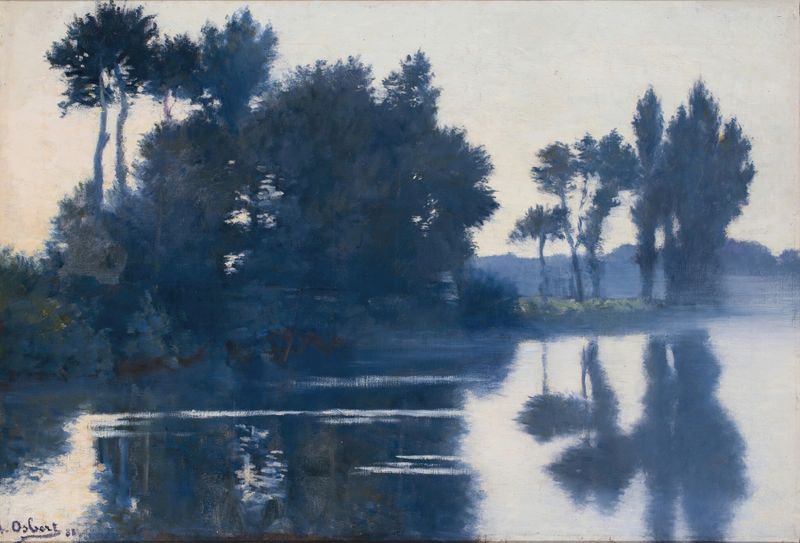
La tombée du soir sur l’Oise
Alphonse Osbert

Une mare dans les dunes, le soir, Siouville
Alphonse Osbert
River Bank
Alphonse Osbert

Dans les champs de Diélette (Manche)
Alphonse Osbert

A Morning’s Harmony
Alphonse Osbert





