
Le coucher de soleil — History & Facts
Could beauty survive in a century of chaos? In Le coucher de soleil, the answer unfurls like a delicate whisper, inviting us to ponder the fragile nature of memory and the passage of time. Focus on the horizon, where the sun, a molten orb of vibrant oranges and deep purples, sinks gently into the vast expanse of water. Observe how the colors bleed into one another, creating a surreal atmosphere that blurs the boundaries between sky and sea. The silhouettes of distant trees frame the scene, their dark forms stark against the dazzling light, guiding the viewer's gaze toward the point where day reluctantly yields to night. Within this tranquil moment lies a poignant contrast: the fleeting beauty of the sunset juxtaposed with the stillness of the surrounding landscape.
The calm surface of the water reflects the sky’s hues, embodying a fleeting memory suspended in time. Each brushstroke conveys a gentle longing—a nostalgia for moments lost amid the chaos of modern life, evoking a sense of both peace and melancholy. Painted in 1893, this work emerged during a time of great change in the world of art and society. Alphonse Osbert was part of a movement that sought to capture beauty and emotion in a manner that transcended the tumultuous realities of the era.
As impressionism gave way to symbolism, he crafted a serene refuge in art, where viewers could escape and contemplate the deeper meanings of existence against the backdrop of an uncertain world.
More Artworks by Alphonse Osbert
Browse all →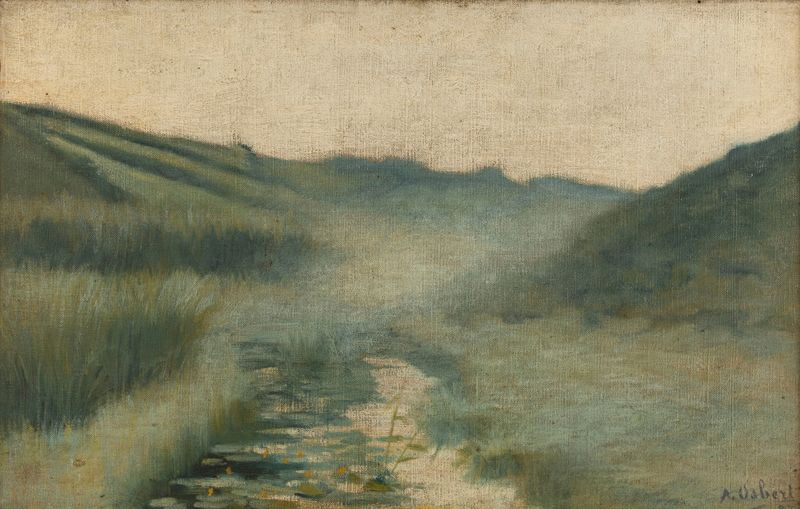
Brouillard du matin, Diélette – Flamanville
Alphonse Osbert
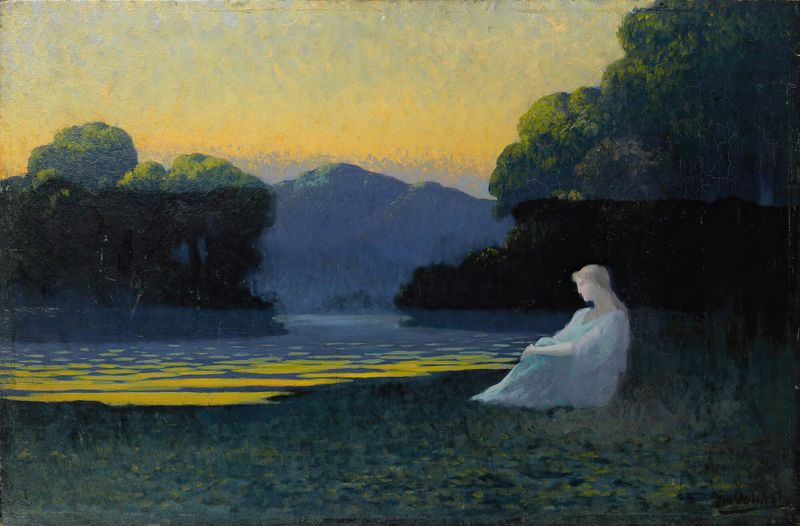
In The Evening’s Tranquility
Alphonse Osbert
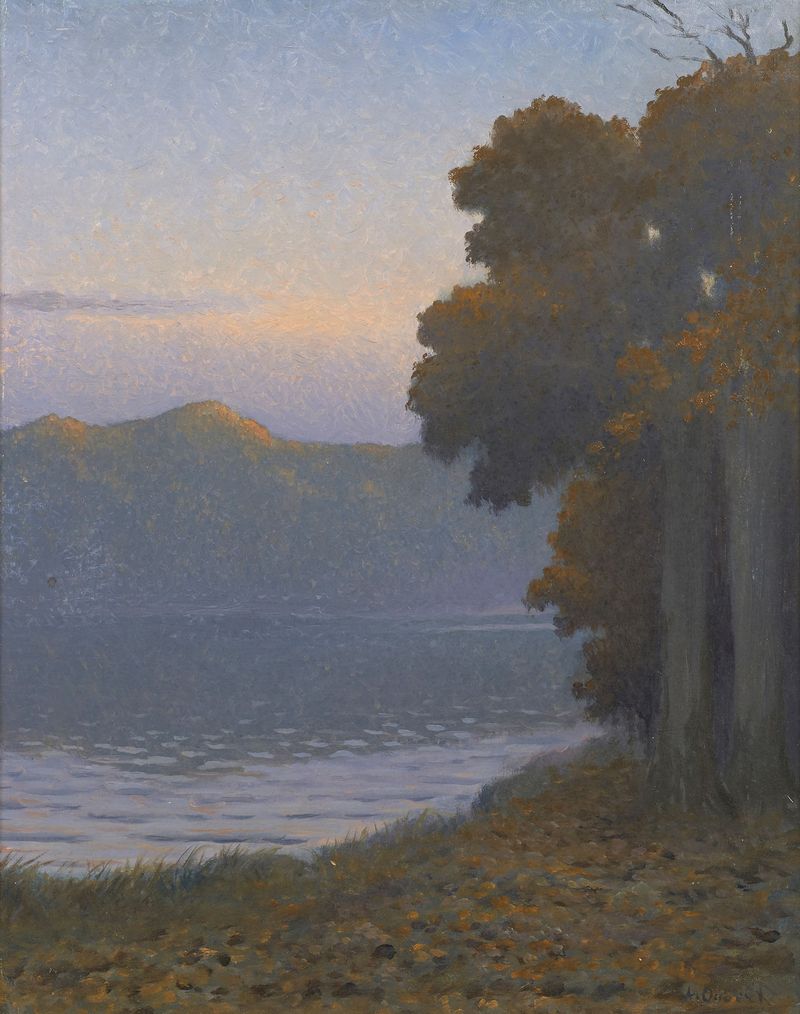
Le soir sur l’étang
Alphonse Osbert

Harmonie lunaire
Alphonse Osbert
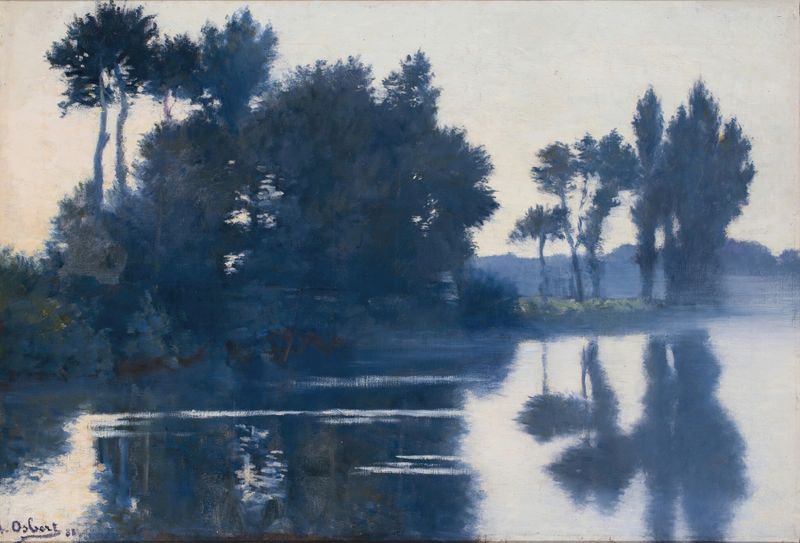
La tombée du soir sur l’Oise
Alphonse Osbert

Une mare dans les dunes, le soir, Siouville
Alphonse Osbert

River Bank
Alphonse Osbert

Solitude
Alphonse Osbert

Dans les champs de Diélette (Manche)
Alphonse Osbert

A Morning’s Harmony
Alphonse Osbert





