
In the garden — History & Facts
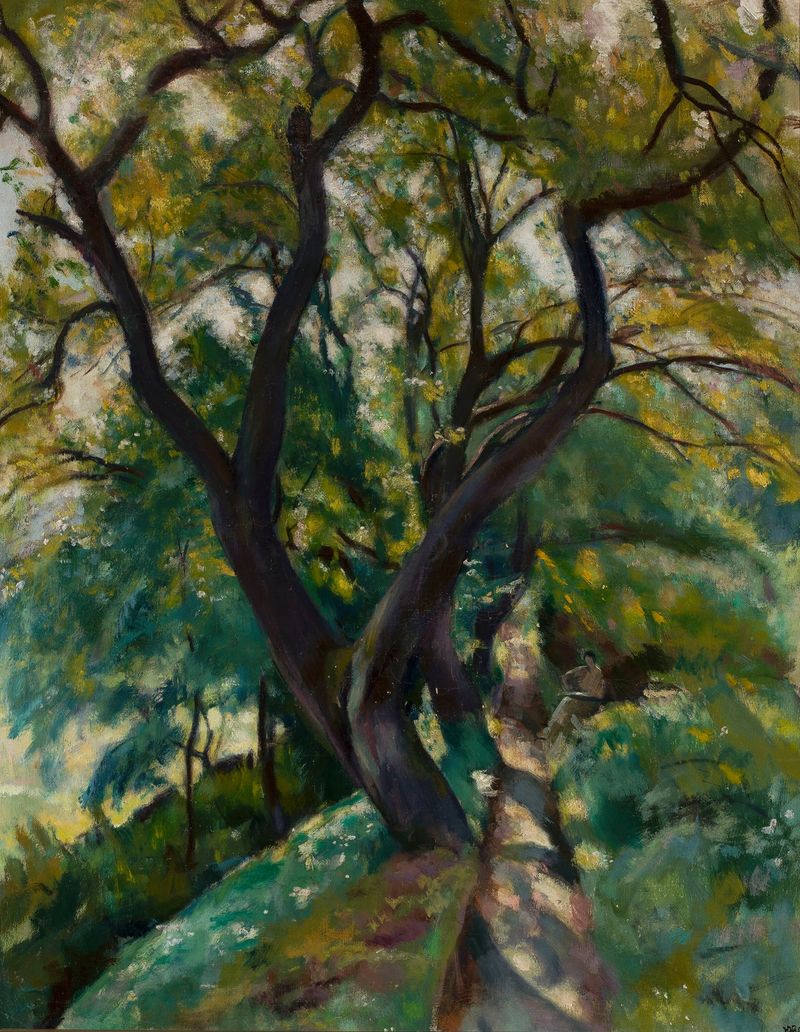
A soft breeze rustles the leaves, whispering secrets in a sun-drenched garden. Two figures linger amidst the verdant foliage, their postures relaxed yet charged with a palpable longing. Light filters through the branches, casting dappled shadows that dance around them, hinting at both intimacy and an underlying emptiness that fills the air. Focus on the figures positioned slightly to the left, their bodies angled toward each other, yet their expressions tell a different story.
Notice how the vibrant greens of the garden contrast with the muted tones of their clothing, emphasizing both their connection to the earth and their detachment from it. The delicate play of light illuminates their faces, revealing subtle emotions that resonate against the backdrop of nature's lush embrace. Beneath the surface, the painting encapsulates themes of solitude and unfulfilled desires. The figures, though physically close, are emotionally distant, suggesting an internal struggle amid the serene surroundings.
The garden, abundant and alive, serves as a paradox—representing the beauty of life, yet also the ache of loneliness felt by those who occupy it. Each brushstroke invites contemplation on the duality of connection and isolation, urging us to reflect on our own experiences. Wojciech Weiss painted this work in 1928 in Poland, during a time when he was heavily influenced by the Symbolist movement. His exploration of emotional themes within natural settings resonated with the societal shifts of the post-World War I era, reflecting a longing for stability and meaning amidst the chaos.
This moment in his artistic journey captured both personal introspection and a broader cultural sentiment, marking a poignant chapter in his career.
More Artworks by Wojciech Weiss
Browse all →
Kraków w oddali II
Wojciech Weiss
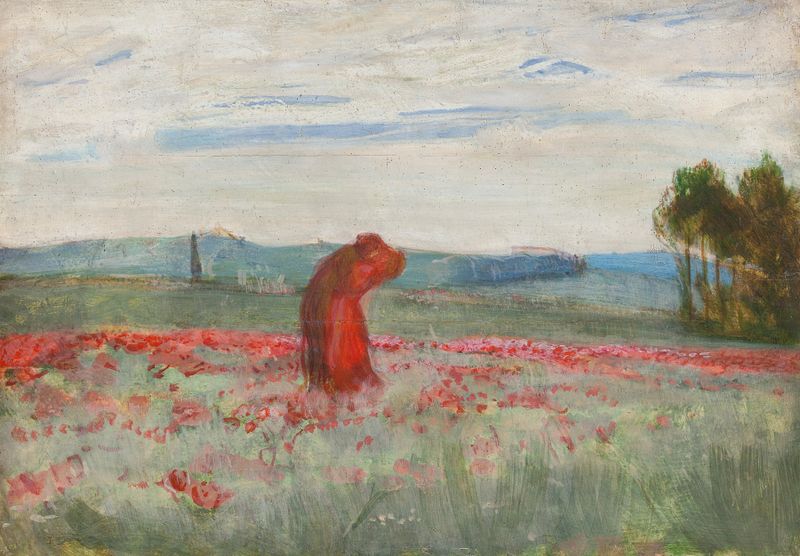
Pocałunek wśród maków
Wojciech Weiss

Calvary
Wojciech Weiss
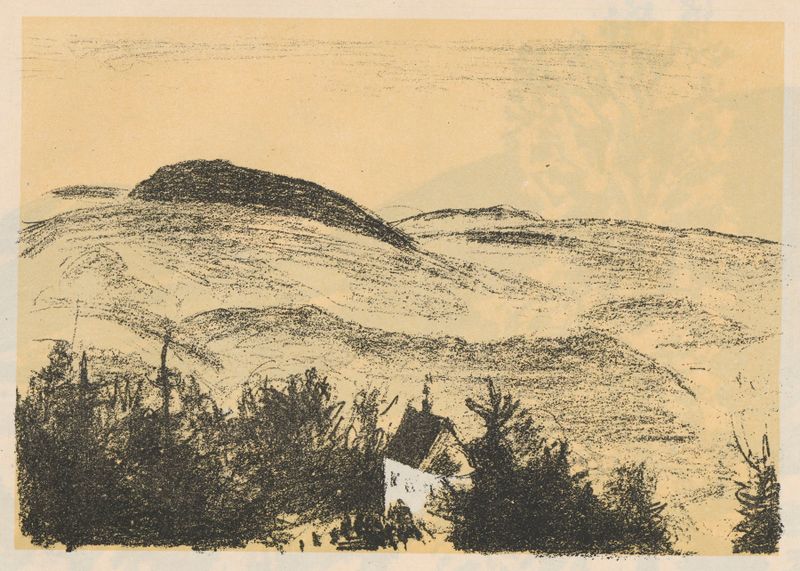
Kalwaria
Wojciech Weiss

Landscape with Trees
Wojciech Weiss
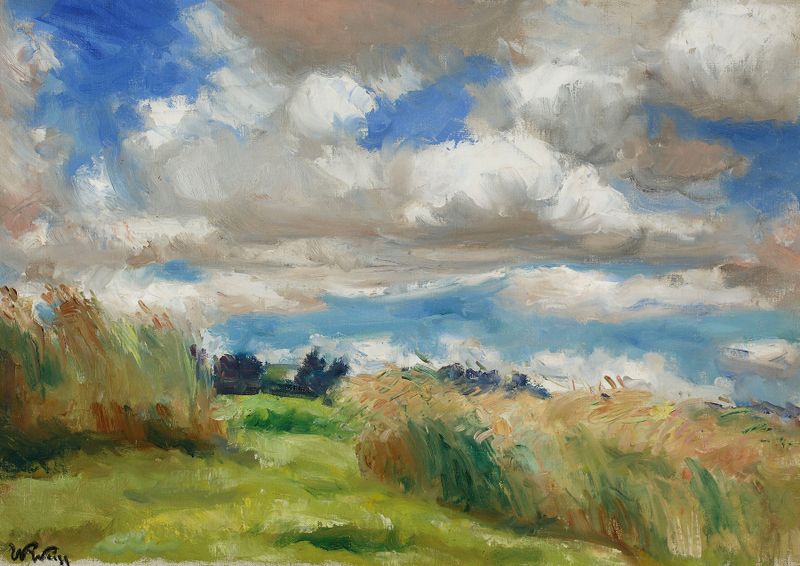
Landscape of Kalwaria Zebrzydowska
Wojciech Weiss

Apple-Trees
Wojciech Weiss
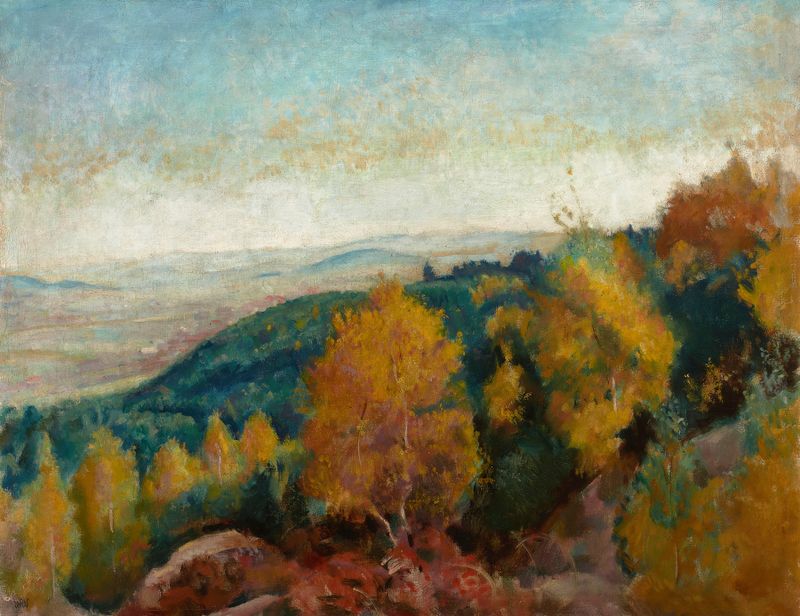
Autumn Landscape – Environs of Kalwaria Zebrzydowska
Wojciech Weiss

Landscape with hollyhocks
Wojciech Weiss
Trees
Wojciech Weiss





