
Landscape of Kalwaria Zebrzydowska — History & Facts
What if silence could speak through light? In the quietude of Landscape of Kalwaria Zebrzydowska, the decay of nature whispers tales of time, longing, and transience. Look to the foreground, where frail, twisting branches reach toward the sky, their gnarled shapes both haunting and beautiful. The artist employs muted earth tones, allowing the subtle variations in brown and green to evoke an autumnal palette, signaling the approach of change. Notice how the light filters through the clouds, casting an ethereal glow on the crumbling architecture in the distance, emphasizing the ephemeral nature of both the landscape and human creations. Beneath the surface, a tension exists between decay and beauty.
The ruins hint at a lost grandeur, while the vibrant, yet fading foliage suggests life is still present, albeit in a different form. Each element, from the bent trees to the distant church steeple, reflects an emotional struggle between permanence and impermanence, elegantly narrating the inevitable passage of time and the silent acceptance of loss. In 1936, Wojciech Weiss created this poignant work amidst a shifting European art scene, deeply influenced by the rise of modernism and the tumultuous socio-political landscape of the time. Living in Poland, he sought to capture the essence of his homeland while grappling with themes of identity and continuity, reminding viewers of the beauty that persists even in decay.
More Artworks by Wojciech Weiss
Browse all →
Kraków w oddali II
Wojciech Weiss
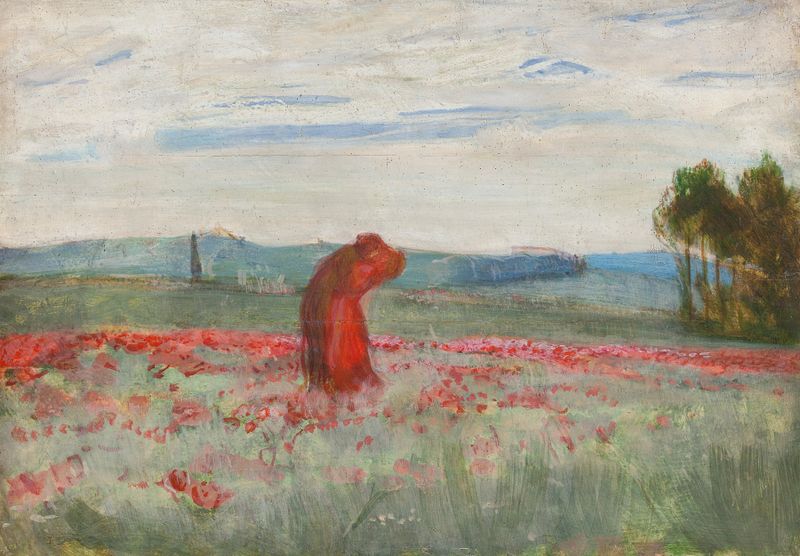
Pocałunek wśród maków
Wojciech Weiss

Calvary
Wojciech Weiss
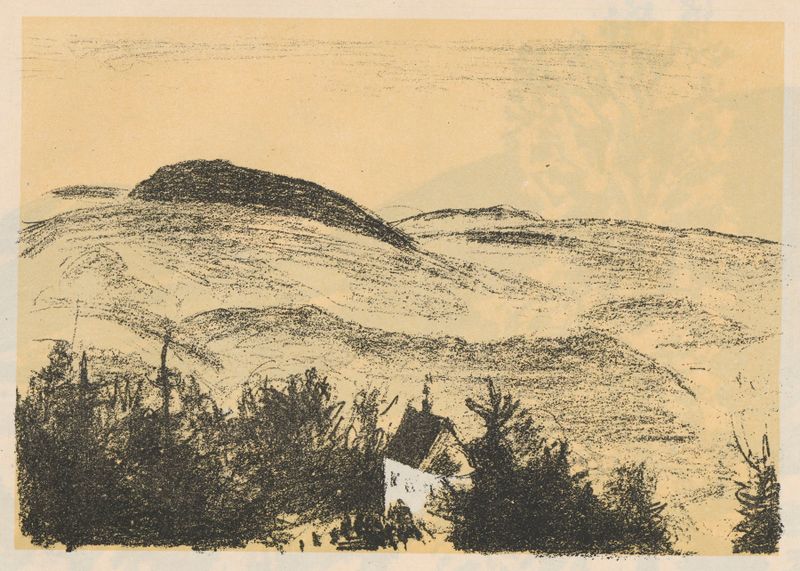
Kalwaria
Wojciech Weiss

Landscape with Trees
Wojciech Weiss

Apple-Trees
Wojciech Weiss
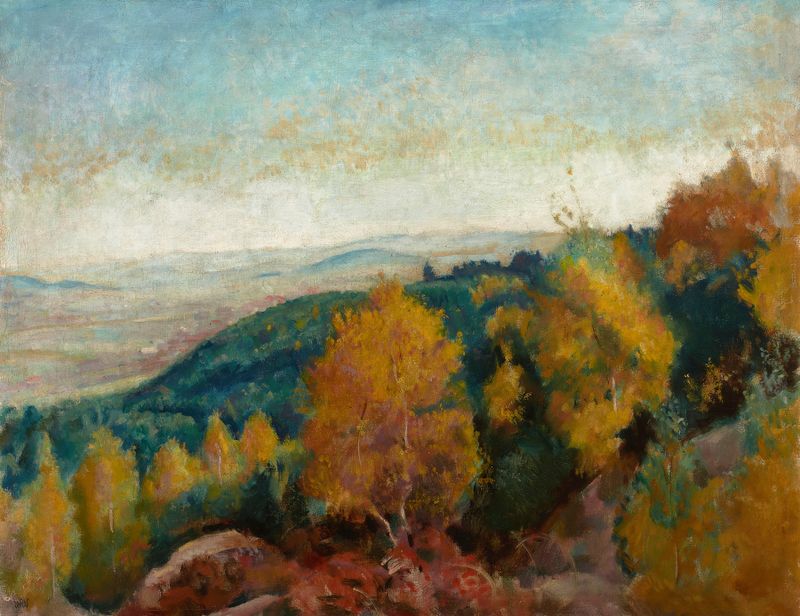
Autumn Landscape – Environs of Kalwaria Zebrzydowska
Wojciech Weiss

In the garden
Wojciech Weiss

Landscape with hollyhocks
Wojciech Weiss
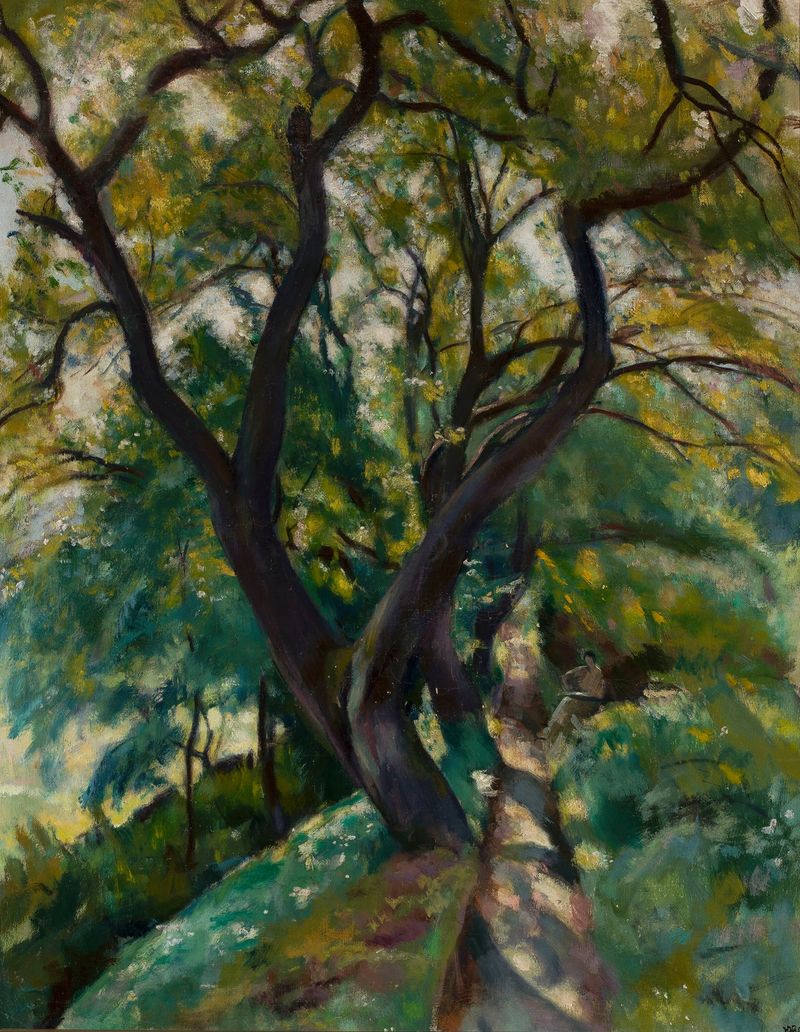
Trees
Wojciech Weiss





