In the Suburbs — History & Facts
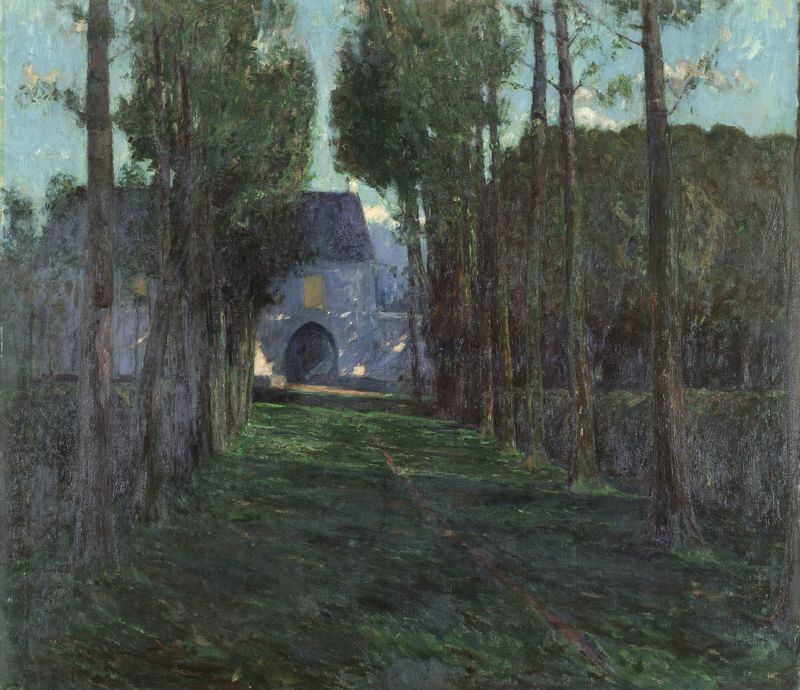
Can paint confess what words never could? In In the Suburbs, the artist unveils the bittersweet nature of decay, revealing layers of life that resonate with whispered stories. Look to the left at the crumbling wall, where faded colors meld into one another, undermined by time's relentless passage. The muted palette exudes a sense of nostalgia, rich browns and soft grays inviting the viewer to linger. Notice how the light catches the edges of the peeling paint, almost as if it were trying to offer a final glimmer of hope amidst the ruin.
Lines are softened, suggesting both fragility and resilience, embodying a world once vibrant but now slipping away. The contrasts within this piece speak volumes. The stark juxtaposition between the decay of the architecture and the serene suburban landscape creates a dialogue about transience and permanence. Each crack in the wall seems to breathe the stories of its former glory, hinting at lives once lived, now only echoes.
This painting captures a poignant moment of stillness, where the beauty of neglect intertwines with the inevitability of change, sparking a reflection on our own impermanence. Frans Hens painted In the Suburbs in 1900 during a period marked by industrial growth and suburban expansion. Living in a rapidly modernizing Europe, he sought to depict the contrast between the emerging urban landscapes and the remnants of declining rural life. At this time, artists were beginning to explore themes of realism and impressionism, deeply influenced by their surroundings and societal transformations, as Hens did in this evocative work.