
Indian Camp, Alaska — History & Facts
In the quiet corners of life, we find expressions of obsession — both beautiful and haunting. Look to the center of the canvas where the tent stands, a silent sentinel amid the wild Alaskan landscape. The muted earth tones blend with the rugged terrain, drawing your eyes toward the stark contrast between man-made shelter and the vastness of nature. Notice how the soft light filters through the fabric, hinting at life within while casting shadows that evoke a sense of isolation.
The surrounding foliage, painted with delicate strokes, whispers a story of resilience against the elemental forces. Yet, amid this serene setting lurk deeper tensions. The juxtaposition of the tent's vulnerability against the imposing backdrop of mountains suggests a struggle for survival, an obsession with both the land and the way of living it demands. The subtle movement of the leaves hints at a breeze that carries distant echoes of life, perhaps a reminder that solitude is both a refuge and a overwhelming weight.
The intricate details of the landscape invite contemplation, urging viewers to consider the connection between humanity and the wilderness that both nurtures and dominates. Theodore J. Richardson painted this work during a transformative period in the early 20th century, when interest in indigenous peoples and the American wilderness was growing. Living and working in Alaska between 1880 and 1914, he was deeply influenced by the land and its people.
This era was marked by a burgeoning fascination with nature, reflected in the artist's dedication to capturing the stark beauty and rawness of the Alaskan experience.
More Artworks by Theodore J. Richardson
Browse all →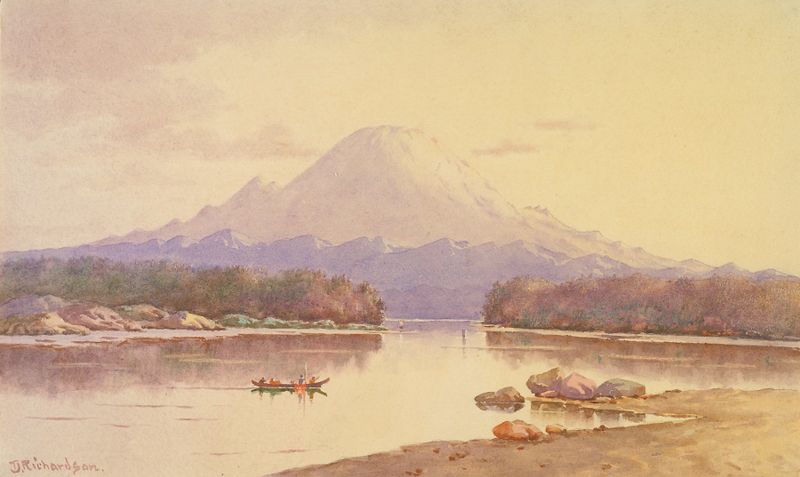
Mount Rainier
Theodore J. Richardson
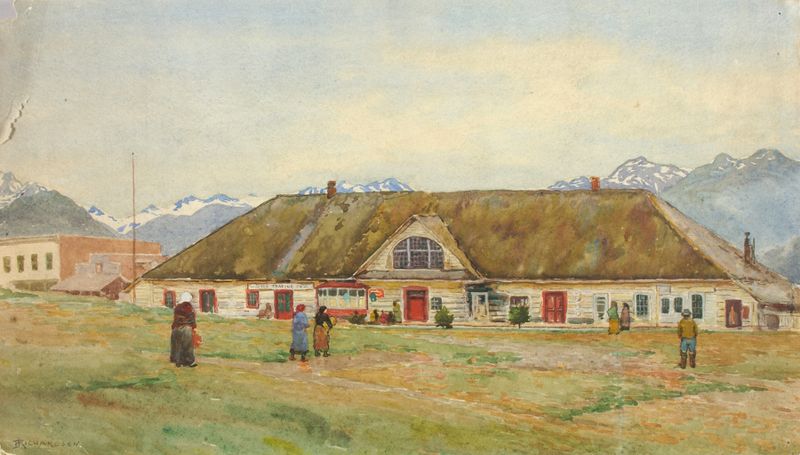
Old Russian Trading Post, Sitka
Theodore J. Richardson

The Ranch Native Village, Sitka, 1884
Theodore J. Richardson

Rear View Of Greek Church, Sitka, 1888
Theodore J. Richardson
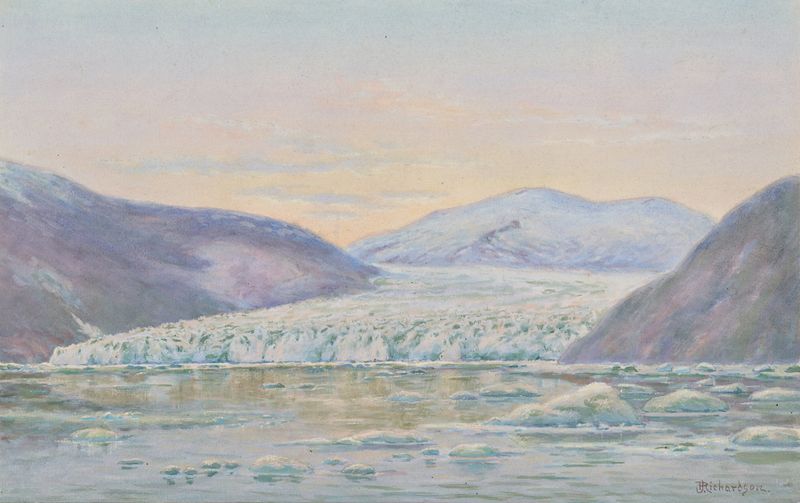
Taku Glacier, Evening
Theodore J. Richardson

St. Elias Alps
Theodore J. Richardson

Drying Blankets Over Canoes
Theodore J. Richardson

In The Old Quarter, Sitka, 1900
Theodore J. Richardson
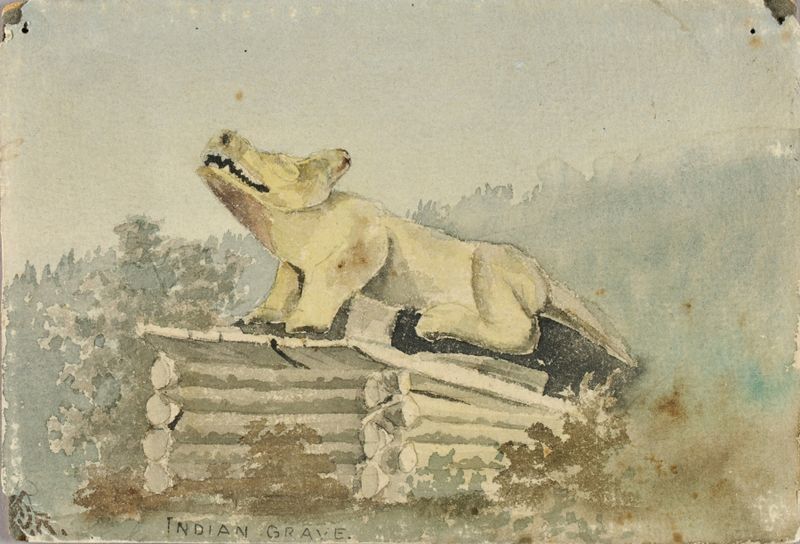
Indian Grave. Wolf Totem Over Medicine Man Grave, Wrangell
Theodore J. Richardson
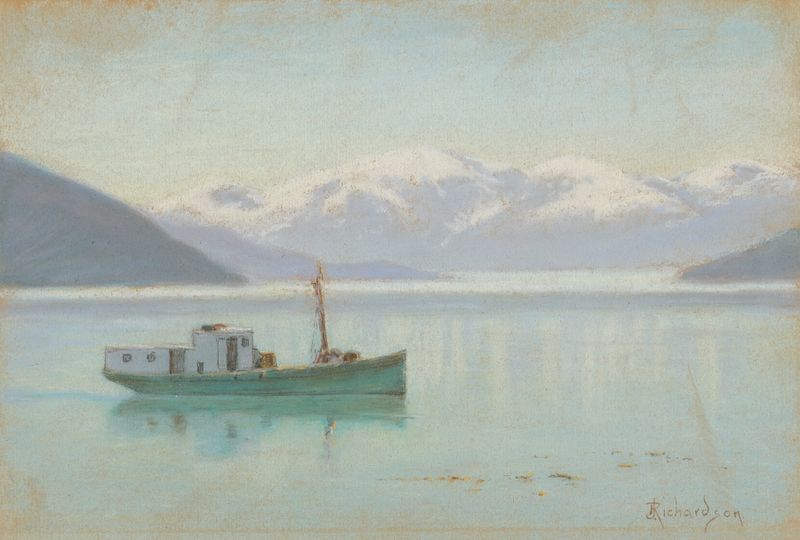
Jack Mantle’s Boat
Theodore J. Richardson





