
Indian Summer — History & Facts
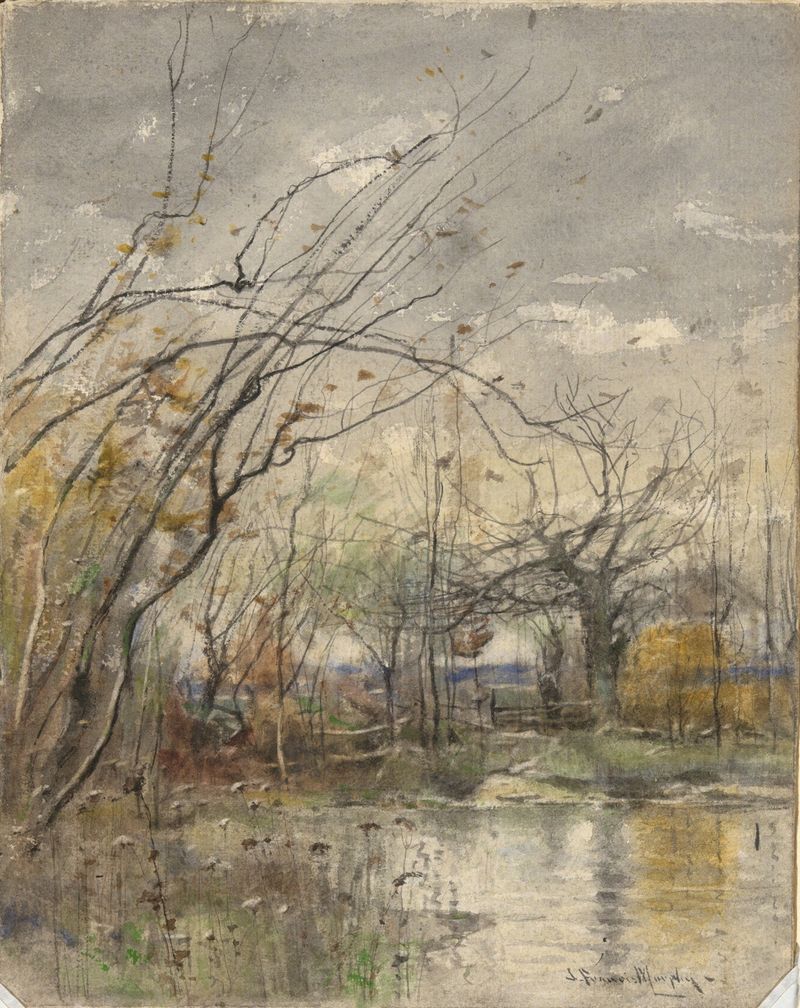
What secret hides in the quiet of the canvas? In the stillness of Indian Summer, an unspoken loneliness lingers, inviting viewers to embrace the solitude of nature and the human spirit. Look to the left at the golden hues of autumn leaves, their vibrancy softened by the gentle brushstrokes that capture the fading warmth of the season. Notice how the light cascades through the trees, dappled and shimmering, creating a dance of shadow and illumination across the forest floor. The overall composition draws your eye toward a solitary figure, almost lost within the landscape; they become a mere whisper amid the grandeur of nature, highlighting the contrast between the vibrant surroundings and the introspection of the lone presence. This painting speaks to the quiet introspection that can accompany solitude.
The figure, dwarfed by the towering trees, evokes a sense of isolation, despite the beauty that surrounds them. The warm palette suggests comfort yet hints at an inevitable farewell to summer, embodying the bittersweet nature of change. The interplay between light and shadow reveals a deeper emotional complexity—a celebration of nature’s beauty intertwined with the pang of loneliness inherent in human experience. John Francis Murphy painted Indian Summer in 1903, during a period when American artists were increasingly drawn to the transcendental qualities of the natural world.
Living in the Hudson Valley, he was surrounded by the landscapes that inspired his works. This era was marked by a search for identity and resonance with the environment, reflecting broader themes in art that sought to capture both the external world and the internal landscapes of human emotion.
More Artworks by John Francis Murphy
Browse all →
October
John Francis Murphy
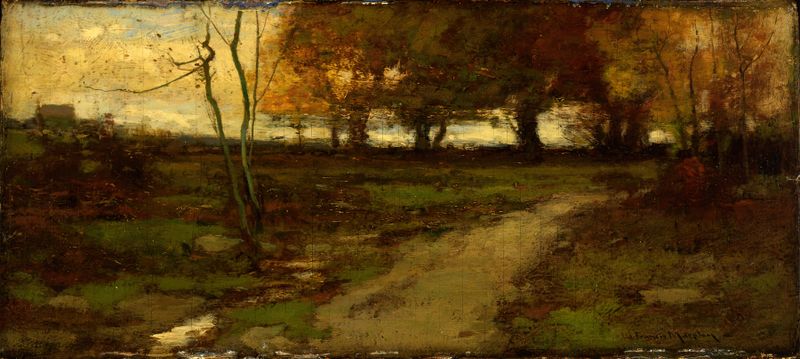
Landscape
John Francis Murphy
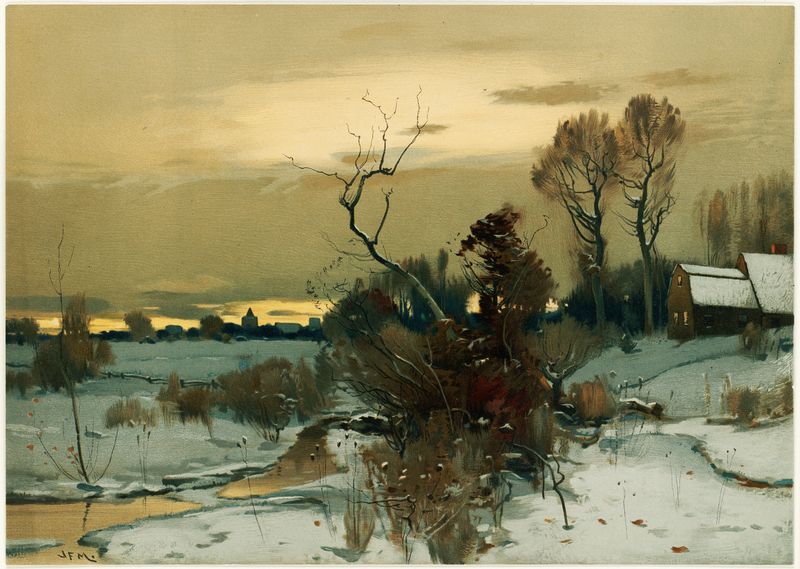
Winter landscape
John Francis Murphy

The Road Home
John Francis Murphy
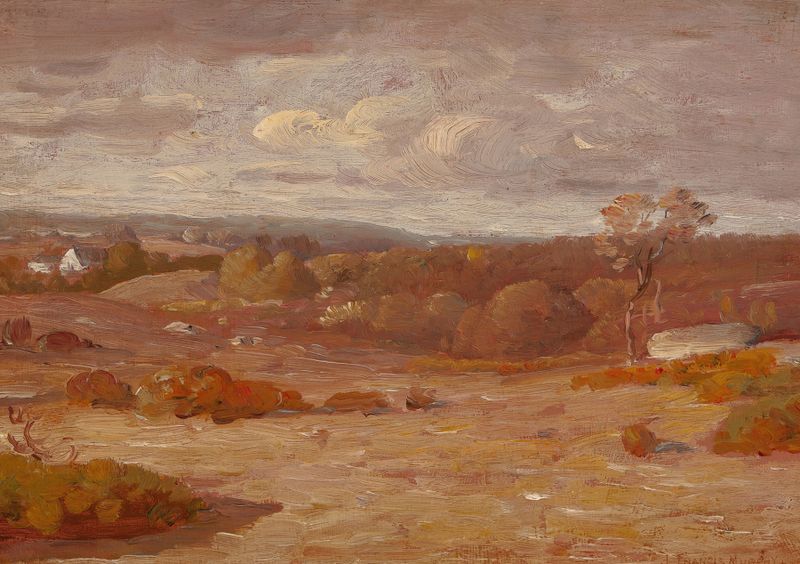
Early Autumn, New York
John Francis Murphy
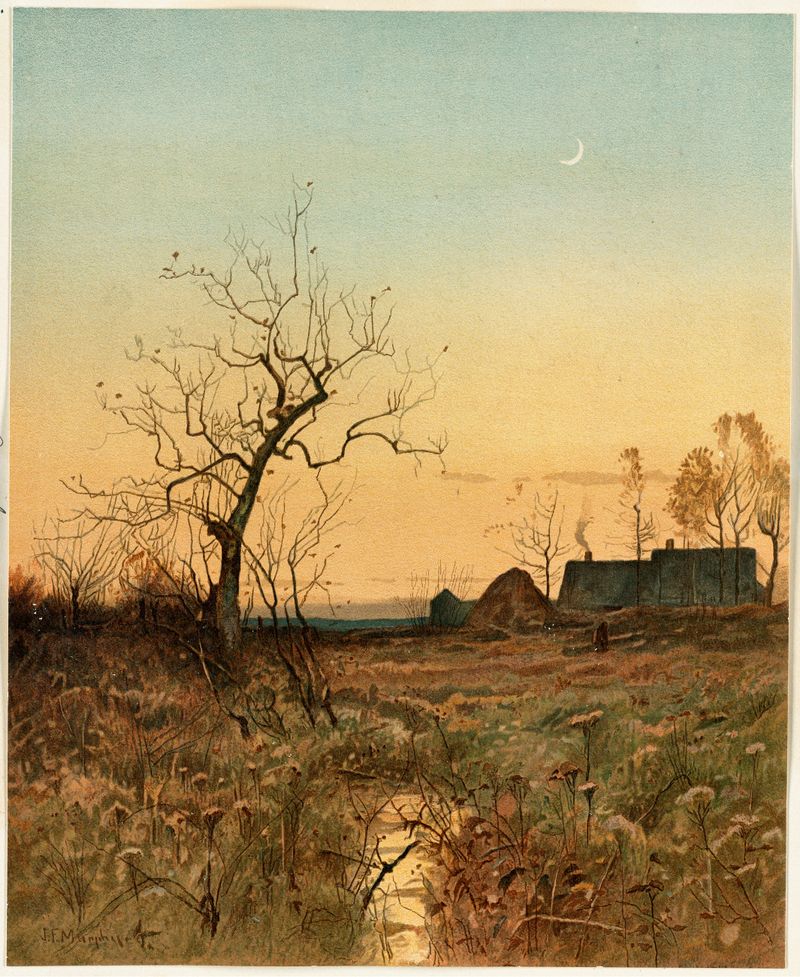
November
John Francis Murphy

Small Landscape
John Francis Murphy
Landscape
John Francis Murphy

The Meadow
John Francis Murphy

After the Storm
John Francis Murphy





