
Indian Temple — History & Facts
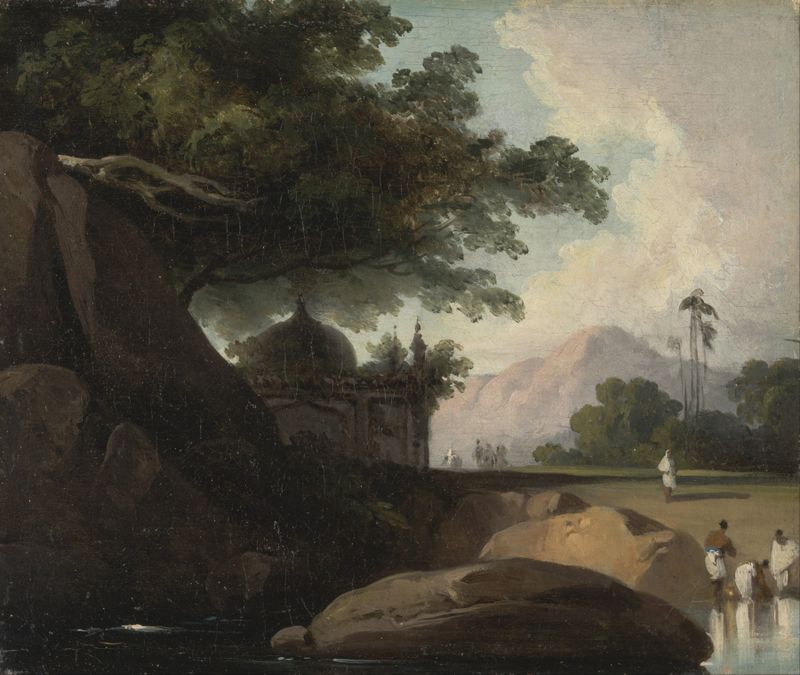
What if silence could speak through light? In the stillness of Indian Temple, innocence finds its voice, whispering truths that transcend time and culture. Look to the left at the temple’s intricate carvings, each detail telling a story of devotion and artistry. Notice how the warm hues of ochre and saffron envelop the scene, creating a serene aura that invites contemplation. The composition draws the viewer’s eye upward, leading us towards the temple’s towering spires, which seem to reach for the heavens, while the subtle brushwork evokes a sense of texture that breathes life into stone. Beneath the tranquil surface lies a contrast between the sacred and the mundane.
The delicate interplay of light and shadow reveals a deeper narrative—the steadfastness of faith juxtaposed with the transient nature of human existence. Small figures navigating the temple grounds symbolize the innocence of everyday life amidst the grandeur of spirituality. The artwork captures not just a place, but a moment where the divine and the ordinary coexist, reminding us of the quiet strength found in both. George Chinnery created Indian Temple between 1808 and 1812 while residing in India, a period marked by his exploration of the country’s rich visual heritage.
Living in a time when the British Empire was expanding its reach, he sought to bridge cultures through his art, capturing the essence of Indian architecture and spirituality. This painting reflects not only his artistic vision but also the complex dynamics of cultural exchange occurring during that time.
More Artworks by George Chinnery
Browse all →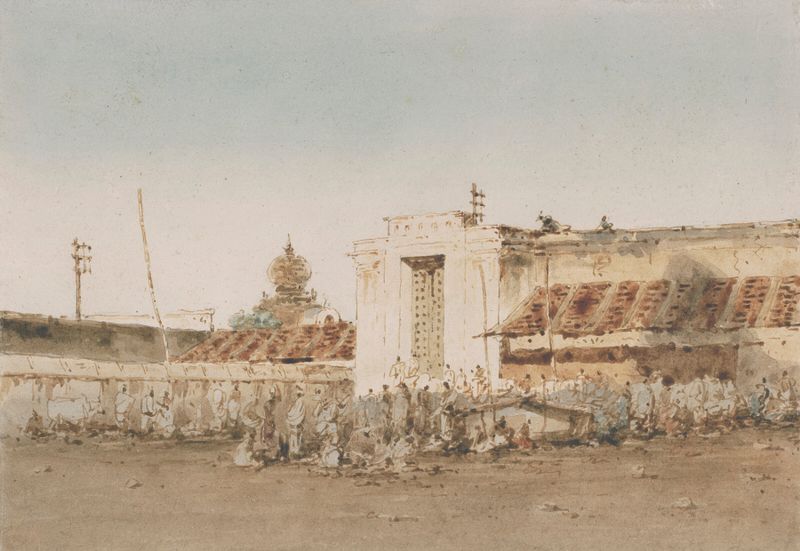
The entrance to ‘the Honourable East India Company’s pagoda’, Madras
George Chinnery
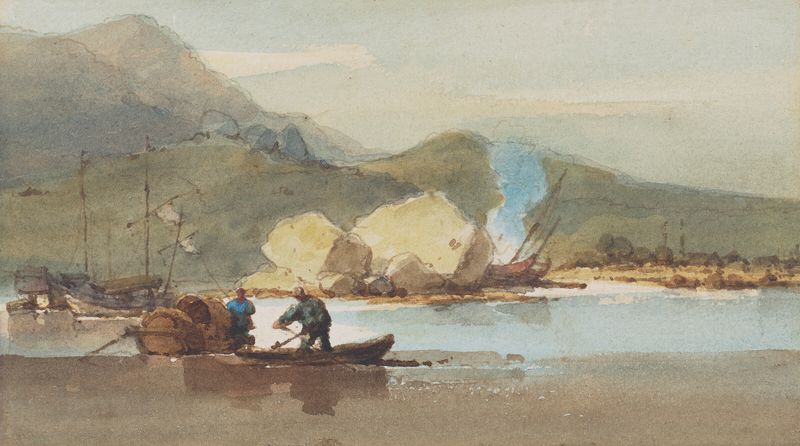
Junks and Tanka boats in a bay, with a beached junk and cooking fire beyond
George Chinnery
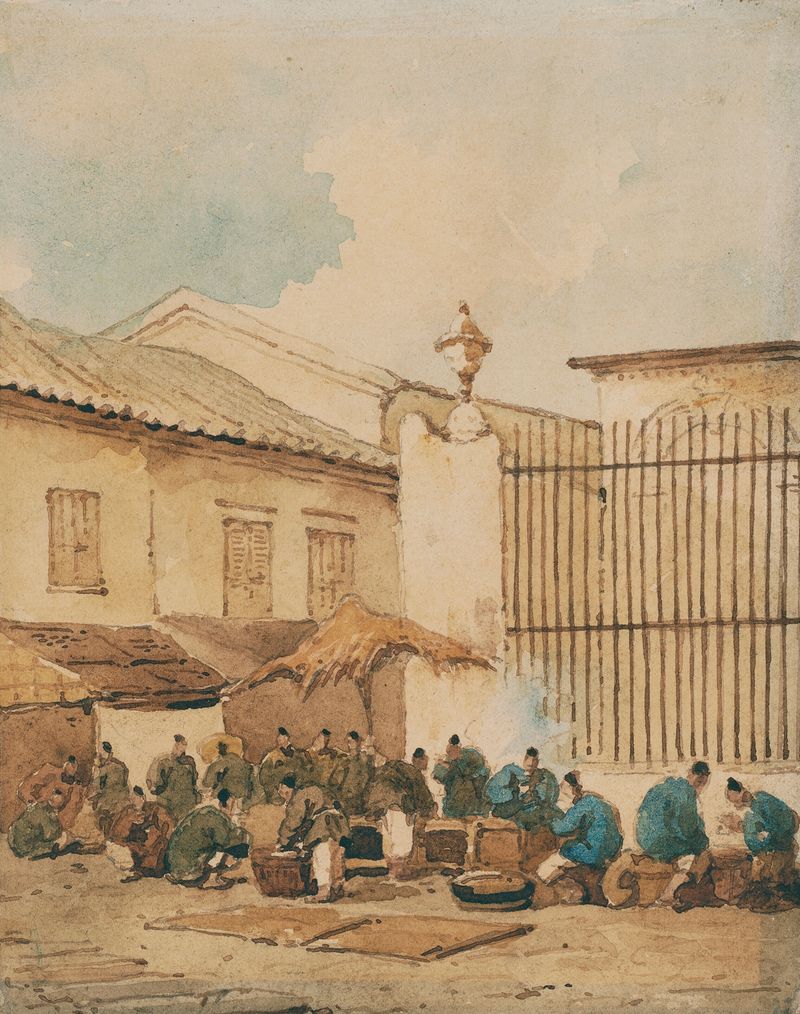
A market outside the railings of St. Dominic’s Church, Macau
George Chinnery

Temple by the Lake
George Chinnery

A River in Ceylon
George Chinnery
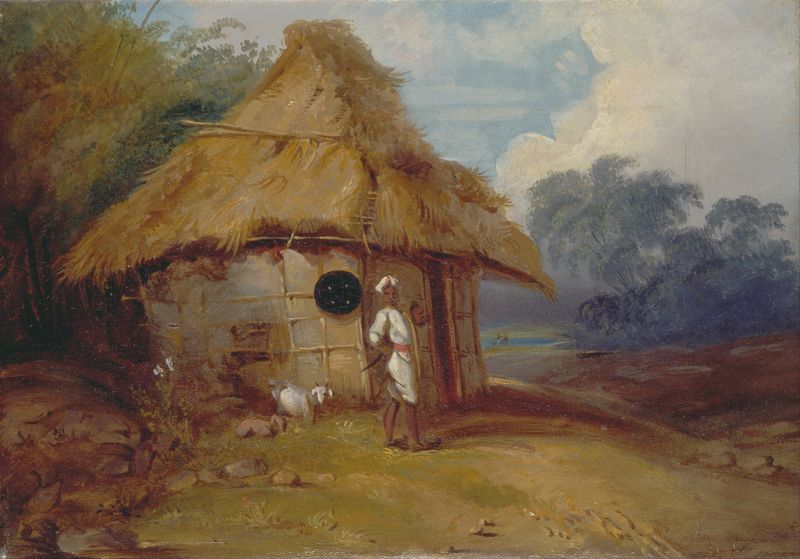
View in Southern India, with a Warrior Outside his Hut
George Chinnery
Indian Landscape with Temple
George Chinnery

Madras, a street scene
George Chinnery
A landscape in Macau with a herdsman walking along a track
George Chinnery

Tanka boat off Macao
George Chinnery
More Architecture Art
Browse all →
The statue of Liberty
Frédéric Auguste Bartholdi

View of Houses in Delft, Known as ‘The Little Street’
Johannes Vermeer

View of Houses in Delft, Known as ‘The Little Street’
Johannes Vermeer

The Cathedral in Rouen. The portal, Grey Weather
Claude Monet

The yellow house
Vincent van Gogh

The Church in Auvers-sur-Oise, View from the Chevet
Vincent van Gogh