
Industrieanlage — History & Facts
Can paint confess what words never could? In Industrieanlage, the haunting stillness of a factory looms like an unspoken fear, echoing the anxieties of its time. Look to the center of the canvas, where the stark structure of machinery stands in bold contrast against the muted palette. The heavy brushstrokes create a palpable weight, drawing your gaze to the intricate details of the industrial equipment. Notice how the shadows pool in the corners, lending an almost oppressive quality to the atmosphere.
The light, diffused yet struggling, hints at the unseen churn of life within these walls, evoking a sense of foreboding. Hidden within this composition lies the tension between progress and despair. The juxtaposition of the industrious forms against the almost suffocating space speaks to the duality of human ambition and the fears it harbors. The schemes of steel and smoke suggest both creation and destruction, encapsulating the anxiety of a generation grappling with the repercussions of war.
It’s as if the very essence of industry stands as a witness to human endeavor, yet wrapped in an air of melancholy. Otto Geigenberger created Industrieanlage in 1944, a time marked by turmoil and uncertainty. Living in Germany during the final years of World War II, he found himself amidst the chaos and devastation defining the era. This piece reflects not only the industrial landscape of his surroundings but also the broader existential dilemmas faced by individuals in a world ravaged by conflict, capturing a moment in history where hope flickered against the shadows of despair.
More Artworks by Otto Geigenberger
Browse all →
Hohe Munde bei Seefeld in Tirol
Otto Geigenberger
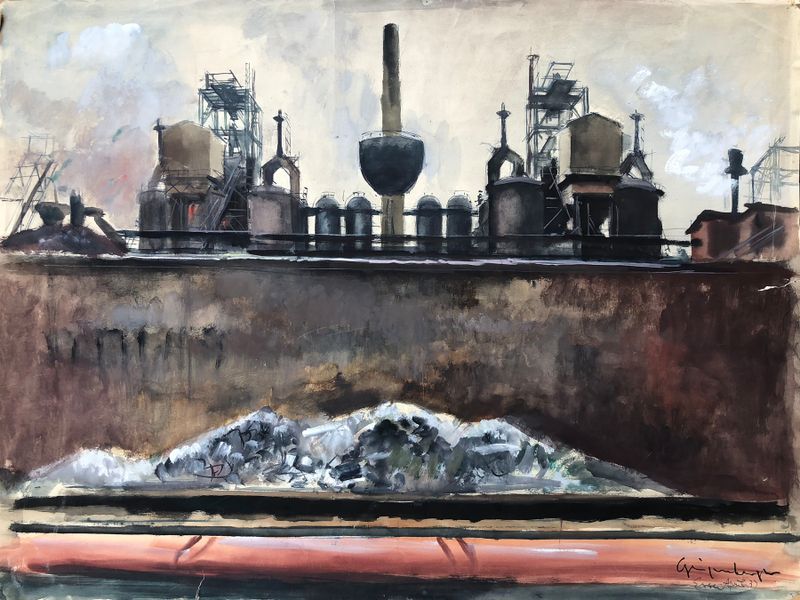
Stahlwerk Krupp in Essen
Otto Geigenberger

Landschaft mit Kirche
Otto Geigenberger

Passau am Inn 2
Otto Geigenberger
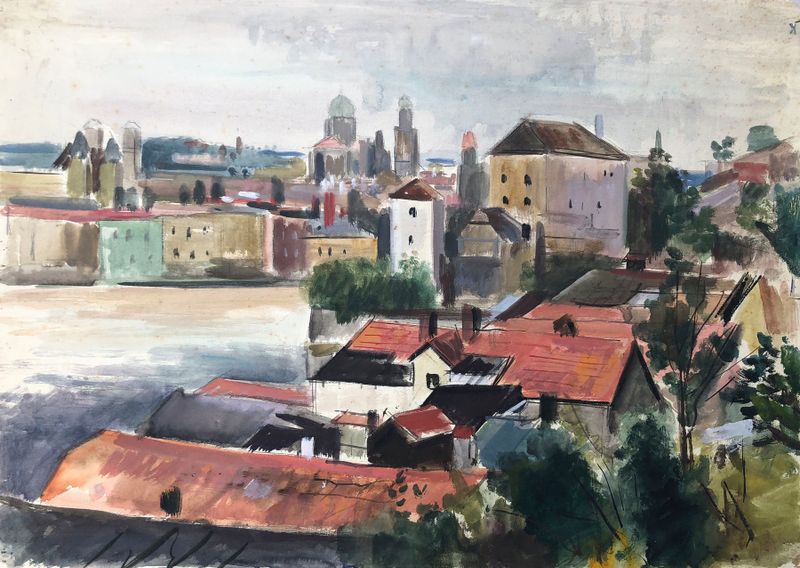
Passau am Inn
Otto Geigenberger
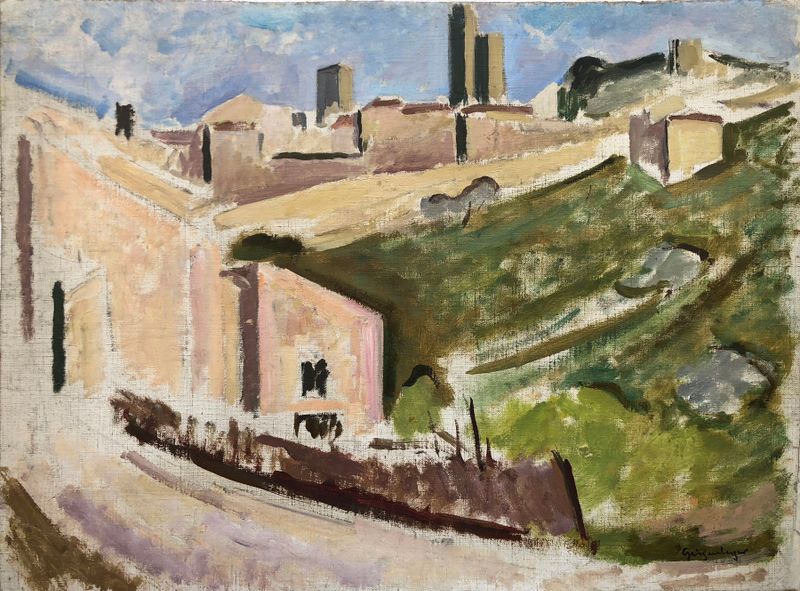
Südliche Stadt auf einem Hügel
Otto Geigenberger

Wasserburg am Inn – Häuserpartie am Inn
Otto Geigenberger

Wasserburg am Inn – Innfront
Otto Geigenberger
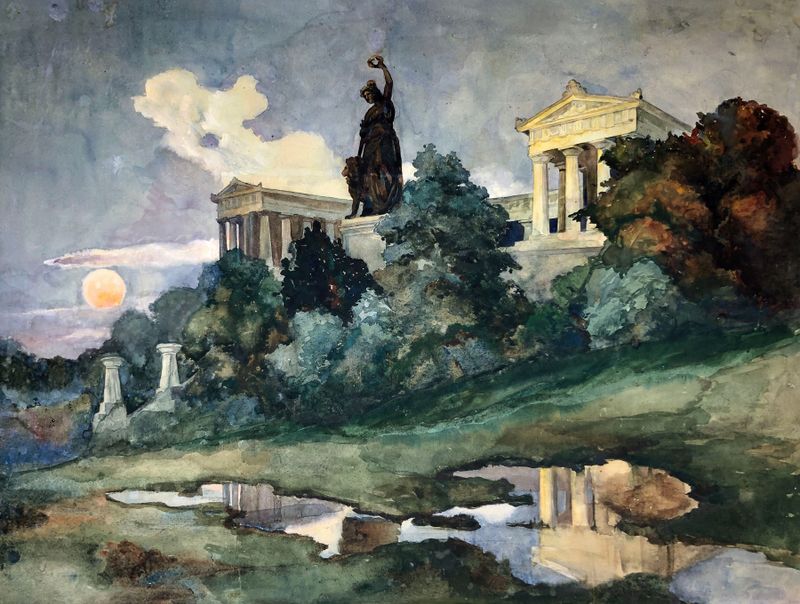
Sonnenuntergang an der Bavaria und Ruhmeshalle in München
Otto Geigenberger
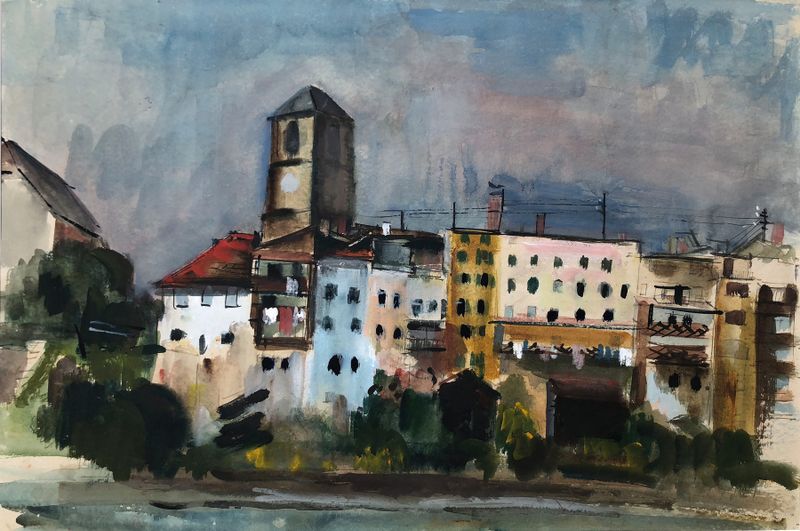
Wasserburg am Inn – Innfront.
Otto Geigenberger
More Architecture Art
Browse all →
The statue of Liberty
Frédéric Auguste Bartholdi

View of Houses in Delft, Known as ‘The Little Street’
Johannes Vermeer

View of Houses in Delft, Known as ‘The Little Street’
Johannes Vermeer

The Cathedral in Rouen. The portal, Grey Weather
Claude Monet

The yellow house
Vincent van Gogh

The Church in Auvers-sur-Oise, View from the Chevet
Vincent van Gogh