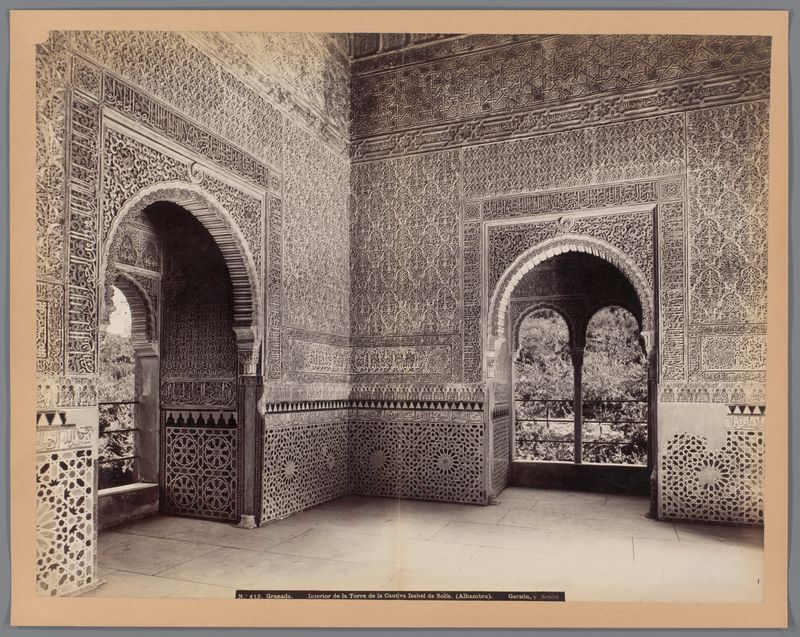
Interieur van een zaal van het Alhambra te Granada — History & Facts
What if beauty was never meant to be finished? In this exquisite representation, the illusion of infinite depth and intricate detail invites us to lose ourselves in a moment suspended in time. Look to the center of the canvas, where the mesmerizing interplay of light and shadow brings the architectural elements to life. The warm hues of ochre and terracotta contrast beautifully with the cool blues and greens, creating a harmonious balance. Notice how the patterns on the walls seem to beckon, drawing the viewer's eye deeper into the scene, as if each ornate tile whispers a secret from the past.
The meticulous brushwork captures the play of sunlight filtering through the latticework, casting delicate patterns that dance across the floor. Upon closer inspection, the artwork reveals deeper tensions between the permanence of stone and the fleeting nature of light. The vibrant colors suggest vitality and warmth, yet the rigid architecture stands as a testament to time's passage. The blending of various cultural motifs hints at the rich tapestry of influences that shaped this iconic space, evoking a sense of longing for both the past and the ephemeral beauty of life itself. Created between 1870 and 1895, this piece emerged during a period of fascination with Moorish architecture in Spain, particularly the Alhambra's intricate designs.
Garzón, captivated by the beauty of his homeland, sought to capture the essence of this historic site amidst a growing interest in Orientalism and the exploration of cultural identity. This painting not only reflects his artistic vision but also serves as a bridge between historical reverence and contemporary interpretation.