The Music Lesson — History & Facts
When The Music Lesson was purchased by King George III in the 1760s, it was attributed not to Johannes Vermeer, but to Frans van Mieris, a testament to the obscurity into which Vermeer had fallen after his death. The painting’s true authorship remained hidden for over a century, until the scholar Théophile Thoré-Bürger rediscovered Vermeer’s hand in the 19th century. Today, the painting is a touchstone for debates about Vermeer’s technique and the use of optical devices, with some suggesting that the uncanny precision of the tiled floor and reflections hints at a camera obscura. A young woman stands at a virginal, her back to the viewer, while a gentleman leans in, perhaps to instruct or perhaps to court.
The moment Vermeer has chosen is ambiguous: is this a lesson in music, or in love? The mirror above the virginal reflects the woman’s face and a patch of window, drawing the viewer into the room and suggesting a world beyond the canvas. The black-and-white tiles, the Persian carpet draped over the table, and the delicate glassware all signal affluence and taste. In contrast to the lively, sometimes chaotic music scenes of Jan Steen, Vermeer’s composition is hushed and poised, inviting us to listen for what is unsaid. The journey of The Music Lesson mirrors the fate of Vermeer himself: from near-anonymity to celebrated genius.
After its misattribution and royal acquisition, the painting remained in the British Royal Collection, where it still hangs today at Buckingham Palace. Its medium, oil on canvas, is typical of Vermeer’s surviving works, though the exact pigments and techniques continue to fascinate conservators. Created around 1662, during the artist’s most productive decade, it embodies the quiet introspection and technical brilliance that have made Vermeer’s paintings some of the most closely studied in the world.
Sources: Wikidata Q2336984 · Wikipedia: The Music Lesson · Image source (Wikimedia Commons)
More Artworks by Johannes Vermeer

View of Delft
Johannes Vermeer

Girl with a Pearl Earring
Johannes Vermeer
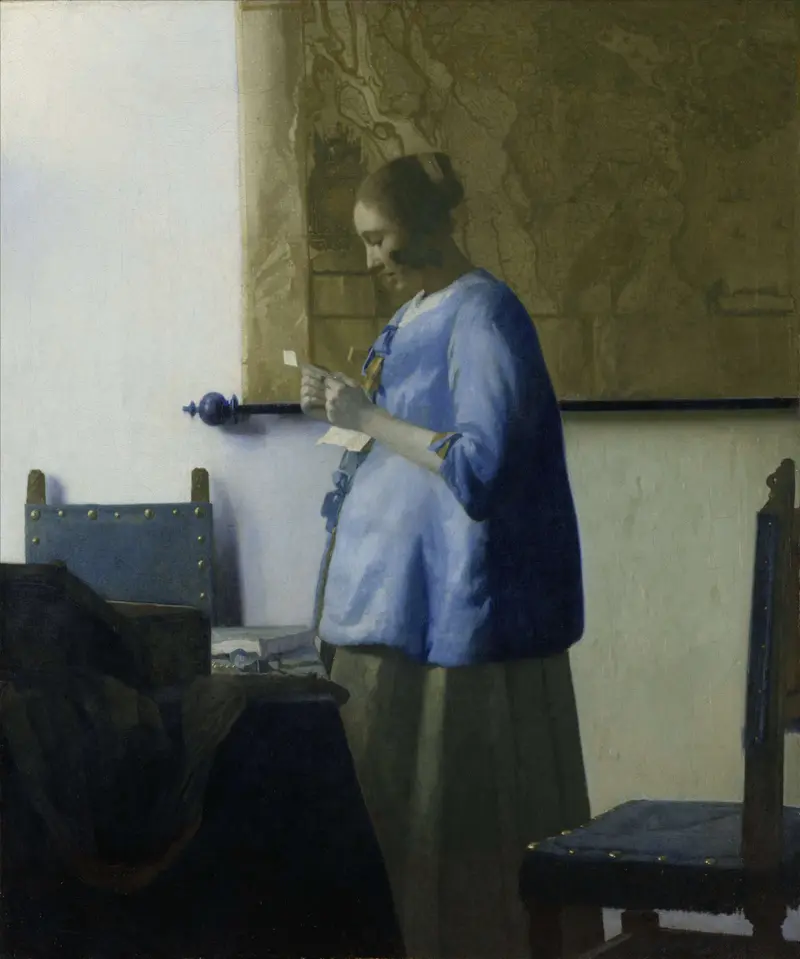
Woman in Blue Reading a Letter
Johannes Vermeer
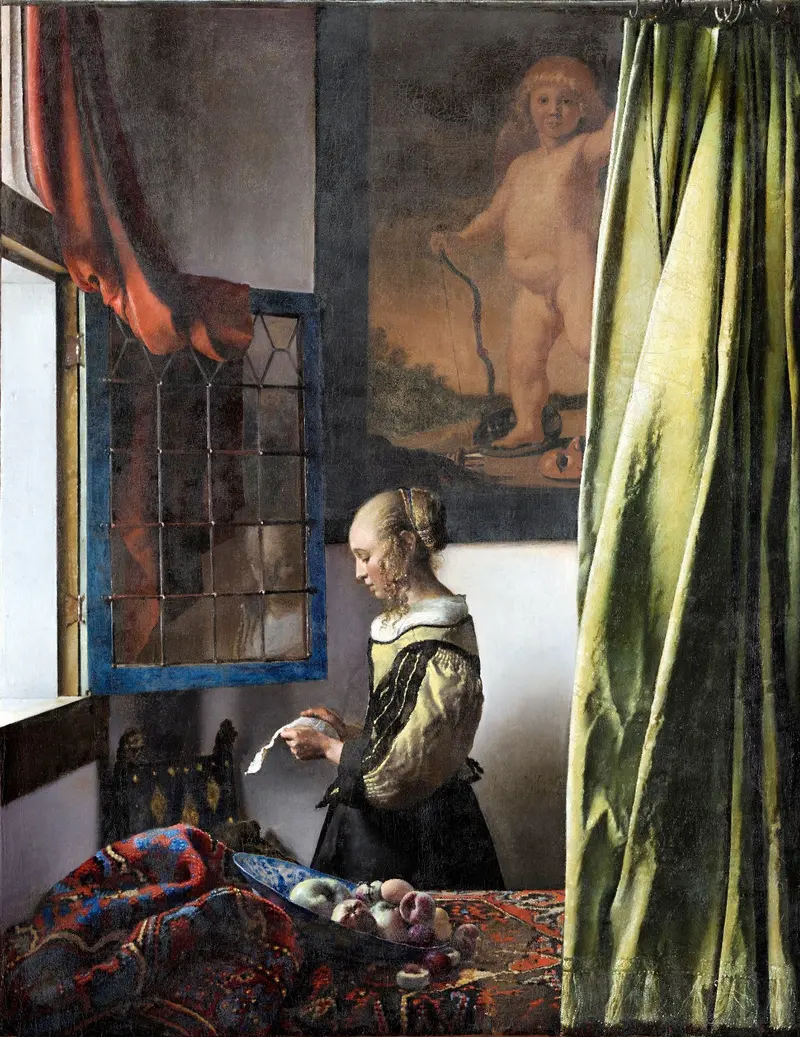
Girl Reading a Letter at an Open Window
Johannes Vermeer
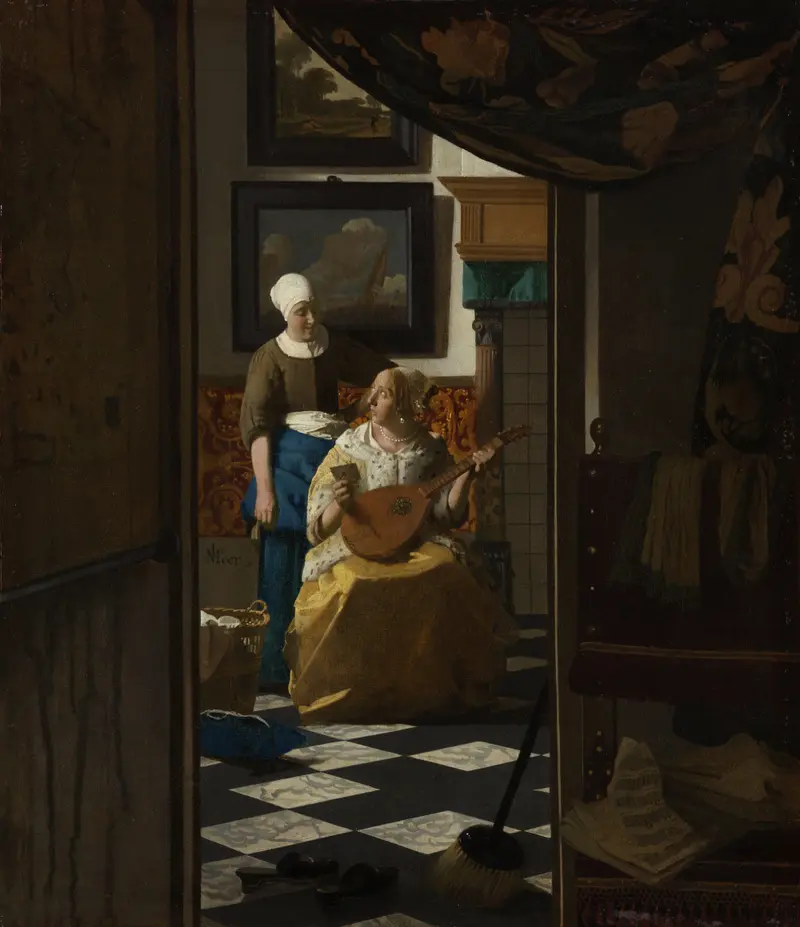
The Love Letter
Johannes Vermeer

A Girl Asleep
Johannes Vermeer
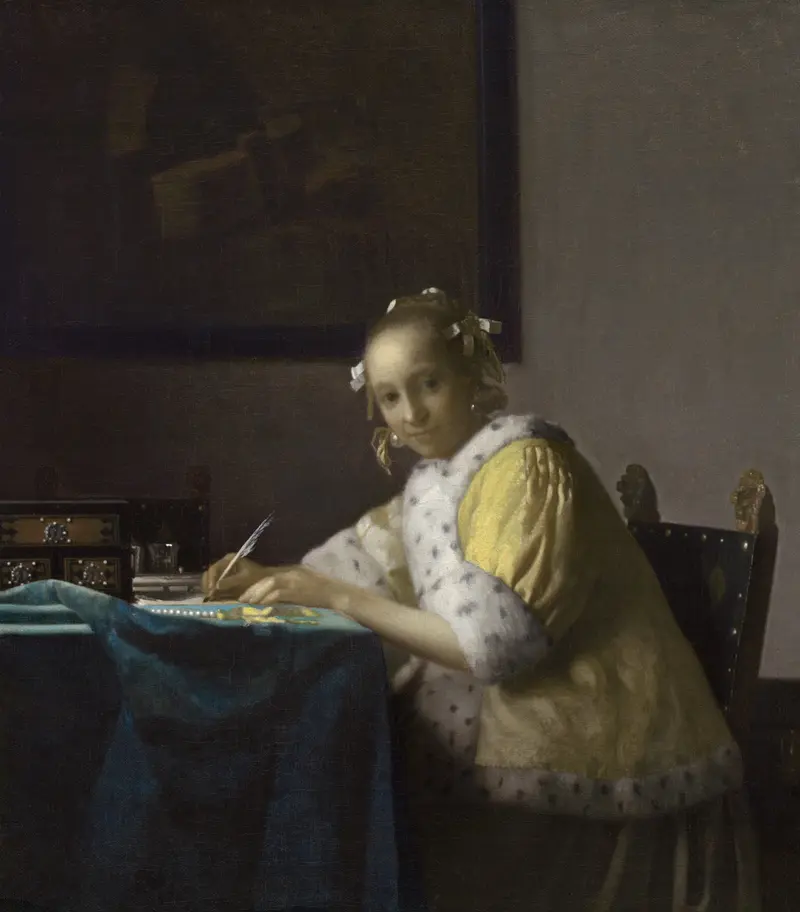
A Lady Writing a Letter
Johannes Vermeer
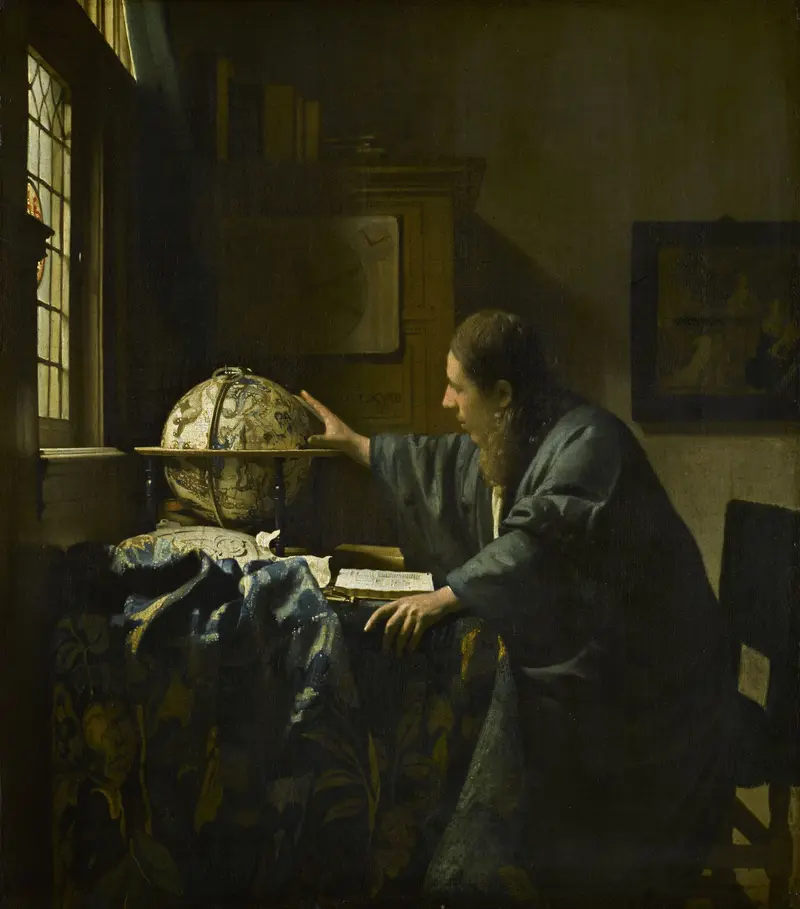
The Astronomer
Johannes Vermeer
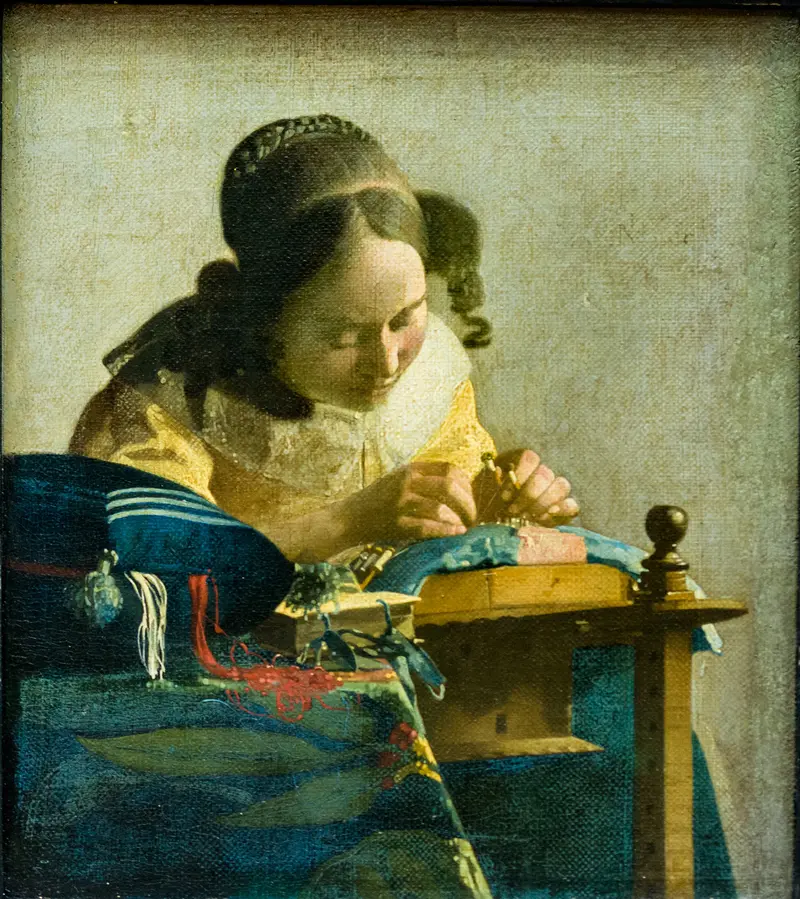
The Lacemaker
Johannes Vermeer
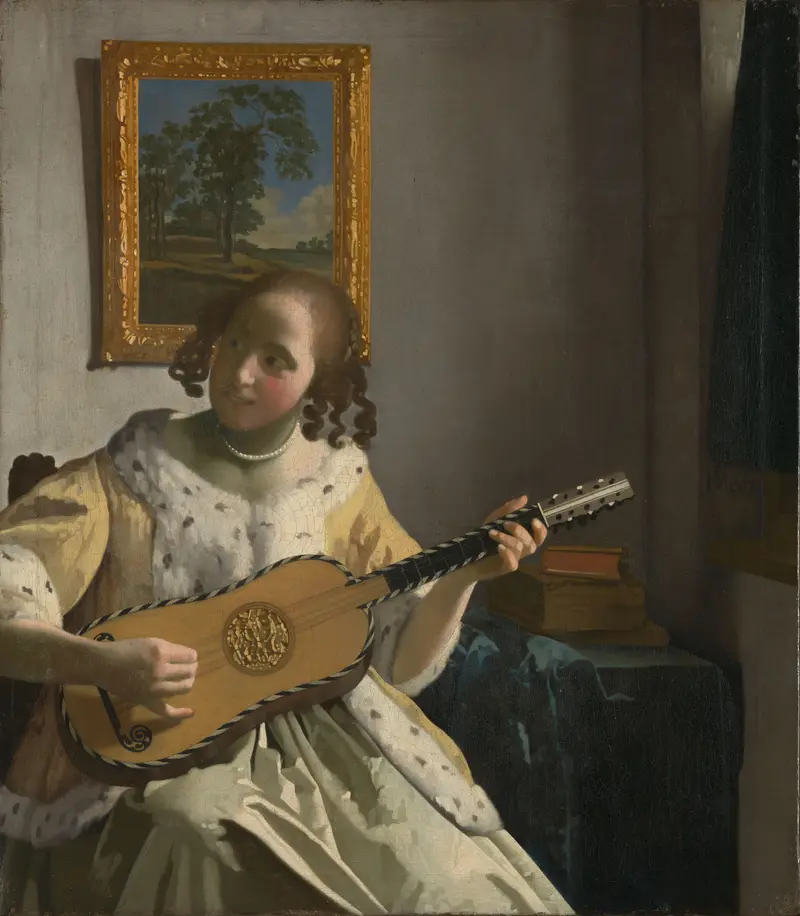
The Guitar Player
Johannes Vermeer