Van Gogh's Chair: analysis and Gauguin's Chair
An empty chair stands in for the man who owned it. In Van Gogh's Chair, painted in Arles in late 1888, Vincent van Gogh (1853–1890) put his pipe and tobacco pouch on the seat of a plain yellow rush-seated chair on terracotta tiles: a portrait without a sitter. This oil on canvas, a work of Post-Impressionism also known as Vincent's Chair with His Pipe, is in the National Gallery, London.
- A portrait without a sitter: the National Gallery calls both chairs surrogate portraits. Van Gogh's is simple and functional and shown in bright daylight; its pendant, Gauguin's Chair, is an elegant, finely carved armchair painted at night, with a candle and two novels on the seat.
- Pipe, box and onions: a pipe and a tobacco pouch lie on the seat. Behind the chair, to the left, a low box signed “Vincent” holds sprouting bulbs, possibly onions; at the right, part of a blue door shows.
- Colour and outline: yellows against blues, thick impasto, a blue line around the legs and red lines on the sunlit back. The Gallery links these outlines to Cloisonnism; Van Gogh wrote: “I have tried for an effect of light by means of pure colour.”
- A crude, rustic chair: it is plain unpolished wood painted yellow, crudely made, with legs that are not quite aligned. The Gallery says it recalls the peasant chairs in his Dutch paintings of the 1880s.
- Reworked after the crisis: after the fight of 23 December 1888, when Van Gogh cut off part of his left ear and Gauguin returned to Paris, he came back from a fortnight in hospital and slightly reworked his chair; the Courtauld Gallery dates the rework to January 1889.
- How it reached London: from Mrs J. van Gogh-Bonger, the artist's sister-in-law, it passed to her son V. W. van Gogh; the Trustees of the Courtauld Fund bought it through the Leicester Galleries in 1924, and it was transferred from the Tate Gallery in 1961.
Sources: National Gallery: Van Gogh's Chair (NG3862) · Van Gogh Museum: Gauguin's Chair (s0048V1962) · Courtauld Gallery virtual tour: Van Gogh's Chair · Wikidata Q1118295
Questions and answers about the painting
What does Van Gogh's Chair mean?
The canvas is a portrait of Van Gogh without a sitter: the plain yellow chair, in bright daylight, with his pipe and tobacco pouch on the seat, stands for his own simple, direct character. The sprouting onions in the box behind it, signed “Vincent”, point to his bond with nature. The empty seat may carry older memories too: Van Gogh had written of weeping at the sight of his father's vacant chair after his death in 1885, and told his brother Theo, “Empty chairs – there are many, more will come.”
How does the yellow chair relate to Gauguin's Chair?
It is the daytime pendant to Gauguin's Chair, now in the Van Gogh Museum, Amsterdam, and Van Gogh meant the two to hang together, one chair turned to the right and the other to the left. He began both in November 1888, soon after Gauguin joined him in Arles, where they lived in the Yellow House. Gauguin's finely carved armchair is shown at night with a candle and two novels; Van Gogh's plain chair stands in sunlight. Two very similar chairs appear in Bedroom in Arles of 1888.
Source: National Gallery: Van Gogh's Chair (NG3862) · Van Gogh Museum: Gauguin's Chair (s0048V1962) · Van Gogh Letters: letter 721, to Theo, about 19 November 1888
Where is Vincent van Gogh's chair painting, and in which room?
In Room 43 of the National Gallery in London, where it has the inventory number NG3862. The Trustees of the Courtauld Fund bought it through the Leicester Galleries in 1924, and it was transferred from the Tate Gallery in 1961. Its pendant, Gauguin's Chair, belongs to the Van Gogh Museum in Amsterdam. Room as shown on the Gallery's website on 13 November 2026.
When did Vincent van Gogh paint the yellow chair?
Vincent van Gogh painted the chair in Arles in November 1888 and reworked it in January 1889. In a letter to his brother Theo of about 19 November 1888 he described it as “a wooden and straw chair all yellow on red tiles against a wall”. After the fight of 23 December 1888, when he cut off part of his left ear and Gauguin returned to Paris, he came back from a fortnight in hospital and slightly reworked the picture.
Source: National Gallery: Van Gogh's Chair (NG3862) · Courtauld Gallery virtual tour: Van Gogh's Chair · Van Gogh Letters: letter 721, to Theo, about 19 November 1888
How big is the National Gallery's Van Gogh chair painting?
Van Gogh's Chair measures 91.8 × 73 cm (about 36 × 29 in) and is oil on canvas. In his letter to Theo, Van Gogh called both chair pictures “Size 30 canvases”. The Van Gogh Museum lists its companion, Gauguin's Chair, at 90.5 × 72.7 cm. The Gallery's audio description notes that the thick paint was applied with a loaded brush, leaving raised paint on the surface.
Source: National Gallery: Van Gogh's Chair (NG3862) · Van Gogh Museum: Gauguin's Chair (s0048V1962)
Is Vincent van Gogh's chair painting in the public domain?
Yes. Van Gogh died in 1890, so his paintings are free of copyright everywhere, and Wikidata lists this painting as public domain. A faithful photograph of a public-domain painting adds no new copyright in the United States or the European Union, so you can download this image and use it in personal or commercial projects. Public Domain Images for Commercial Use explains how.
Source: Wikidata Q5582 (died 29 July 1890) · Wikidata Q1118295 (public domain)
More Artworks by Vincent van Gogh

The Starry Night
Vincent van Gogh

Almond Blossom
Vincent van Gogh
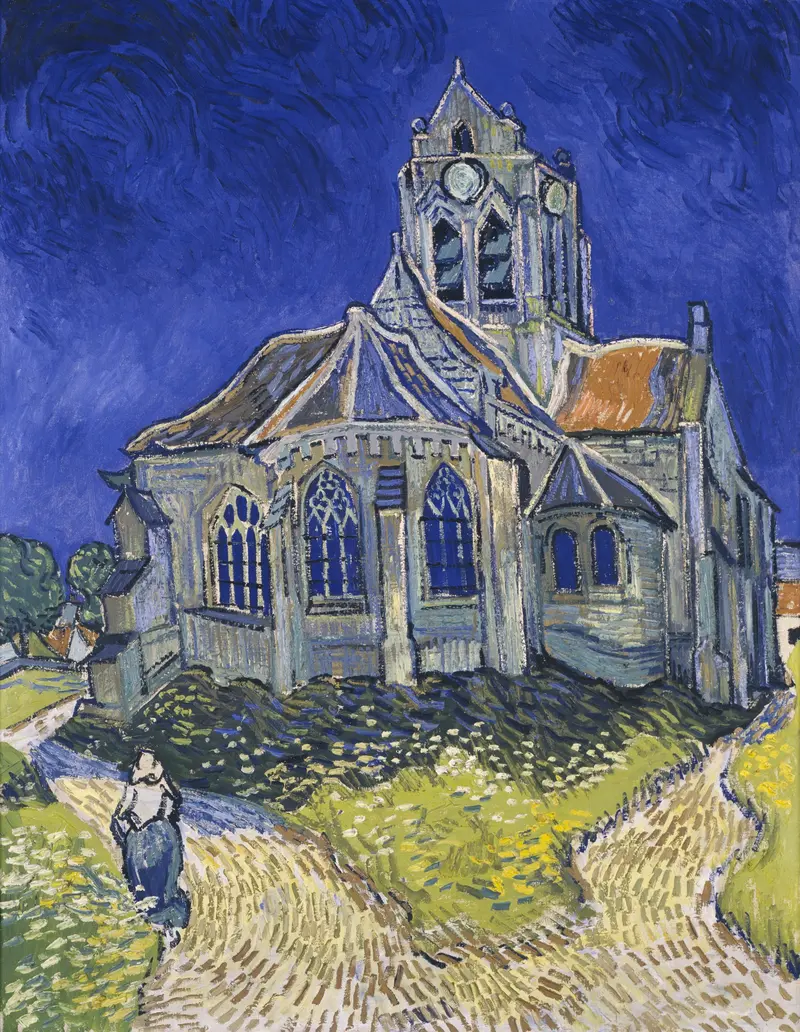
The Church at Auvers
Vincent van Gogh

Sunflowers
Vincent van Gogh

Bedroom in Arles
Vincent van Gogh

The Night Café
Vincent van Gogh

A Wheatfield, with Cypresses
Vincent van Gogh

Café Terrace at Night
Vincent van Gogh
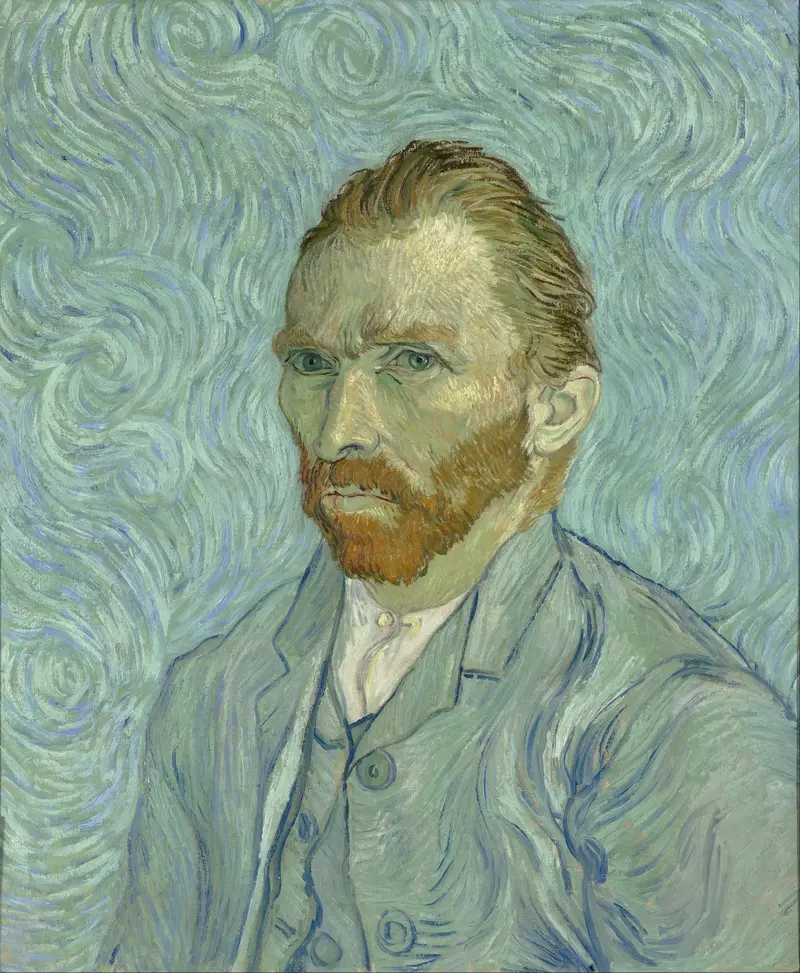
Self-Portrait (1889)
Vincent van Gogh
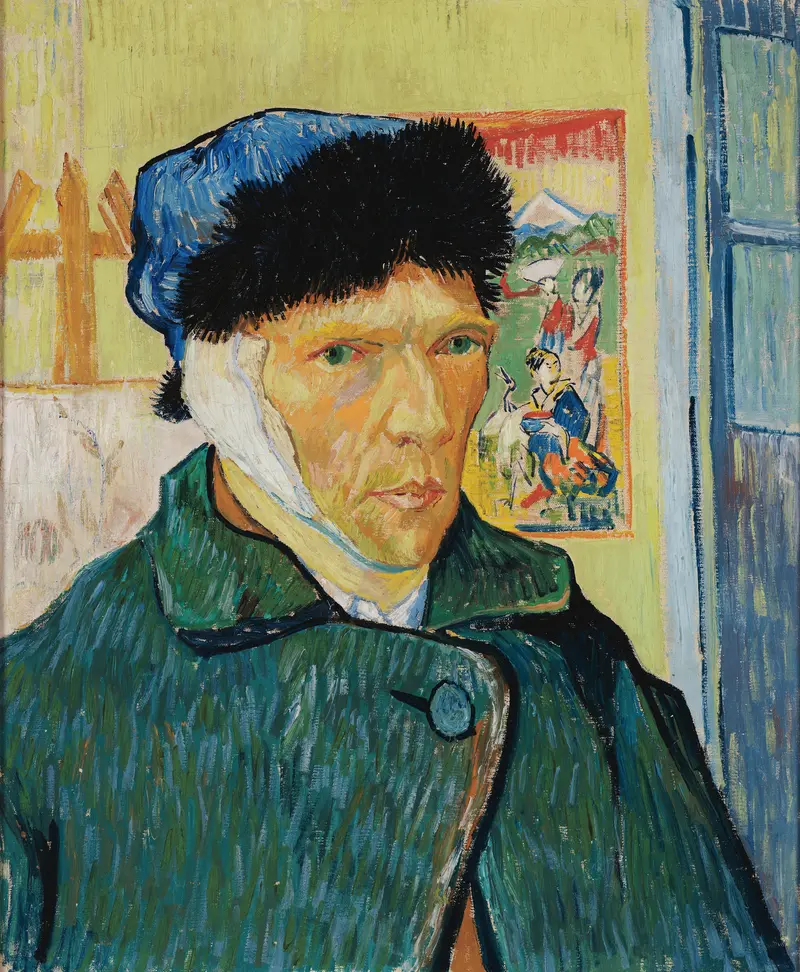
Self-Portrait with Bandaged Ear
Vincent van Gogh